Something happens to UK gardens in August. The feeder that was busy from dawn in May sits untouched for days. The blue tits that emptied a peanut feeder every week have gone. Plenty of people take this as a sign that the birds have moved on, stop topping up, and put the feeder in the shed until the weather turns.
The birds have not moved on. What is happening is a combination of natural abundance and a genuinely difficult period in the bird calendar, and understanding it changes how a garden performs for the rest of the year.
Why the garden goes quiet
Two things overlap in late summer.
The first is that natural food is everywhere. Seed heads have ripened, berries are coming in, caterpillars and insects are at their peak. Garden birds are opportunists, and when a hedgerow is loaded there is little reason to visit a feeder for sunflower hearts.
The second is the moult. Most UK garden birds replace their feathers between July and September, and it is a demanding process. Growing a full set of new feathers takes a great deal of protein and energy, and it leaves birds temporarily less agile and more vulnerable to predators. Their instinct during this period is to keep out of sight, so they retreat into dense cover and feed quietly rather than sitting in the open on a bird table.
So the garden looks empty. The birds are close by, in the hedge, doing something difficult.
Why it is worth keeping the feeder stocked anyway
The old advice was to feed in winter and stop in summer. That guidance has been revised over the years, and the current position from UK conservation bodies is to feed year round while adjusting what goes out.
During the moult, high-protein food genuinely helps. Feathers are almost entirely protein, and a bird that can find a reliable protein source will get through the moult faster and in better condition. Sunflower hearts and mealworms are the useful ones here.
There is also a practical argument. Birds learn where reliable food is and build feeding routes around it. A feeder that empties in August and refills in November has to be rediscovered. A feeder that stays stocked through the quiet months already has an established clientele when the weather turns and the natural food runs out.
Late August into September: the shift
From late August the picture starts to change. Natural food begins to run down, moulting birds return to normal activity, and this year's young are dispersing and looking for territory.
This is the point where a garden that has kept feeding starts to see the benefit. It is also the right moment to think about what the setup will need to handle over winter, because a single hanging feeder that coped in spring will not cope in December.
The Bird Feeder range at Bossy Cat covers the three formats most UK gardens end up using, and the differences matter more in autumn than at any other time of year.
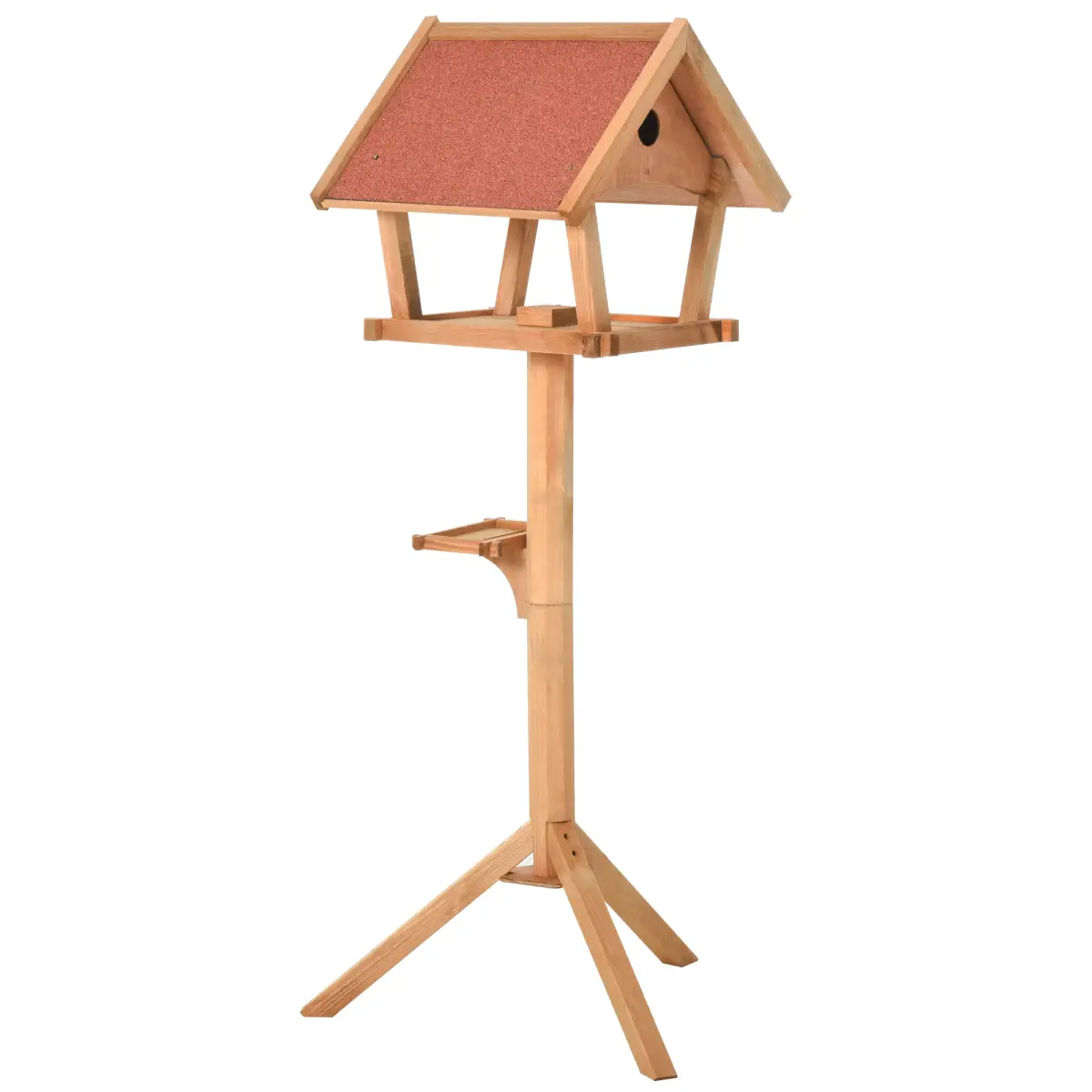
Bird tables are the most flexible option, and the range includes freestanding fir wood tables with roofs at around 130cm and 139cm tall, from Pawhut and vidaXL, sitting in the £33 to £40 region. A roofed table takes seed, mealworms, fat blocks and kitchen scraps without any additional kit, and it suits the ground-feeding species like blackbirds and robins that struggle with hanging feeders. In autumn, when leaf litter starts covering the ground where those birds normally forage, a table becomes considerably more valuable.
Feeding stations are poles with multiple hooks, and they come into their own as the range of species visiting a garden widens. The Pawhut station kit with six hooks and four hanging feeders, at around £35, lets seed, peanuts and fat balls go out simultaneously rather than forcing a choice. Different species prefer different things, and offering all three at once is the simplest way to increase the variety of birds visiting.
Window feeders are the smallest and cheapest option, with the vidaXL acrylic pair at around £16. These are worth mentioning specifically for autumn, because as the evenings draw in and the garden gets used less, a feeder stuck to the kitchen glass is the one that still gets watched. They also take a couple of weeks for birds to trust, so setting one up now means it is established by the time the clocks change.
What to put out as the season turns
Through the moult and into early autumn, protein is the priority. Sunflower hearts do most of the work and leave almost no husk mess. Mealworms, dried or live, are the strongest option for moulting birds and for any late broods still being fed.
Peanuts should go in a mesh feeder rather than loose. This matters most in spring and early summer when whole nuts can choke chicks, but mesh remains the sensible default year round.
Fat balls come into their own from about October, when birds need calories to get through cold nights. It is worth buying them loose or removing the plastic netting before hanging them, since the netting can trap feet.
Water is easy to overlook in a dry August. Birds need it for drinking and for keeping new feathers in condition, and natural sources dry up in a hot spell. A shallow dish topped up regularly will attract birds even when the food is being ignored.
The autumn clean
Late summer is the sensible moment to give everything a proper clean, before the busy season starts.
Feeders concentrate birds in one place, which means disease spreads more easily than it would in the wider countryside. Warm conditions make this worse, so August is exactly when a neglected feeder becomes a problem. Hot soapy water, a scrub, a thorough rinse and complete drying before refilling is the whole procedure. Every couple of weeks is a reasonable rhythm.
Sweeping up spilled seed underneath matters too. Damp seed on the ground goes mouldy quickly and attracts rats, which is the fastest way for a bird feeder to become an argument with a neighbour.
Wooden tables benefit from a coat of pet-safe wood preservative every year or two, and late summer is the right time to do it while the timber is dry and there is still warmth for it to cure. Creosote and strong-smelling solvent treatments should be avoided entirely.
Getting ahead of winter
The gardens that fill with birds in January are usually the ones where the feeder never came down.
Establishing a routine now, while the garden feels quiet, means that when the first hard frost arrives the birds already know exactly where to go. It costs very little to keep a feeder topped up through a slow month, and it is the difference between a garden birds pass through and one they rely on.
The full Bird Feeder range covers tables, stations, window feeders and wall-mounted options, alongside the wider Garden Accessories and Pet Supplies collections.
Every order at Bossy Cat comes with free delivery to UK mainland addresses, excluding Northern Ireland. Orders are dispatched within 3 to 5 working days, and there are no hidden fees at checkout. Change of mind returns are accepted on unused items in original packaging, though the return postage is covered by the customer. Faulty or damaged items are handled separately.