An outdoor aviary is one of the few pet purchases that behaves more like a building project than a piece of furniture. A cage goes in the corner of a room and that is largely that. An aviary needs a level base, a considered position, a plan for winter and a fair bit of thought about security, and none of that is easy to retrofit once the panels are up.
The good news is that the planning is straightforward if it happens in the right order. This guide covers what to work out before the delivery arrives rather than after.
Start with the footprint, then double-check the height
Garden aviaries vary enormously in shape, and the shape matters as much as the total floor area.
The Bird Cage range at Bossy Cat spans a wide spread of formats. At the compact end there are structures around 208cm by 102cm, roughly the footprint of a garden bench. In the middle sit the walk-in designs at around 181cm by 110cm with a ridge over 170cm, tall enough to stand up in. At the largest end are long runs measuring over four metres in length, and tall square structures around 165cm by 165cm rising to two metres.
Length is generally more useful than width for birds. They fly in straight lines rather than circling, so a long narrow aviary gives more genuine flight distance than a square one of the same area. That is why several of the larger models in the range are built as extended runs rather than boxes.
Walk-in height is worth paying for if the aviary will be cleaned regularly. Crouching through a low door twice a day gets old quickly, and a structure that is awkward to enter tends to be cleaned less often than it should be.
The base is the part people skip
An aviary needs to sit level, and it needs to sit on something that stops anything digging underneath.
Paving slabs are the most common solution in UK gardens. They give a level surface, they stop rats and foxes tunnelling in, and they can be swept and hosed. Concrete works equally well but is permanent. Bare soil or grass is the option that causes problems later, because the frame settles unevenly, the timber sits in damp, and the perimeter becomes a weak point.
Whatever the surface, it wants to drain away from the aviary rather than towards it. Standing water at the base of a structure is the fastest route to rot in a timber frame and rust at the joints of a steel one.
It is worth laying the base before the aviary arrives. These are large flat-packed items delivered in multiple boxes or on a pallet, and having nowhere to assemble them is an awkward position to be in on delivery day.
Position: shelter, sun and the neighbours
Three considerations, in roughly this order.
Prevailing weather. In most of the UK, weather comes from the south west. Backing the sheltered end of the aviary into that direction, or siting it against a wall, fence or hedge on that side, makes a real difference through winter. Birds cope with cold far better than they cope with wind and driving rain.
Sun and shade. Birds need both, and an aviary in full sun all day is as much a problem as one in permanent shade. Morning sun with afternoon shade is the ideal, which usually means an east-facing aspect with something providing cover later in the day.
Proximity to the house. Closer is generally better. It makes daily feeding and checking easier in bad weather, it means problems get noticed sooner, and the birds are more likely to be watched and enjoyed. Some thought about neighbours is sensible too, since certain species are noisier than others and a boundary fence is not much of a sound barrier.
Weatherproofing and shelter
Every outdoor aviary needs a section birds can retreat into that is dry and out of the wind. This is not optional in a UK winter.
Some of the larger models in the range include an enclosed shelter section as part of the structure, which solves this directly. Others include a storage compartment, which is genuinely useful for keeping feed dry and tools to hand, though it is not the same thing as a bird shelter.
Where a model does not include one, the usual approach is to clad the roof and two sides of one end with solid panels or heavy-duty clear sheeting, leaving the rest as open mesh. That gives a dry, sheltered corner while keeping the aviary light and ventilated.
Galvanised steel handles UK weather well and needs little maintenance. Timber aviaries look better in a garden setting but want a coat of bird-safe preservative every year or two, and creosote and strong solvent-based treatments should never be used.
Security matters more than most people expect
An aviary in a UK garden has two security problems, and they pull in different directions.
The first is keeping predators out. Foxes, cats and rats are all persistent, and rats in particular are drawn to spilled feed. Welded mesh rather than chicken wire is the standard here, since chicken wire can be torn by a determined fox. A solid base or buried perimeter closes off the digging route.
The second is keeping birds in. The most common escape is not through the mesh but through the door, which is why a safety porch is worth considering on any walk-in structure. A small enclosed vestibule means one door is always shut, and it removes the moment where a startled bird flies past a shoulder.
Doors with a proper lock rather than a simple catch are worth checking for, both against opportunistic theft and against a gate being nudged open.
Thinking ahead to winter
An aviary bought in August will face its first real test in December, and it is worth being honest about what that involves.
Water freezes. Feed gets damp. Daylight hours drop to the point where birds may need supplementary lighting depending on species. Cleaning becomes considerably less appealing in the rain, which is another argument for a walk-in design close to the house.
Which species will live in the aviary determines a lot of this. Some finches and softbills need frost-free conditions and a heated shelter through winter, while budgies and cockatiels are generally hardier if given proper protection from wind and wet. This is a question to settle before buying rather than after, since the shelter requirement changes what the structure needs to do.
A note on starting smaller
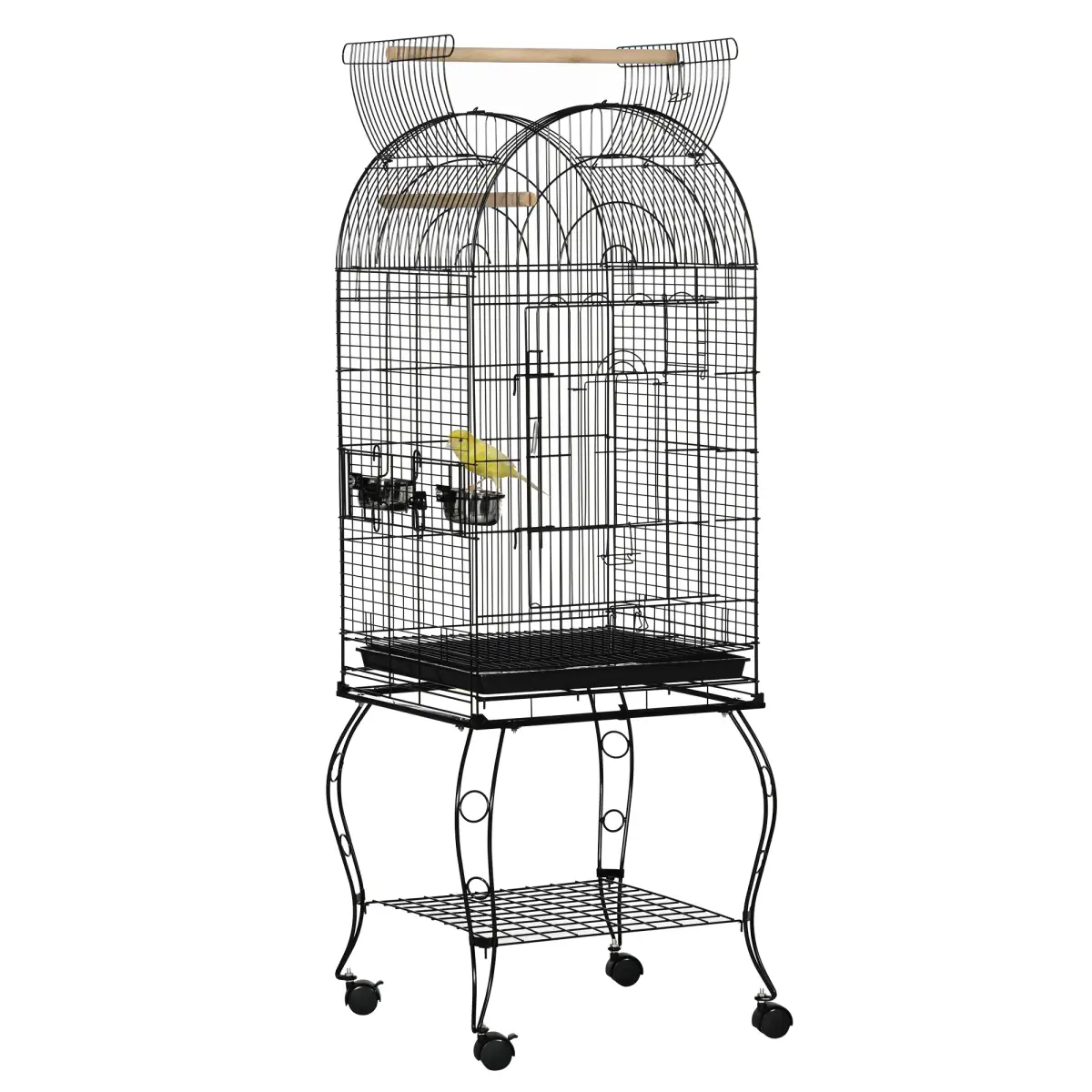
Not every setup needs to begin outdoors. For anyone getting into keeping birds, an indoor cage on a rolling stand is a much lower commitment, and the range includes plenty of options in the £36 to £90 bracket with slide-out trays and storage shelves.
There is no rush to build the full garden setup. Plenty of keepers start indoors, learn what their birds actually need, and move outdoors once they know what they are planning for.
The full Bird Cage range covers indoor cages through to large walk-in aviaries, alongside Bird Feeders, Chicken Coops and the wider Pet Supplies collection.
Every order at Bossy Cat comes with free delivery to UK mainland addresses, excluding Northern Ireland. Orders are dispatched within 3 to 5 working days, and there are no hidden fees at checkout. Larger aviaries arrive flat packed across multiple boxes or on a pallet, so someone needs to be available to take delivery. Change of mind returns are accepted on unused items in original packaging, though the return postage is covered by the customer. Faulty or damaged items are handled separately.