Nobody plans to buy a barrier mat. It happens after something else goes wrong. The hall carpet has gone grey in a two metre strip by the front door. The dog came back from a wet field and left a trail through the kitchen. Someone slipped on wet tiles by the back door. Then you start looking, and you find there are dozens of sizes, half a dozen colours, and very little explanation of which one you actually need.
This guide sorts that out. It's not complicated once you know what to look at.
Start with the doorway, not the mat
Measure the width of your doorway first. That's the number everything else hangs off. A mat narrower than the door leaves gaps at the edges where people step around it, which defeats the point entirely.
Then check your door clearance. Open the door and measure the gap between the bottom of it and the floor. Most barrier mats sit somewhere between 7mm and 10mm thick. If your door only clears the floor by 5mm, the mat goes outside the swing of the door or it doesn't go anywhere. Internal doors in older houses are particularly tight. Worth checking before you order rather than after.
The two step rule for sizing
Here's the bit most people get wrong. They buy a mat that fits neatly in front of the door and wonder why dirt still gets through.
A single step on a mat removes maybe a third of the muck on a shoe. Two steps gets you to around two thirds. Four steps and you're taking off nearly all of it. So the length of the mat matters more than the width, and the answer is almost always bigger than you think.
For a standard front door with normal household traffic, 60 x 90cm or 80 x 120cm does the job. For a back door that opens onto a garden or a gravel drive, go longer, 80 x 180cm or more. If you've got a hallway that runs straight from the front door, a runner at 80 x 200cm or 80 x 300cm will do more for your flooring than anything else you can buy at that price.
Shops, salons and village halls should skip straight to the longest option available. Commercial footfall wrecks flooring fast.
What you're actually buying
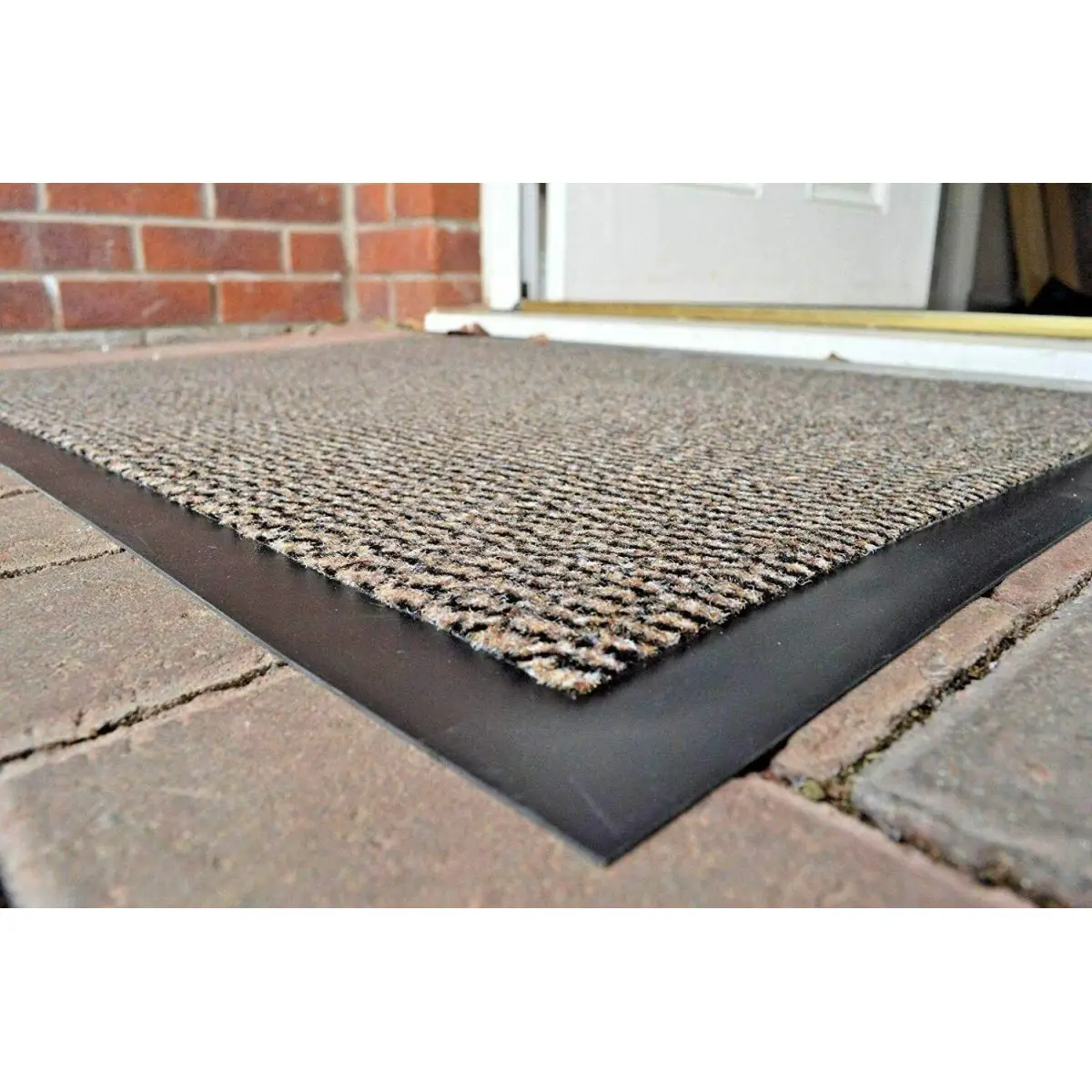
Most barrier mats in this price bracket are polypropylene pile on a rubber or PVC backing, with bound edges. That combination is doing three separate jobs.
The pile is short, dense and slightly coarse, so it scrapes grit off shoe soles rather than letting it pass over the top. Polypropylene also holds a lot of water without going soggy, which is what stops rain being tracked further into the house.
The backing keeps the mat still. This is the part people underestimate. A mat that shifts about is worse than no mat at all, because it becomes a trip hazard and it stops making proper contact with shoes.
The bound edge stops the corners curling. Cheap mats without a proper edge finish start lifting at the corners within a few months, and once that starts it doesn't stop.
Colour is a practical decision
You'd think this is the least important choice. It isn't.
Anthracite and grey hide dirt better than anything else, which is why you see them in every office reception and supermarket entrance in the country. If you want a mat that looks acceptable between washes, pick one of those.
Brown and rust are good at hiding mud specifically. If you're at a back door with a garden behind it, or you live somewhere with clay soil, they'll look cleaner for longer than a grey mat will.
Red and blue read as a deliberate choice rather than a functional one. They work well where the mat is visible from a living space and you'd rather it looked like part of the room. They'll show dust sooner, though.
As a general rule, go a shade or two darker than your flooring.
Matching the mat to your household
A terraced house with a front door straight onto the pavement mainly deals with dry grit and dust. A medium mat in a dark colour handles that easily.
A house with a back door onto a garden deals with mud and wet grass, which is a different problem. You want length and absorbency here, and brown or rust will save you washing it as often.
Dog owners should size up. A dog crossing a mat doesn't wipe its feet deliberately, so it needs enough length to take dirt off four paws in passing. This is the one situation where a runner genuinely earns its money.
Anyone working from home with an office off the hallway should think about a second mat at the office door. Grit that reaches a home office ends up under an office chair, and chair castors grind it into the floor.
Three mistakes worth avoiding
Buying too small. Covered above, but it's the single most common one.
Using a decorative rug instead. A nice rug in a hallway will look grubby within a month and won't absorb anything properly. Different product, different job.
Leaving it in place for months. Grit works its way under the mat and gets ground into the floor by foot traffic. Lift it and vacuum underneath every few weeks.
What it should cost
Barrier mats are cheap relative to what they protect. Smaller sizes start around £8 and the longest runners run to roughly £30. Replacing a hall carpet costs a great deal more, and so does sanding and refinishing a wooden floor.
Our full range is at
Keeping it in decent shape
Vacuum twice a week through winter, less in summer. Every few weeks take the mat outside and give it a proper shake to release the grit that's worked down into the pile. For a deeper clean, wash the surface with warm water and mild detergent, rinse, and dry it flat rather than folded or hung. Don't tumble dry it.
Do that and a decent mat will see you through several winters.
Ordering
Delivery is free to the UK mainland and orders arrive within 3 to 5 working days. There are no hidden fees added at checkout.
If you order the wrong size and change your mind, you can return it, though the return postage is yours to cover. If a mat turns up faulty or damaged, get in touch and we'll deal with it separately.