A parasol is one of those bits of garden kit that seems straightforward until you actually start shopping for one. There's the size to think about, the canopy material, the base, whether you want a tilt mechanism, whether the pole goes through your table or stands off to the side. And then once you've got it home, there's the question of how to keep it looking decent through a few British summers.
This guide walks through all of it. We'll cover what to look for when you're buying, how to get it set up properly, and the small habits that make a parasol last rather than turning into a faded, wonky mess by year two.
Why bother with a parasol in the first place
The obvious answer is shade. But a good parasol does a few things at once. It keeps you cooler when the sun's directly overhead, which matters more than people think during a UK heatwave. It protects skin from UV, which the NHS has been increasingly vocal about. And it gives a defined feel to an outdoor seating area, so your patio doesn't just look like a slab of stone with chairs on it.
Compared to a gazebo, a parasol is far more flexible. You can move it, tilt it, fold it down when the weather turns. Compared to a permanent shade sail, you don't need to drill into walls or sink posts into the lawn. For most gardens, especially smaller patios and balconies, a parasol is just the most practical option.
How to pick the right one
There's no single "best" parasol, so it really depends on your space and how you plan to use it.
Size and shape
Start with what you're actually trying to shade. A round canopy works well over a round bistro table or a small lounge area. A rectangular one suits a longer dining table where you've got six or eight people sat down for lunch. As a rough rule, the canopy should overhang the seating area by at least 30cm on each side, otherwise people on the edges end up with the sun in their eyes by mid-afternoon.
Most of the parasols we stock at Bossy Cat land around the 3 metre mark, which covers a typical six-seater dining set comfortably. If you've just got a two-seater bistro setup, you can go smaller, around 2 to 2.5 metres, and save yourself some money.
Centre pole or cantilever
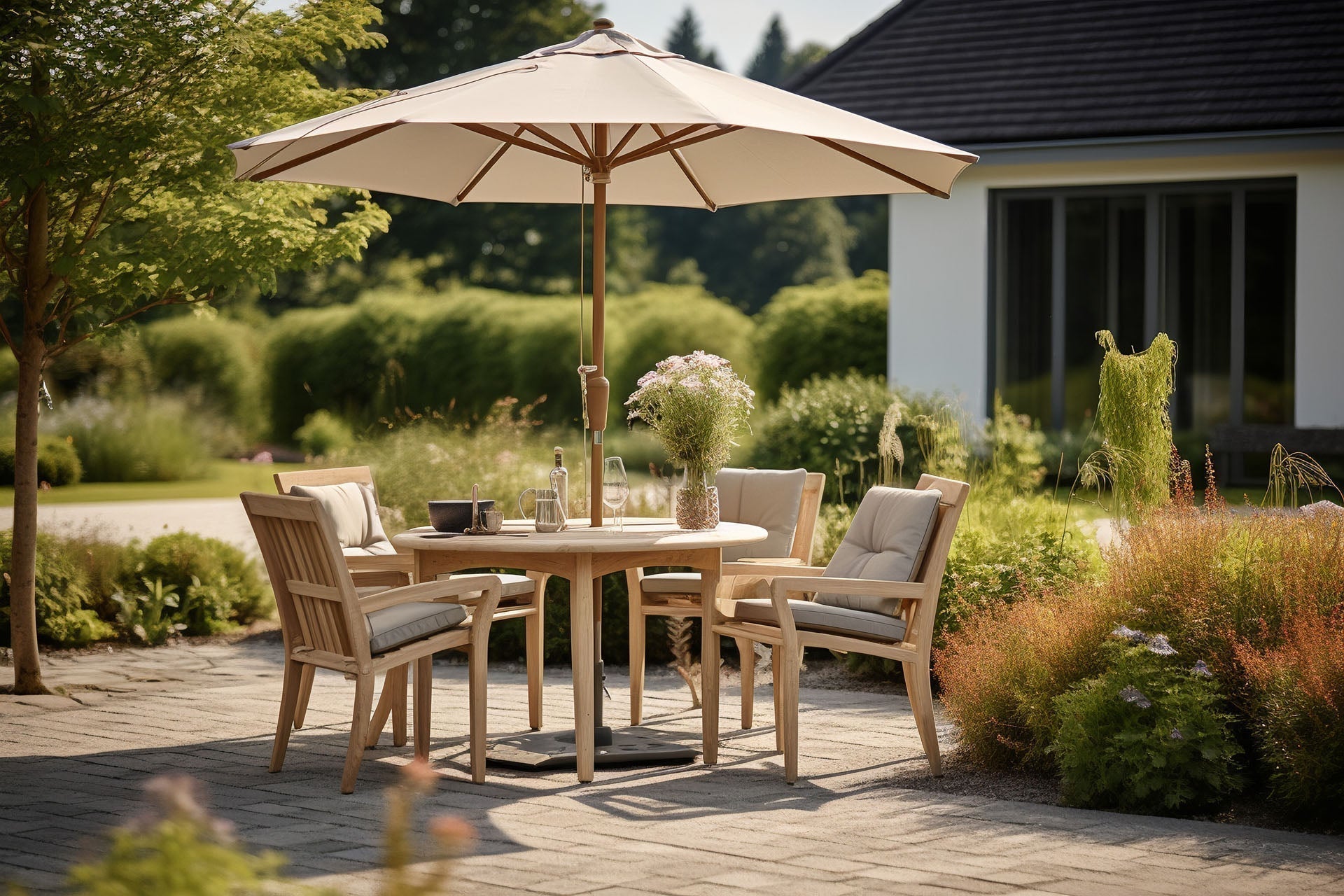
This is the bigger choice than people realise. A traditional centre-pole parasol slots through the hole in your garden table, which works brilliantly if you've got a table designed for it. The pole stays out of the way and the table itself adds stability.
A cantilever parasol, sometimes called a side-post parasol, has the pole offset to one side and the canopy hangs out over the seating area. You don't lose any space under the canopy to a pole, which makes it nicer for lounging or for situations where you don't have a table at all. The trade-off is that cantilever models need a heavy base, because all the weight is on one side. Most of ours come with a fan-style base that you fill with sand or water yourself, which keeps shipping sensible and gives you proper stability once it's full.
Canopy fabric
Polyester is the standard, and a 160g polyester canopy with a UV coating is what you'll find on most of our cantilever models. It holds colour well, sheds light rain, and resists mildew if you store it dry. You can spend more on acrylic, which fades less over years of use, but for most people polyester is fine if you bring it in or cover it during winter.
Whatever the fabric, look for a UV protection rating. Cheap parasols often skip this, and you can tell because they fade in a single summer.
The frame
Aluminium is the most common frame material and it's a good choice. It's light, doesn't rust, and powder-coated aluminium frames look smart for years. Steel is stronger but heavier and can rust if the coating chips. Wooden frames, usually eucalyptus or hardwood, look lovely on a more traditional patio but need a bit more upkeep.
The bits that matter day to day
A crank handle makes opening and closing the parasol painless. Without one, you're wrestling with a string pull, which is fine but gets tedious.
A tilt mechanism lets you angle the canopy as the sun moves. Worth having. The sun in the UK swings around quite a lot during a long afternoon, and a fixed canopy means you'll be shifting your chair every twenty minutes.
A wind vent at the top of the canopy lets air pass through instead of catching like a sail. Even on a mildly breezy day, a vented canopy is noticeably more stable.
LED lighting is a nice extra if you sit out in the evenings. A few of our cantilever models have integrated solar LEDs along the ribs, which means no cables and no faffing with extension leads from the house.
Getting it set up properly
Most of the work is in the base. A parasol that's not weighted properly is, frankly, a hazard. We've all seen one tip over in a gust and take a wine glass with it.
For a centre-pole parasol going through a table, you still want a proper base under the table, not the table alone holding it up. For a 3m parasol, you're looking at 25kg or so of base weight as a minimum. For a cantilever model, more like 60 to 80kg, sometimes more for the bigger ones. That sounds excessive until the first time the wind picks up and you're glad of it.
Fillable bases that take sand or water are a sensible option. Sand is heavier per litre and doesn't leak if the base cracks, but it's messier to fill. Water is easier but you'll want to drain it before winter unless you fancy a frozen lump of plastic in spring.
Set the parasol up on a level surface. A wobbly base on uneven paving is asking for trouble. If you're on decking, you can get base plates that screw down for extra security.
Once it's up, give the canopy a proper open. Don't yank it. The crank should turn smoothly, and the locking mechanism should click in cleanly. If anything feels stiff or notchy, sort it out before you walk away. Forcing things tends to break them.
Using it without ruining it
A few habits that make a real difference:
Close the canopy when you're not actively using it. Even on a still day, an open parasol catches more sun and wind than a closed one, and that's wear you don't need.
Watch the weather. If the forecast says gusts above 25mph, take the canopy down. We've had customers lose parasols to surprise gusts and it's never worth the gamble. Most cantilever models come with a waterproof cover, so once you've collapsed the canopy, slip the cover on and you're sorted.
Don't leave a wet parasol folded up for days. Mildew gets in fast. If it's been raining, open it up to dry the next sunny morning before storing.
Use the tilt function rather than dragging the whole base around. The base is heavy on purpose, and shifting it across paving slabs scratches them up.
Looking after it through the year
A parasol that gets a bit of attention will easily last five or six summers. One that doesn't, you'll be replacing in two.
Cleaning the canopy. Brush off loose debris regularly. Bird droppings need dealing with quickly because they discolour fabric. For a proper clean, lukewarm water with a small amount of mild washing-up liquid does the job. Sponge it on, rinse it off, let it dry fully open. Don't put it in the washing machine, even if it's removable. The seams won't survive.
The frame. Wipe down aluminium frames a couple of times a season. If you've got a steel frame and you spot any rust starting, deal with it early with a rust remover and touch-up paint. For wooden frames, a coat of teak oil or similar each spring keeps the wood from drying out and cracking.
The mechanism. A drop of light oil on the crank and tilt joints once a year stops them seizing. Sounds fussy but takes thirty seconds.
Winter storage. This is the big one. Don't leave a parasol standing through a UK winter. Even with a cover, the constant wet and the wind are punishing. Take it down, give it a clean, dry it fully, and store it indoors. A garage, shed, or even a corner of a utility room works. The base can usually stay outside, especially if you've drained any water from it.
Common problems and what to do about them
The canopy won't open all the way. Usually a fabric snag or something caught in the rib mechanism. Close it fully, check for obstructions, then try again slowly. If a rib has bent, you can sometimes straighten it carefully with pliers, but a properly broken rib generally means the parasol is done.
The whole thing keeps tipping or feeling unsteady. Almost always a base issue. Either it's not heavy enough, or the parasol's pole isn't seated properly in the base. Check both before you blame the parasol.
Water pooling on top of the canopy after rain. The canopy isn't taut enough, or the central rib hasn't extended fully. A pool of water can be surprisingly heavy and will damage the fabric over time. Push up gently from underneath to drain it, then check the mechanism.
Faded canopy. This is largely a fabric quality issue, and once it's faded there's no real fix. Worth replacing the canopy alone if the frame's still good. Some manufacturers sell replacement canopies, though it's not always straightforward to find one that fits.
A few quick FAQs
How heavy should the base actually be? For a 2.5m centre-pole parasol, around 25kg is the minimum. For a 3m cantilever, 60kg and up. Bigger canopies need proportionally heavier bases. When in doubt, go heavier.
Can I leave my parasol up all summer? You can leave it up between uses, but close the canopy when not in use and bring it in for any rough weather. Leaving it open and unattended is what kills parasols.
What about winter? Take it down, store it inside if you can. Even the most weatherproof parasol isn't designed to sit through a wet British winter without consequences.
Do I need a separate base? If you're buying a cantilever, almost always yes. Some come with bases included, but most don't, because shipping a 60kg base is expensive. Check the listing carefully. For our cantilever range, the base is sold separately and you fill it yourself with sand or water once it's in position.
Final thoughts
A parasol isn't a complicated bit of kit, but the difference between a good buying decision and a regrettable one comes down to a few details. Get the size right for your space. Spend a bit more on a proper base. Pick a model with a tilt and a crank if you can stretch to it. And actually look after it once you've got it.
If you're starting from scratch, our garden parasol collection covers most use cases, from compact bistro setups to 3m cantilevers with LED lighting and rain covers included. Free delivery on all orders to UK mainland (excluding Northern Ireland), most arriving in 3 to 5 working days, no hidden fees.
Any questions about a specific model, drop us a line. Happy to talk through what'll work for your garden.