A few years ago, a stainless steel litter tray was a niche buy. Now they're everywhere, and the question we get asked most is simple: are they actually worth the extra money?
For most homes, yes. But not for every cat or every situation. Here's how the two compare, round by round.
Round one: smell
Plastic is slightly porous. Every scoop also leaves fine scratches in the surface, and over months those scratches hold on to odour. That's why an old plastic tray can still smell after a thorough wash.
Stainless steel has a hard, non-porous surface that doesn't scratch as easily, so smells rinse away rather than soaking in.
Winner: stainless steel. One caveat: the tray is only part of the picture. How often you scoop, the litter you use and airflow in the room make a bigger difference than the material.
Round two: cleaning
Both clean up with hot water and a mild washing-up liquid. Avoid strong disinfectants unless they're labelled pet safe. Also skip chlorine bleach on steel, since it can mark the surface.
The difference shows up over time. A steel tray stays smooth, so a quick rinse and wipe usually does the job. A plastic tray gets harder to clean properly as it wears.
Winner: stainless steel.
Round three: lifespan
Plenty of owners replace plastic trays every year or so, once they start to smell, stain or crack at the corners. A steel tray should last for years. It can dent if it's dropped hard, but it won't wear out in the same way.
Winner: stainless steel.
Round four: price
A basic plastic tray can cost less than a takeaway coffee on the high street. Steel costs more upfront. Our high-sided steel trays start from around £29, and larger enclosed models cost more.
Spread over a few years, though, one steel tray often works out similar to a run of plastic ones.
Result: a draw, depending on how long you keep it.
Round five: noise
This is steel's weak spot. Scooping on metal makes a scraping sound, and kicked litter sounds louder against steel sides. Most cats don't mind, but a nervous cat may notice the new sounds at first. A deeper layer of litter helps soften the noise.
Winner: plastic.
Round six: design choice
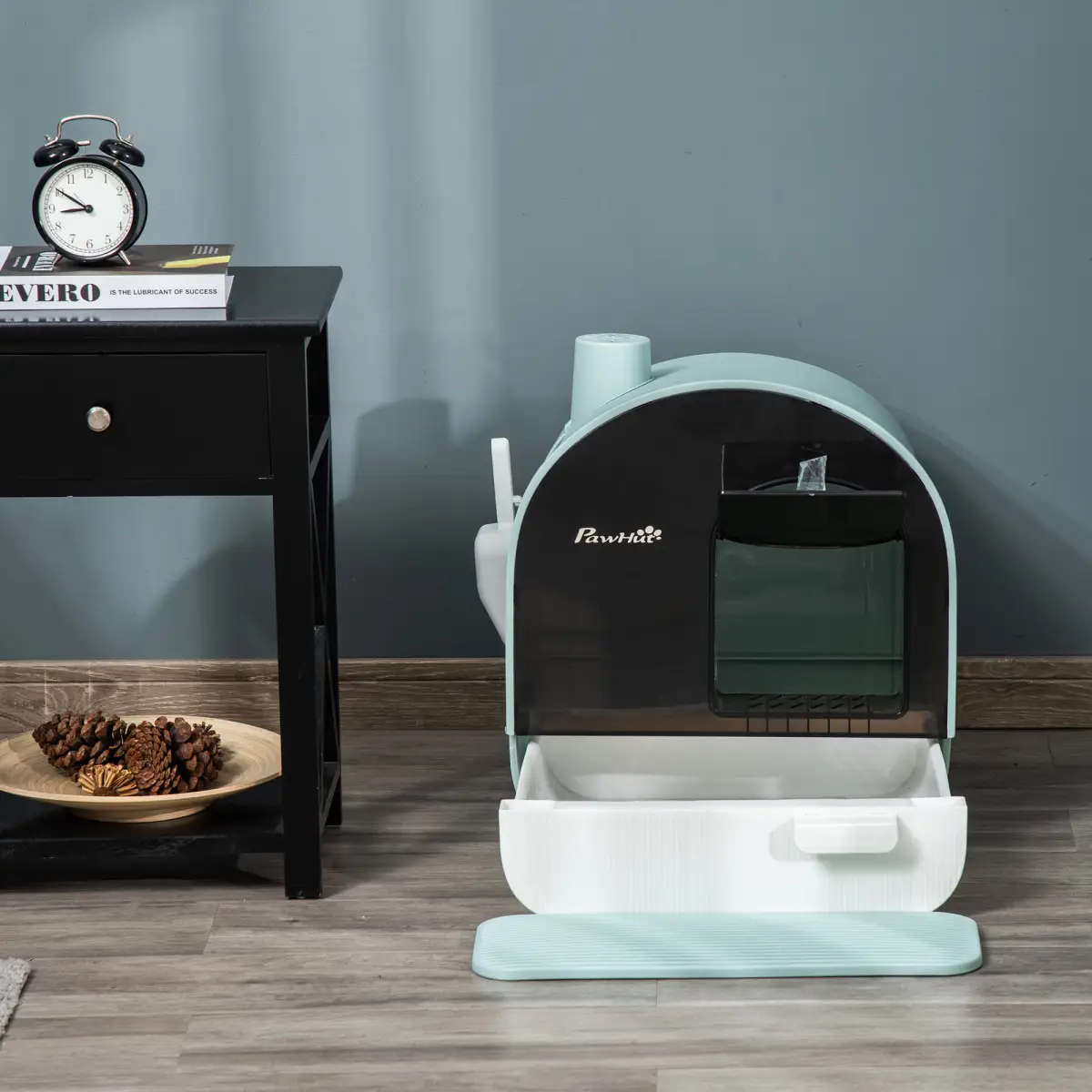
Plastic still offers the widest range of shapes, from top-entry boxes to compact kitten boxes with flap doors. Steel has caught up quickly, though. You'll now find high-sided, hooded, fully enclosed and extra-large steel designs, often with a matching scoop.
Result: close to a draw, with plastic just ahead for kitten sizes.
So which suits your home?
A new kitten. Low sides matter more than material, since little legs need an easy step in. A small plastic box with a low entry is fine to start with, and you can upgrade once they're grown.
A big cat or an enthusiastic digger. An XXL high-sided steel tray is hard to beat. A tray about one and a half times your cat's body length gives them room to turn and dig, and high walls keep the litter where it belongs.
More than one cat. Trays in multi-cat homes get heavy use, so durability counts, and steel makes sense. The usual guide is one tray per cat plus one spare. Our post on how many litter trays a multi-cat household needs goes into more detail.
A small flat. An enclosed steel box helps contain smell in a small space.
An older cat. As with kittens, low entry matters most. Pick whichever material comes with sides your cat can step over comfortably.
Switching trays without upsetting your cat
Cats can be fussy about change. Put the new tray next to the old one, in the same spot, with the same litter. Once your cat is using the new one reliably, take the old one away.
If your cat stops using the tray altogether, or seems to strain or visit more often than usual, speak to your vet. Those changes can have causes that have nothing to do with the tray itself.
The verdict
Stainless steel wins on smell, cleaning and lifespan. Plastic wins on noise and upfront price. If your budget allows, steel is the better long-term choice for most adult cats. If it doesn't, a plastic tray that's replaced regularly still does the job.
For more on choosing the right style, see how to pick a litter tray your cat will actually use, or browse our cat litter trays.
Delivery and returns
Delivery is free on every order to UK mainland addresses, and orders arrive within 3 to 5 working days. There are no hidden fees, so the price at checkout is the price you pay. If you change your mind, you're welcome to send your order back, though return postage on no-fault or change-of-mind returns is paid by the customer. If anything arrives faulty or damaged, get in touch and we'll put it right.