Nobody buys a litter tray with much enthusiasm. It's a grudge purchase. You want the cheapest thing that stops the smell, and you want to think about it as little as possible.
The trouble is that getting it wrong costs you far more than the tray did. A cat that doesn't like its toilet doesn't file a complaint. It just goes somewhere else, and that somewhere is usually your rug, your bath mat or the corner behind the sofa. Once that habit starts it can take weeks to undo.
So it's worth ten minutes of thought. Here's how to work through it without the guesswork.
Start with the size, not the style
This is the one people get wrong most often, and it's the easiest to fix.
The rough rule is that the tray should be about one and a half times the length of your cat, measured nose to the base of the tail. A cat needs room to step in, turn round, dig, do its business, cover up and get out again without its back end hanging over the edge.
Most trays sold in supermarkets are too small for an adult cat. They're sized for kittens, or for what fits neatly on a shop shelf. If your cat perches on the rim rather than standing inside, or scrapes at the wall next to the tray instead of the litter, the tray is too small.
Go bigger than you think. Nobody has ever complained that their cat's litter tray was too roomy.
Then decide: open, hooded or top entry?
This is the real choice, and it comes down to who has the bigger problem, you or the cat.
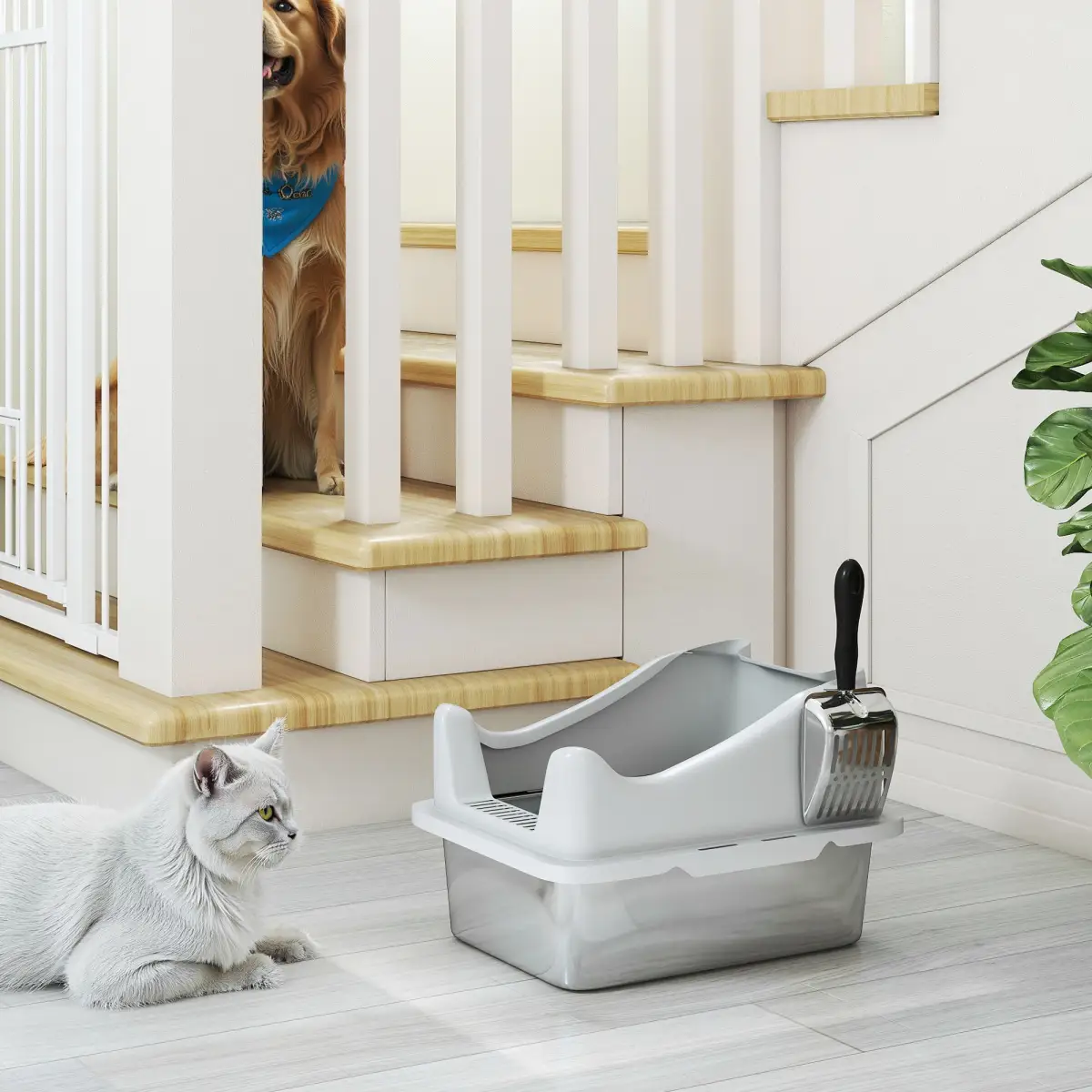
Open trays with high sides are the safest bet if you're not sure. Cats can see what's coming, which matters to them more than we tend to realise. The high sides deal with the main downside of an open tray, which is litter and spray going over the edge. A vigorous digger can fling litter a surprising distance from a shallow pan.
The Cat Litter range includes a few of these, including the PawHut Stainless Steel Litter Box with Scoop, which is a high sided open tray. Good starting point for most households.
Hooded trays put a lid over the top. The benefits are obvious: less mess flying out, less smell escaping into the room, and you don't have to look at it. The PawHut Cat Litter Box with lid and scoop in grey does this job, as does the enclosed stainless steel version in dark grey.
The catch is that hoods concentrate odour inside, which is fine for you and less fine for the cat that has to walk into it. Some cats don't mind at all. Some refuse point blank. If yours is nervous, or if you have more than one cat and there's any tension between them, a hood can feel like a dead end with no escape route.
Top entry trays have a hole in the lid and the cat drops in from above. The PawHut tray with a front entrance and top exit takes this idea and softens it, so the cat has two ways in and out rather than one. These are excellent for litter scatter, because most of it falls off the paws on the way out and stays on the lid. They're less good for kittens, older cats with stiff joints, and anything overweight.
Steel or plastic?
Most of the PawHut litter trays we stock are stainless steel, and there's a reason that's become popular.
Plastic is porous. Over months and years it develops tiny scratches from claws and from scooping, and those scratches hold onto urine. This is why an old plastic tray can smell even straight after cleaning. There's nothing you can do about it except replace the tray, which people usually do every year or two without ever quite working out why.
Steel doesn't do this. It doesn't scratch in the same way, it doesn't stain, and it doesn't absorb anything. You can scrub it properly, or pour boiling water over it, without worrying about damaging the surface. It also won't warp or go brittle.
The trade-offs are honest ones. Steel costs more up front. It's noisier when a cat scratches at it, which bothers a small number of cats. And it's colder to the touch, though litter depth solves that.
If you're replacing a plastic tray for the third time, steel usually works out cheaper over five years.
Practical bits people forget
Buy one more tray than you have cats. The standard advice is one per cat plus a spare, in different parts of the house. Cats guard resources, and a single tray in a multi cat home is a common cause of accidents.
Get one with a scoop included. Most of the PawHut trays come with one, which saves a separate purchase and means the scoop actually fits the tray.
Think about where it goes. Not next to the food bowls, not in a busy corridor, not next to the washing machine. Somewhere quiet with a clear line of sight to the door works best.
Depth of litter matters. Around 5cm to 7cm is usually right. Too shallow and the cat can't dig. Too deep and you're wasting litter.
A quick way to decide
If you have one confident adult cat and don't mind a bit of sweeping, get a high sided open steel tray.
If smell in the room is your main issue and your cat is relaxed, get a hooded or enclosed one.
If litter tracking across the floor drives you mad and your cat is young and agile, get a top entry.
If you've got multiple cats, mix it up. Give them options and see what they choose, because they will tell you clearly enough.
You can see the full range on our Cat Litter page. It's worth a look at Cat Trees and Cat Houses too if you're setting up for a new arrival, and the wider Pet Supplies section covers carriers, gates and playpens.
Every order at Bossy Cat comes with free delivery to UK mainland addresses, excluding Northern Ireland. Orders are dispatched within 3 to 5 working days, and there are no hidden fees at checkout. If you change your mind and want to return an item, that's fine, though the return postage cost is covered by you. Anything faulty is a different matter and we'll sort it out.