In a lot of UK homes, the hallway is barely wider than the front door. Add a radiator, a coat hook and four people's shoes, and getting in with the shopping turns into an obstacle course.
A slim shoe cabinet is often the fix. But "slim" means different things to different makers, and a cabinet that's a few centimetres too deep can make a narrow hall feel worse, not better. So this guide starts with a tape measure, not a product page.
Measurement 1: How much floor can you give up?
Measure the width of your hallway at the spot where the cabinet will go. Then take off the depth of the cabinet you're looking at.
What's left is your walkway. As a rough guide, try to keep around 90cm clear so two people can pass and you can carry a bag or a buggy through. If your hall is 100cm wide, that leaves you about 10cm to play with, which is too tight for most cabinets. At 115cm, a slim cabinet of around 20cm deep fits comfortably.
Don't forget the skirting board. It stops most cabinets sitting flush against the wall, so add a centimetre or two to the depth.
Measurement 2: What's in the way?
Stand in the hallway and look at the wall you want to use. Note down:
- Radiators. You can't put a cabinet in front of one, and you'll want a gap at the side for heat to get out.
- Door swing. Open every door that opens into the hall. A cabinet in the path of the front door or a room door won't work.
- Switches and sockets. A tall cabinet can easily cover a light switch.
- The meter cupboard. Many hallways hide the gas or electric meter low down. Keep it clear so it can be read.
This usually narrows things down to one or two spots, which makes choosing much easier.
Measurement 3: How many shoes, and what kind?
Count the pairs that actually live by the door, not every pair you own. Most households have a "daily" set of four to eight pairs per person that need to be close by. The rest can go in a bedroom.
Then think about the type of shoe. Trainers and flat shoes fit almost any cabinet. Heels need a little more height in each compartment. Walking boots and wellies are the tricky ones, as they won't fit into most flip-down drawers.
Now match the cabinet to the hallway
With your three measurements, the right style tends to pick itself.
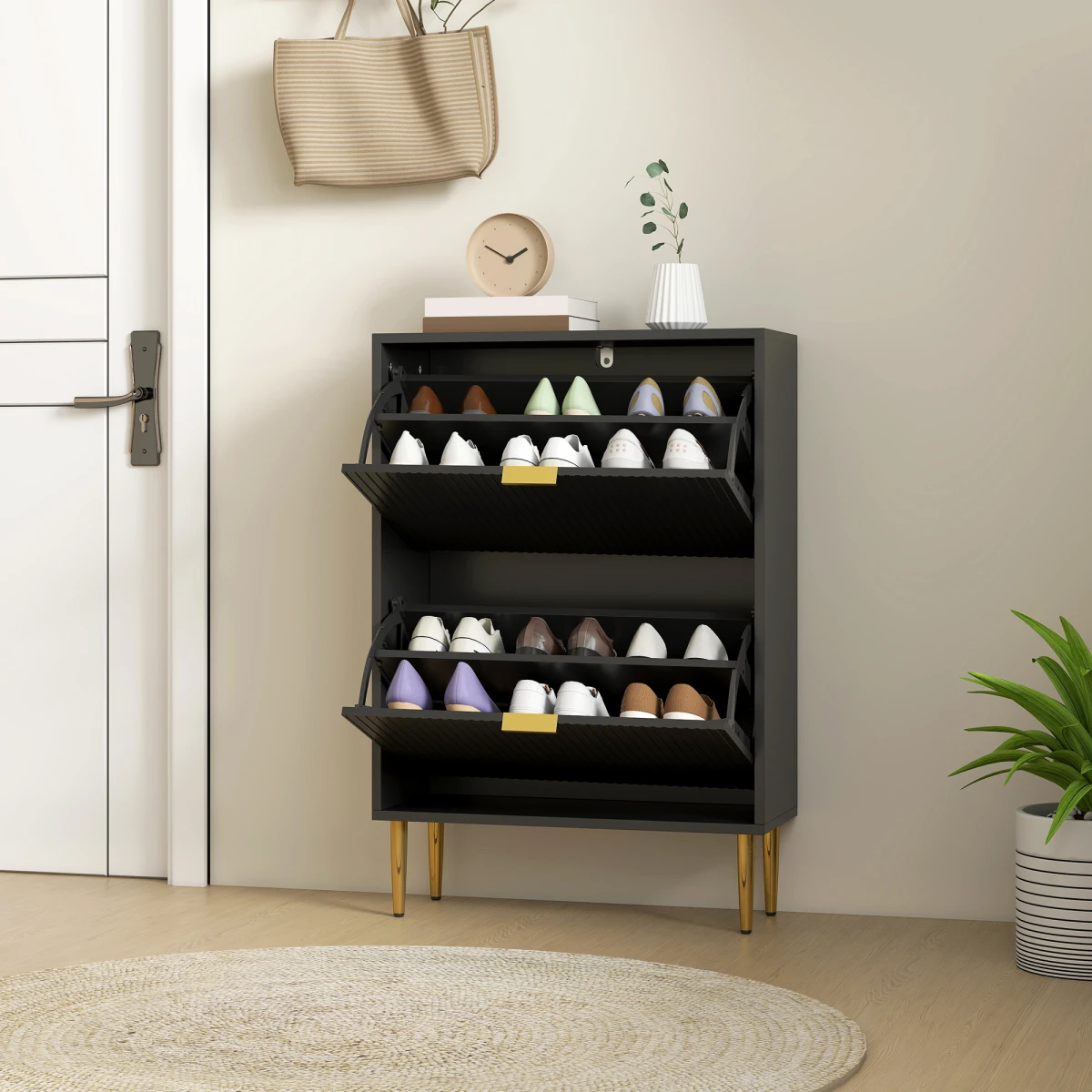
Very narrow hall (around 100 to 110cm wide): flip-down drawer cabinet. These are the slimmest design. Shoes sit at an angle in tilting drawers, so the cabinet can be under 25cm deep. Something like our narrow shoe cabinet with 4 flip drawers holds up to 16 pairs in a small footprint.
Average hall (110 to 130cm): slim cabinet with doors and shelves. These are deeper, usually 30cm or more, but shelves are adjustable, so boots and heels fit. A two-door shoe cabinet with adjustable shelves works well if you have the room.
Wider hall or porch: bench with shoe storage underneath. Somewhere to sit while you pull on boots makes a big difference, especially for children and older family members.
A mix of boots and trainers: use two pieces. A slim flip-drawer cabinet for everyday shoes, and a low open rack or tray in the porch or under the stairs for muddy boots.
Height and safety
Tall, slim cabinets are great for floor space but they can tip forward, particularly when the top drawers are open and full. Always fix tall cabinets to the wall with the fixings supplied, and do this before you load them. If you have young children who might climb or pull on drawers, it's essential.
A cabinet that's waist height or a little higher gives you a useful top surface for keys and post, without feeling like it towers over a small hall.
Keep it fresh
Shoes go into a cabinet damp in winter and that can get musty. A few simple habits help:
- Leave wet shoes on a mat or tray overnight before putting them away.
- Choose a cabinet with vents or gaps at the back if you can.
- Wipe out drawers every few months, especially after a wet spell.
A good barrier mat at the front door also stops a lot of the dirt and water reaching your shoes and floor in the first place.
Finishing the hallway
Once the shoes are sorted, the rest of a narrow hall is mostly about not adding more. A wall mirror makes the space feel wider, and a few hooks above the cabinet keep coats off the stairs. If your problem is more about post, keys and bags than shoes, our piece on console tables for the front door is worth a read.
You'll find flip-drawer, shelved and bench designs in our shoe storage range.
Delivery and returns
All orders come with free delivery to UK mainland addresses, usually within 3 to 5 working days, with no hidden fees. If you change your mind, you can send your order back, but return postage is paid by the customer. If something arrives faulty or damaged, contact us and we'll sort it out separately.