Every home has one. That spot just inside the front door where keys, post, sunglasses, a stray glove and a takeaway menu slowly accumulate on the floor, the radiator cover, or the bottom stair. It's not a storage problem exactly. It's that there's nowhere obvious to put anything down.
A console table fixes it, and it does so in about ten centimetres of depth. That's really the whole appeal. It's a slim, tall table designed to live flat against a wall, giving you a proper surface where there wasn't one, without eating into the space you need to actually walk through.
The one measurement that matters is depth
Most people measure the length of the wall and stop there. The number that actually decides whether a console table works is its depth, because that's what sticks out into the room.
Hallways are narrow, and you need enough clear space to walk past comfortably, get a pushchair or a suitcase through, and open the front door fully without it hitting the table. So measure the width of your hallway, subtract the depth of the table you're considering, and be honest about whether what's left is enough to move around in. If it's tight, go for a shallower table. A slim one that you can walk past easily will get used every day. A deeper one that you clip with your hip every time you come in will drive you mad by week two.
Height is more forgiving. Most sit somewhere around waist height, which is the natural place to drop keys and put a lamp, so you rarely need to think about it too hard.
What it's actually for depends on where you put it
Console tables do three quite different jobs, and knowing which one you're buying for changes what to look for.
By the front door, it's a landing zone. Here, storage matters most. Look for a table with a drawer, because a drawer is where the clutter goes when you want the surface to look tidy, and a hallway surface will not stay clear on its own. An open shelf underneath earns its place too, since it's the natural home for a basket of gloves or a pair of shoes. There's a wooden console with both a drawer and a lower shelf at around £43, which is the sensible starting point for exactly this job.
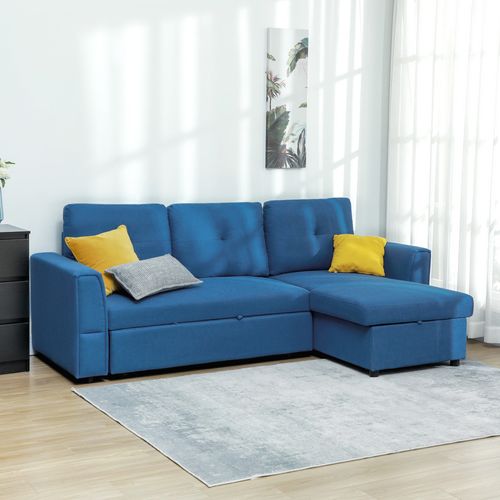
Behind a sofa, it's a space-filler and a surface. If your sofa floats in the middle of a room rather than sitting against a wall, the gap behind it is dead space that always looks a bit unfinished. Slide a console table in and suddenly it reads as deliberate. You get somewhere for a lamp, which solves the lighting problem in that part of the room at the same time. Here you want length rather than storage, and a table roughly two thirds the length of the sofa looks right.
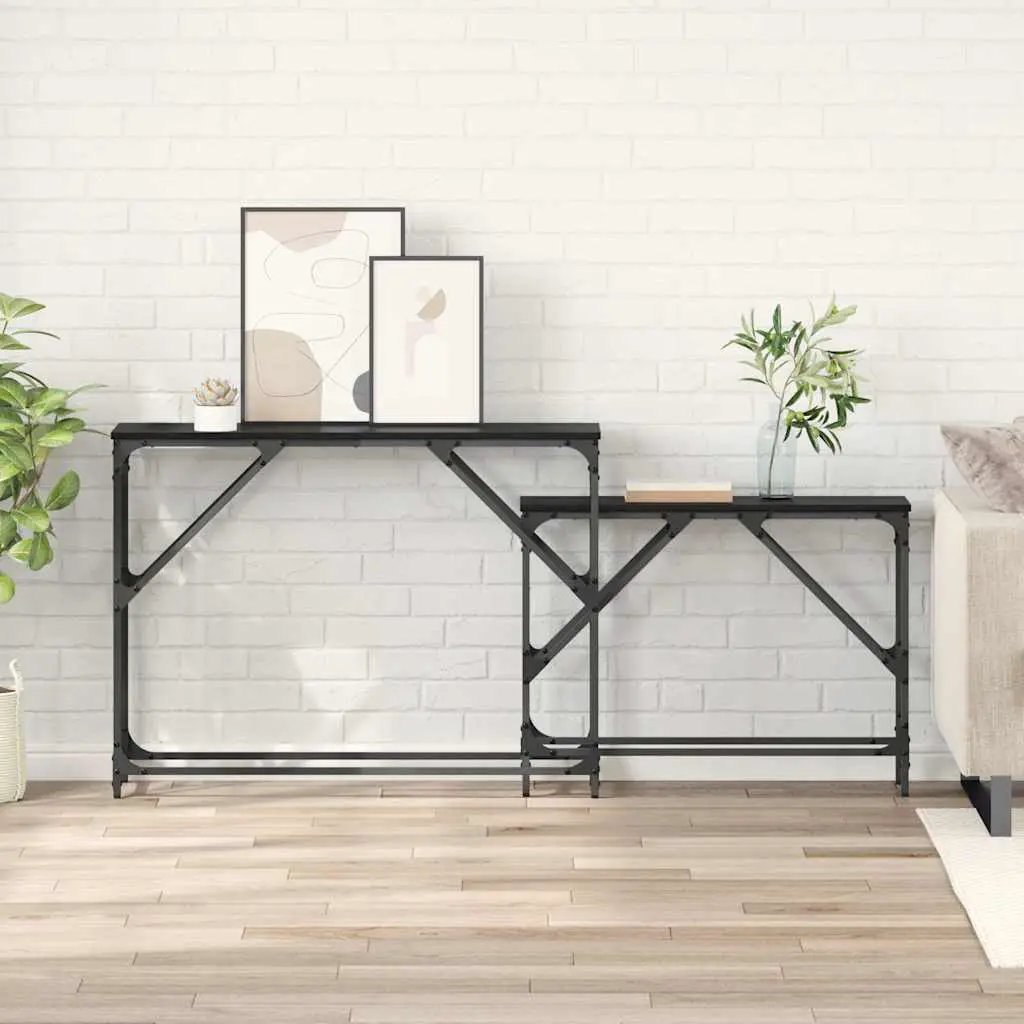
Against a bare wall, it's a display surface. This is the more decorative job. A narrow wall that's too small for a sideboard and too big to leave empty is exactly where a console shines. Storage matters less, looks matter more, and something like the modern sintered stone top design at around £102 or the industrial black metal frame at around £53 gives you a bit of character without any bulk.
Be honest about whether you want something else
This is the part most guides skip, and it's worth a minute of your time before you buy.
If your real problem is shoes, a console table won't solve it. You'll end up with shoes under the table, which is where they already are. What you actually want is proper shoe storage with a closed front.
If you need to store a lot of things and you've got the room, a sideboard gives you far more cupboard space for the same footprint of wall. Consoles are slim by design, which is their strength in a hallway and their weakness anywhere you need volume.
And if you just want a small surface next to a chair, that's a side table or a nest of tables, not a console. Consoles are long and low-slung against a wall, and one plonked beside an armchair looks odd.
Buy a console table when the constraint is depth and the need is a surface. That's the sweet spot, and nothing else does that job as neatly.
Materials, and what you're paying for
The range splits fairly cleanly, and the price difference is not arbitrary.
At the lower end you've got engineered wood and MDF with metal frames, from around £50. These are light, easy to move, perfectly sturdy for a lamp and a bowl of keys, and they look smart. A white MDF console with a wide drawer at around £65 does everything a hallway table needs to do.
Higher up you get solid wood, and that's where the money goes. A solid mango wood console with Nordic-style legs at around £213, or the handcrafted solid wood pieces at the top of the range, are heavier, more characterful and built to last decades rather than years. The grain varies from piece to piece because the timber is real, which is the point.
Neither is the right answer. If the table is going in a busy hallway that takes knocks and you might rearrange in two years, engineered wood is the sensible buy. If it's a piece you want to keep and it's on show, solid wood earns its cost.
The two things that finish it off
A console table on its own is a table. A console table with a mirror above it is a hallway.
The mirror does two jobs. It bounces light around a space that's usually dark and windowless, making a narrow hall feel considerably less like a corridor, and it gives you somewhere to check yourself on the way out. Add a lamp on the surface and you've turned the least loved part of the house into somewhere that actually looks like it was thought about.
You can browse the full console tables range, and it's worth a look at the mirrors and lamps while you're there to finish the look.
Every order comes with free delivery to UK mainland addresses, dispatch within 3 to 5 working days, and no hidden fees. If you change your mind, returns are welcome, though the return postage would be down to you in that case, while anything faulty or damaged is handled separately by the team.