Rabbits are far more active than most people expect. Give one enough room and you'll see it binky, which is that ridiculous mid-air twist they do when they're happy. Keep one in a box it can barely turn around in and you'll see none of that, because it can't.
That gap between what rabbits need and what people buy is the whole reason this guide exists. Choosing a hutch isn't really about picking a nice wooden box. It's about giving an animal that's built to run, dig and stand up on its back legs somewhere it can actually do those things. Get it right and rabbits are brilliant, characterful pets. Get it wrong and you end up with a bored, unhealthy animal that spends its life hunched in a corner.
Size is the thing that matters most
If you take one thing from this, take this. Almost every problem with rabbit housing comes back to space, and almost everyone underestimates how much is needed.
The test is simple. Your rabbit should be able to stand fully upright on its hind legs without its ears touching the roof, stretch right out on its side when it sleeps, and take a few proper hops from one end to the other. A hutch where it can only shuffle about is too small, however cosy it looks in the photo.
This is also why rabbit welfare people are so firm that a hutch on its own isn't enough. Think of the hutch as the bedroom and the run as the garden. Your rabbit needs both, and ideally it should be able to move between them whenever it likes rather than waiting for you to open a door. That's why so many of the better designs come as a hutch with an attached run, connected by a ramp, so the whole thing works as one living space.
Bigger breeds and pairs need noticeably more room again. If you keep two rabbits, which is generally kinder than keeping one alone, size up rather than hoping they'll manage. The 2-in-1 layouts with a double house and a separate run box, like the 259cm solid fir wood model at around £225, are built for exactly this. It's more money up front, but it's the difference between housing your rabbits and merely containing them.
One level or two?
Two-tier hutches are worth understanding, because they solve the space problem cleverly.
A double decker gives you two floors joined by a ramp, so you get roughly twice the living area from the same patch of ground. That matters a lot in a small garden. Rabbits take to the levels quickly, using the upper deck as a lookout and the lower one for pottering about, and the ramp itself gives them something to do. There are two-tier options across the range from around £88, including indoor versions with feeding troughs and slide-out trays.
Single-level hutches are simpler and lighter, and they suit a sheltered spot, an indoor setup, or a smaller pet like a guinea pig that doesn't climb the way a rabbit does. If you're short on floor space, go up. If you're short on nothing in particular, a good long single level with a run is perfectly happy.
Indoors or out?
The UK weather is the deciding factor here, and either can work as long as you buy properly for it.
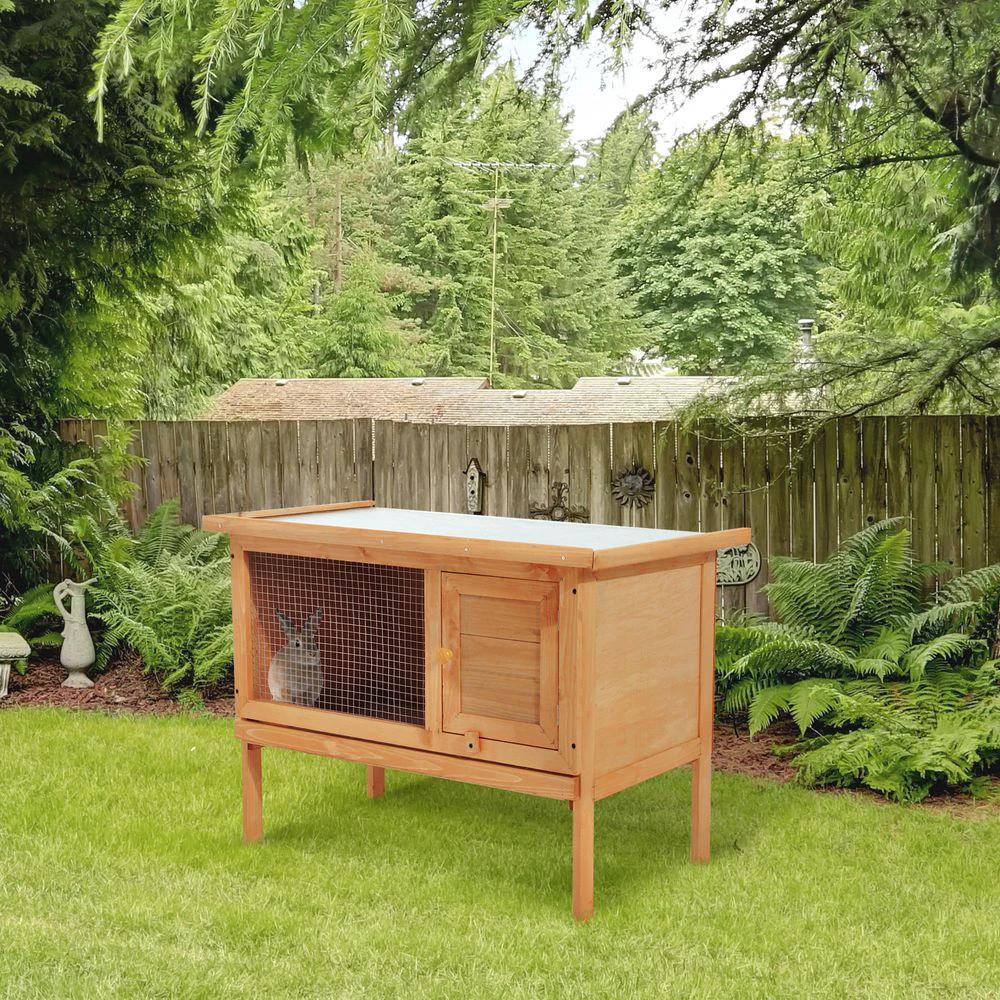
For outdoors, you want treated, water-resistant timber and a proper roof. A water-resistant asphalt roof is the thing to look for, since it sheds rain rather than slowly soaking it up, and an openable or hinged roof makes your life much easier at cleaning time. Elevated hutches, which sit up on legs, are the sensible choice for any garden that gets wet, because they keep the sleeping area off cold, damp ground and add a bit of distance from anything sniffing about. There's an elevated wooden hutch with an asphalt roof and a removable tray at around £56, which is a lot of hutch for the money.
For indoors, you're after something lighter and easier to keep clean, ideally with separable sections so you can shut off part of it when you need to. The indoor pet hutches with slide-out trays make the daily tidy quick, which is what keeps an indoor rabbit setup pleasant to live with rather than a chore you resent.
If you like the idea of a hutch you can wheel out onto the lawn on a nice day and back under shelter when it turns, there are models on wheels from around £92. Genuinely handy, and it means your rabbit gets a change of scene and fresh grass without you rebuilding anything.
Safety, because foxes are real
Any rabbit cage living outdoors needs to be secure. Foxes are in towns as much as the countryside, and a determined one will work at a weak catch all night.
Look for solid, lockable doors rather than simple turn-buttons, and proper galvanised or predator-proof mesh rather than flimsy chicken wire. Several of the hutches in the range specifically use predator-resistant wire on the run panels, which is the detail worth paying for. Then get into the habit of checking every catch is actually done up at dusk, because the best hardware in the world does nothing if the door is resting closed.
Cleaning is a daily job, so buy for it
Nobody warns you how much rabbits produce. You'll be cleaning this thing constantly, so the design of the cleaning access matters more than almost any other feature.
Slide-out trays are the single best thing to look for. Pull the tray, empty it, wipe it, slide it back, done in a couple of minutes. Without one you're on your knees reaching into a wooden box with a dustpan, and that's the point where people start cleaning less often than they should. Hinged or openable roofs and wide doors help too, letting you get right inside for a proper going over. Most hutches here have at least one of these features, and the good ones have all three.
A few final checks
Measure the spot before you order, since hutches are bigger in the flesh than they look on screen, and check the dimensions listed on the product page against your garden or your room. Expect flat-pack assembly with the fixings included, and set aside a bit longer for the two-tier and 2-in-1 models. A second pair of hands helps when you're lining up the roof panels.
You can browse the full rabbit hutches range, and it's worth a look at the pet playpens if you want to give your bunny extra run-around space, or the wider pet supplies section if you're setting up from scratch.
Every order comes with free delivery to UK mainland addresses, dispatch within 3 to 5 working days, and no hidden fees. If you change your mind, returns are welcome, though the return postage would be down to you in that case, while anything faulty or damaged is handled separately by the team.