Fabric wardrobes have a bit of an image problem, and most of it is deserved. Everyone knows someone whose portable wardrobe slowly leaned, sagged in the middle, and finally collapsed into a pile of clothes and bent poles one quiet Tuesday. It's practically a rite of passage in student halls.
Here's the thing though. That almost never happens because fabric wardrobes are useless. It happens because they were the wrong size, badly loaded, or put together in a hurry. Get those three things right and a wardrobe that costs less than a takeaway for four will happily do its job for years. So rather than talk you into or out of one, this is a guide to getting it right, built around the things that actually go wrong.
The problem: it sags in the middle
This is the classic failure, and it's almost always about weight and span. Fabric wardrobes hang your clothes from a thin rail supported at each end, and the longer that rail, the more it wants to bow under a full load of coats and jeans.
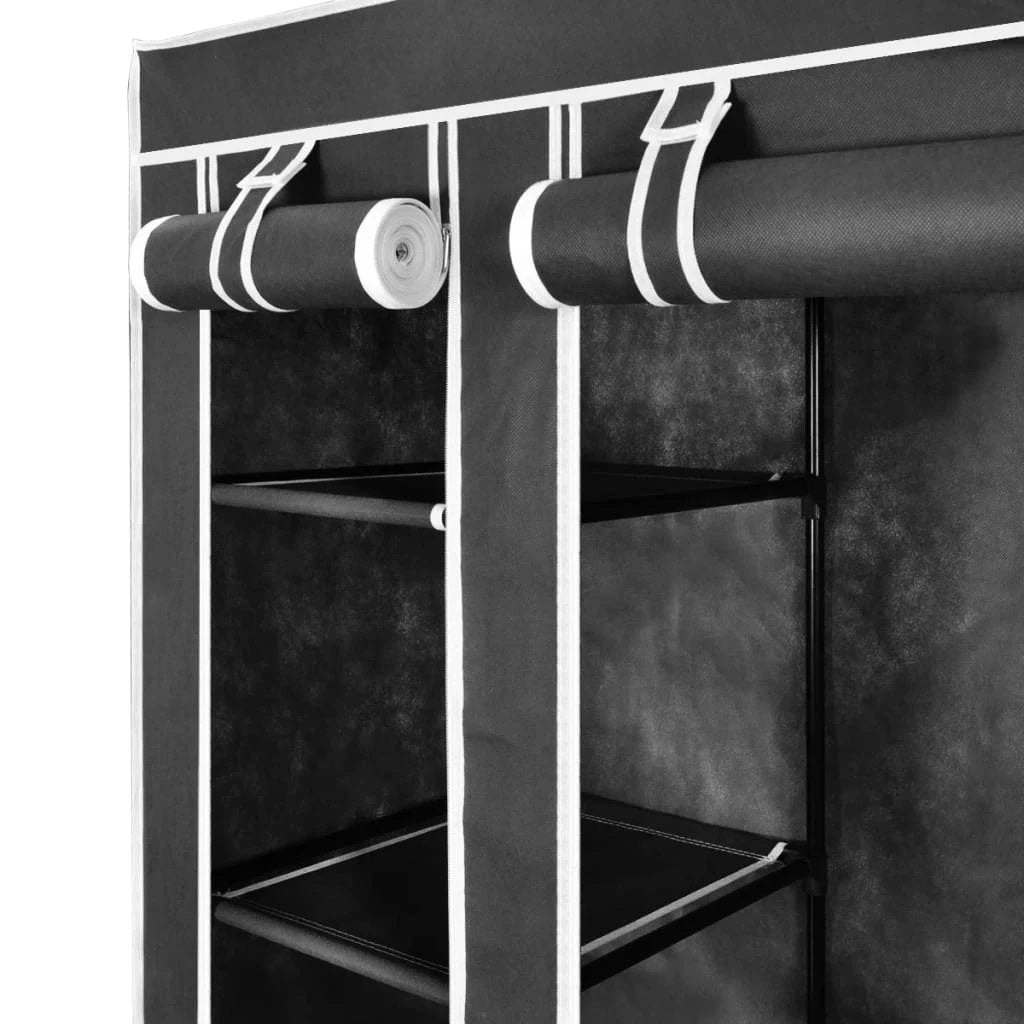
The fix is to be realistic about what you're hanging before you buy. If you've got a lot of heavy items, a wide single-rail wardrobe is asking for trouble. Look instead for a model with two shorter rails rather than one long one, since a shorter span sags far less. The HOMCOM wardrobes with two hanging rails, some with twelve shelves, spread the load much better than a single long pole ever will. And keep the genuinely heavy things, winter coats and the like, for a proper wooden wardrobe or a sturdy clothes rail if you have one. Fabric wardrobes are happiest with shirts, tops, folded knits and everyday clothes.
The problem: the whole thing leans
A fabric wardrobe that tilts is usually one that's been loaded unevenly, with everything crammed onto one side. Once it starts to lean, the frame joints take the strain at an angle and it gets worse from there.
The fix is simple and free. Load it evenly, left to right, and put heavier items low down rather than up on the top shelves. Weight down low keeps the centre of gravity where it should be. It also helps to stand it against a wall rather than out in the open, so it has something to lean back on rather than nothing. Give the frame joints a firm push together during assembly too, because a pole that's only half seated is where most leans begin.
The problem: it wobbles because you rushed the build
Fabric wardrobes are genuinely easy to put together, which is exactly why people get complacent. You slot the poles into their connectors, drape the cover over, zip it up, done in twenty minutes. The trouble is that "near enough" on each joint adds up to a wobbly frame.
The fix is to slow down for the frame stage. Make sure every pole is pushed fully home into its connector, not just resting in the hole, because that last centimetre on each joint is what gives the whole structure its rigidity. If your model came with any feet or floor caps, use them, since they stop the frame skating on hard floors. Five extra minutes here is the difference between something solid and something that shifts every time you open the door.
The problem: your clothes come out smelling musty
Fabric wardrobes trap still air, and still air plus any hint of damp is how you get that musty smell and, at worst, mildew spots on the cover. This is the one genuine health-of-your-clothes issue to take seriously.
The fix is airflow and dryness. Don't shove the wardrobe hard against an outside wall that gets cold and damp, and don't put clothes away even slightly damp, because that moisture has nowhere to go. In a room that's prone to condensation, a small tub of moisture absorber sat on the floor of the wardrobe works wonders. And unzip it to air every so often. The covers on these are there to keep dust off, which they do well when zipped, but they aren't airtight, so a bit of ventilation now and then keeps everything fresh.
The problem: it looks cheap in the corner
Let's be honest, a black nylon box is never going to be the prettiest thing in the room. But fabric wardrobes have come on a fair bit, and a little thought goes a long way.
The fix is choosing the finish and hiding the rest. The lighter grey and white covers, like the pinewood-framed vidaXL models, read far softer in a bedroom than stark black, which suits a spare room or a rented flat better. If it's going somewhere on show, tuck it into an alcove or beside a chest of drawers so it reads as part of a storage corner rather than a standalone eyesore. A folding design also means you can pack it away entirely when guests need the room, which is a trick solid furniture can't match.
So who should actually buy one?
The honest answer is anyone who needs enclosed clothes storage now, cheaply, and isn't pretending it's forever furniture. Students moving digs every year, since it folds flat into the car. Renters who'd rather not spend hundreds on something they'll leave behind. Anyone mid-renovation who needs their clothes kept dust-free for a few months. Or a spare room that only occasionally doubles as a bedroom.
Prices in the range start around £25, which tells you everything about what this is. It's a practical, temporary fix that does exactly what it promises as long as you don't ask it to be an oak wardrobe. Treat it as what it is and you'll get on with it fine.
You can browse the full fabric wardrobes range, and if you decide you'd rather invest in something permanent, the wider wardrobes section has solid and telescopic options too.
Every order comes with free delivery to UK mainland addresses, dispatch within 3 to 5 working days, and no hidden fees. The flat packaging is light and easy to carry upstairs. If you change your mind, returns are welcome, though the return postage would be down to you in that case, while anything faulty or damaged is handled separately by the team.