Most people's first go at fishkeeping ends the same sad way. A small bowl or tiny tank, a couple of fish bought on the same day, and a week later you're wondering why they aren't well. It almost never comes down to bad luck. It comes down to a few things nobody explains at the point of buying, and once you know them, keeping fish is genuinely easy and one of the more relaxing things you can have in a room.
So before you pick a tank, here's what actually matters. Get these right and your fish thrive. Get them wrong and no amount of nice gravel will save the day.
Counterintuitive but true: bigger is easier
The single most common beginner mistake is going as small as possible. It feels sensible. Less water, less cost, less to go wrong. In fact it's the opposite.
A larger volume of water is far more stable than a small one. Temperature stays steadier, and the waste your fish produce is diluted across more water, so conditions change slowly rather than swinging about and stressing the fish. A tiny tank, by contrast, can go from fine to dangerous in a day. This is why a 13L or 28L tank is a much kinder starting point than a 3L, even though the little one looks like the safer bet. If you're buying your very first tank, size up a bit. Your fish, and your patience, will thank you.
That doesn't make the nano tanks pointless, mind. The 3L kits are lovely for a single betta or a little shrimp setup, which are exactly the low-demand occupants that suit a small volume. They also make a good second tank once you've got the hang of it. Just don't make one your training ground for a community of fish.
The step everyone skips: cycling the tank
Here's the bit that separates fish that live from fish that don't, and it's the thing high street impulse buys never mention. A brand new tank is not ready for fish on day one. It needs to be cycled first.
In plain terms, a tank needs a colony of helpful bacteria living in the filter, and those bacteria are what quietly process the waste your fish make into something harmless. When the tank is new, that colony doesn't exist yet, so if you add fish straight away, the waste has nowhere to go and it poisons them. This is the real reason so many first fish don't make it.
The fix costs nothing but time. Set the tank up fully, fill it with dechlorinated water, get the filter and lights running, and then leave it running for a week or two before adding any fish at all. That waiting period lets the bacteria establish. When you do add fish, add just a few at first rather than a full house, so the filter can keep pace with the extra load. It's the least glamorous part of the hobby and by far the most important.
Buy the equipment as a package, not piecemeal
Fishkeeping has a lot of kit, and buying it separately is where beginners get overwhelmed and overspend. The tanks in the range are put together to spare you that.
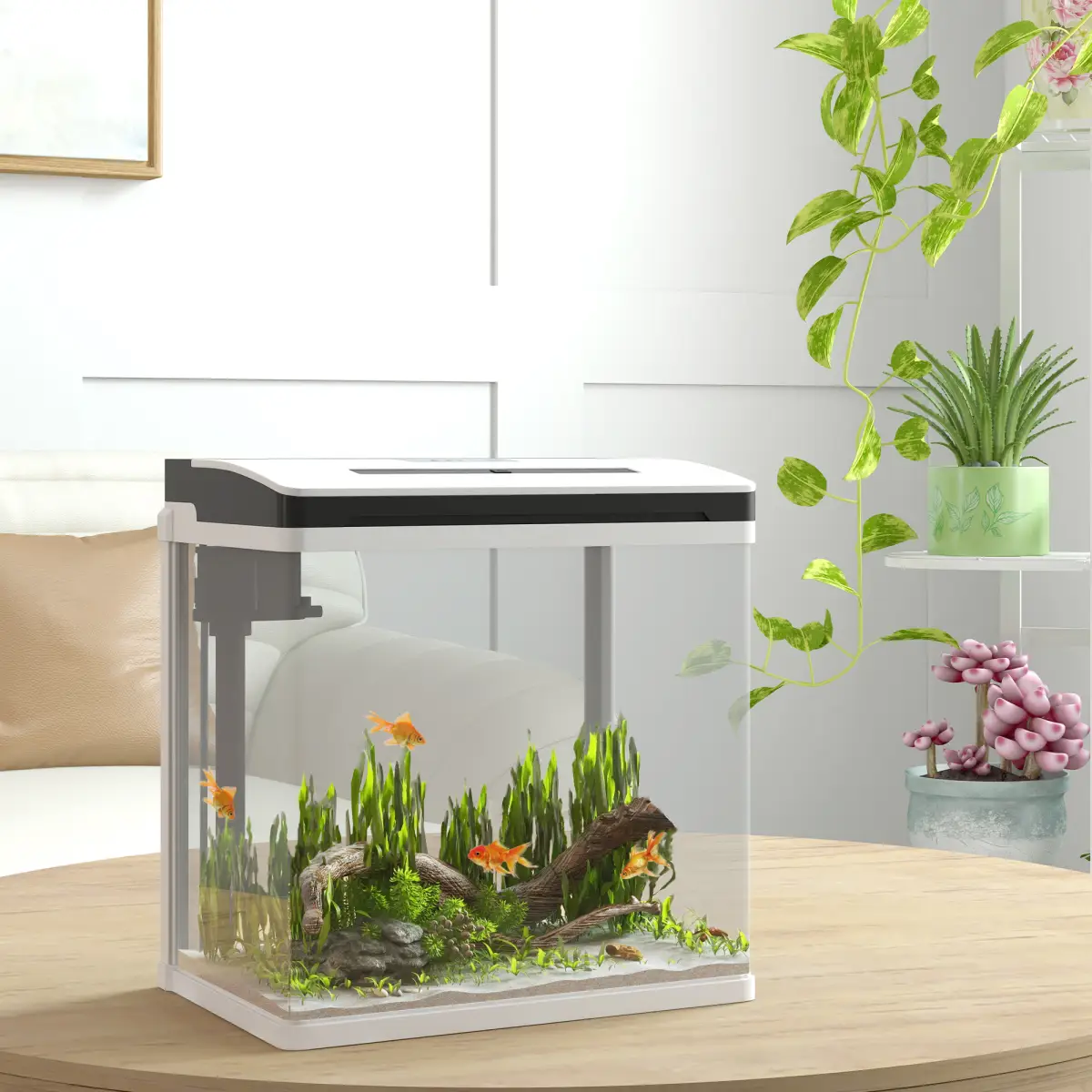
The smaller PawHut tanks generally arrive with a built-in filter, LED lighting and a water pump, so the essentials are in the box and you're not hunting round for compatible parts. The LED lighting is worth a mention on its own, since it shows off the fish and any live plants nicely while sipping electricity compared to the old-style tank lights. If you want to skip the shopping list entirely, the larger Monster Shop cabinet aquariums come as complete starter kits on several options, bundling the tank, the cabinet underneath and the gravel together. For a first-timer, a kit that arrives ready to assemble is far less daunting than a pile of separately bought components.
Think about where it's going before it's full
This is the practical point people forget until it's too late. Water is heavy. A filled aquarium weighs a great deal more than the empty tank you carried in, and once it's up and running you are not moving it without draining it first.
So decide on the spot before you set up. You want a solid, level surface out of direct sunlight, since sun on a tank fuels endless algae and lets the temperature drift. Keep it away from radiators and draughty doorways for the same reason. The cabinet aquariums solve the stand question by coming with their own base built to take the weight, but wherever it goes, that base needs to be firm and level. Assemble one of those units on a solid floor and get the cabinet square, because everything above it depends on that.
Not just for fish
One nice surprise in the range is that fishkeeping isn't the only option. There's a 28L glass turtle tank designed for terrapins and small turtles, and its standout feature is an easy-drain design that makes water changes far less of a chore, which matters because turtles are messier than fish. Do bear in mind that turtles have quite different needs around heating and basking spots, so read up on your particular species before setting up. But as a base to build a turtle home around, it's a tidy solution.
The quiet payoff
It's worth saying why people stick with this once they're past the first hurdle. A settled aquarium is one of the most calming things you can have in a living room or home office. Watching fish drift about genuinely lowers the pace of a room, and a well-lit tank makes a striking centrepiece, which is exactly what the cabinet units are built to be. Get the early steps right and that's what you're setting yourself up for.
You can browse the full aquariums range, from desk-friendly nano tanks to the large cabinet setups, and it's worth a look through the wider pet supplies section for the rest of your setup.
Every order comes with free delivery to UK mainland addresses, dispatch within 3 to 5 working days, and no hidden fees at checkout. If you change your mind or order the wrong one, returns are welcome, though the return postage would be down to you in that case, while anything faulty or damaged is handled separately by the team.