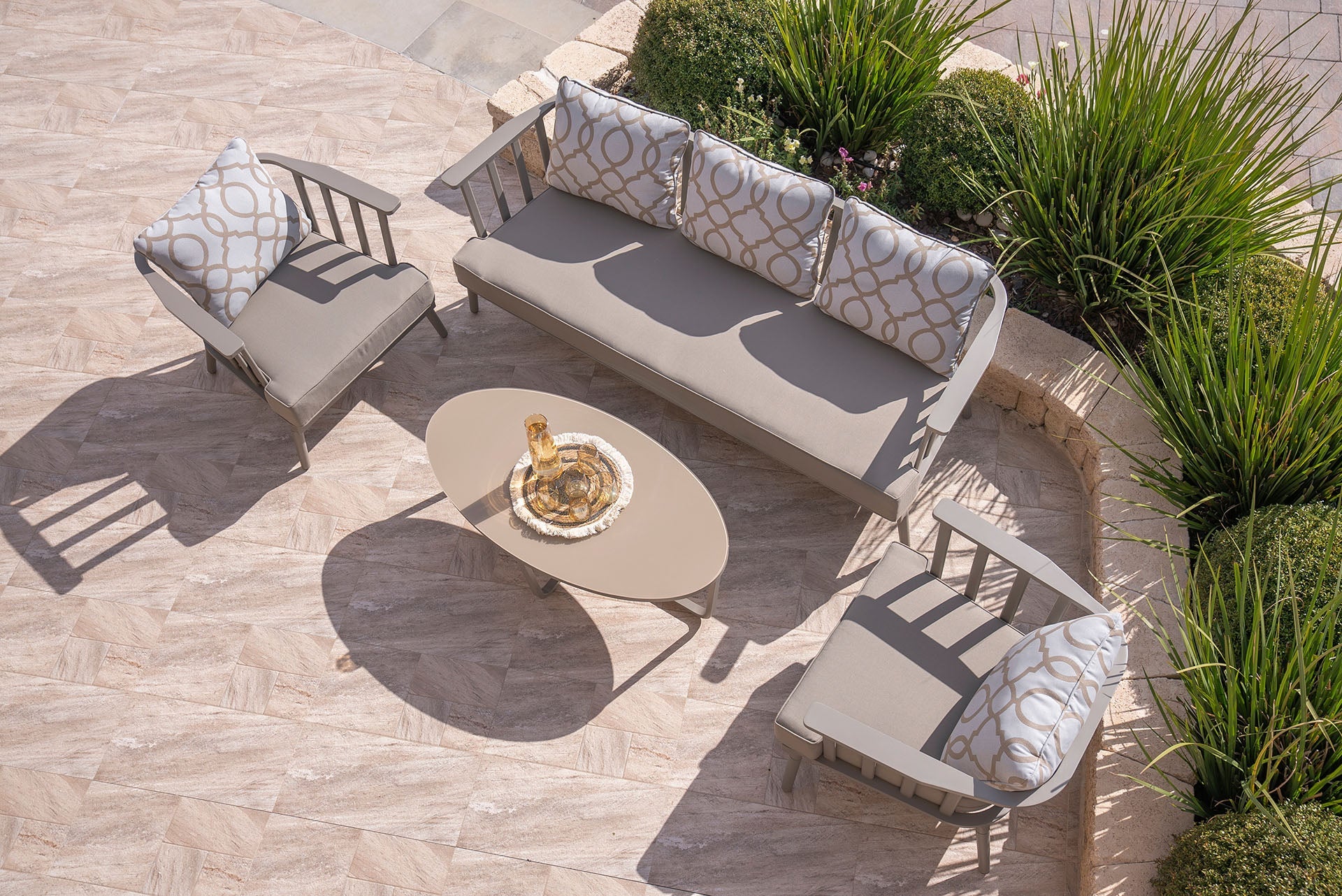
We get maybe a dozen properly good days a year, and there's a quiet panic about wasting them. You drag something out onto the patio, sit on it for twenty minutes, and end up shifting about because the angle's wrong, the sun's moved, or there's nowhere to put your tea down.
The thing is, "sun lounger" covers a lot of different chairs, and the best one for you depends almost entirely on what you do while you're on it. Sunbathing flat out is a different job from reading, which is different again from dozing with a drink. So rather than run through materials, here's a look at the types by how they're actually used. Find yourself in one of these and the choice more or less makes itself.
If you sunbathe properly
You want flat. Fully, properly flat, and you want to be able to lie face-down as well as face-up without your neck complaining.
This is where the face cavity models come into their own, and it's a feature people don't realise exists until they've had one. There's a padded hole in the headrest, the same idea as a massage table, so you can lie on your front with your face supported instead of turning your head sideways for an hour and regretting it later. Several in the range have it, including a portable beach chaise around £37 and a five-position lounger with a pillow around £40. Look for a backrest that drops all the way flat rather than stopping at a slight incline, and check the length suits your height, since a lounger you overhang isn't much use for tanning.
If you're out there to read
Reading is fiddly. You want to be reclined but not flat, propped enough to hold a book without straining your neck, and you want somewhere to put it down when you nod off.
Multi-position backrests are the thing here. Most of the range gives you four or five settings, and the ones with a longline five-level back let you find that slightly-up angle that actually works for reading rather than forcing you to choose between sitting up and lying down. If you're a serious reader, look for a model with a built-in side table, like the folding lounger with a five-level back and integrated table around £52. Having somewhere for your book, your glasses and your drink without reaching down to the paving is a small thing that makes the whole afternoon easier.
Some of the face-cavity loungers double as reading loungers too, since the hole works nicely for lying on your front with a book on the ground below. Bit of a niche pleasure, but people who do it swear by it.
If your back gives you grief
This is the case for zero gravity, and it's worth understanding what the name actually means because it sounds like marketing.
A zero gravity chair reclines into a position where your legs sit level with or slightly above your heart. That takes the pressure off your lower back and helps your circulation, which is why people with back trouble tend to find them noticeably more comfortable than a standard lounger. It's a genuinely different feel rather than just a deeper recline. There are folding zero gravity models from around £73, some with a built-in cup holder tray, and a two-pack with removable cushions around £98. If you find ordinary loungers leave you stiff, this is the one to try.
If you follow the sun round the garden
Gardens have a way of being sunny in the wrong corner at the wrong time, and if you're the sort who moves to chase it, weight matters more than anything.
Metal-framed loungers with textilene fabric are the light, easy ones to shift, and some come with built-in wheels and a carry handle so you can tilt and roll rather than lug. Folding designs are worth prioritising here too, since something that folds flat moves through a doorway and stores in a shed over winter without a fight. At the other end, wooden and rattan loungers are heavier and stay put in a breeze, which is the trade-off. Lovely to look at, but you'll site them once and leave them.
If shade matters more than sun
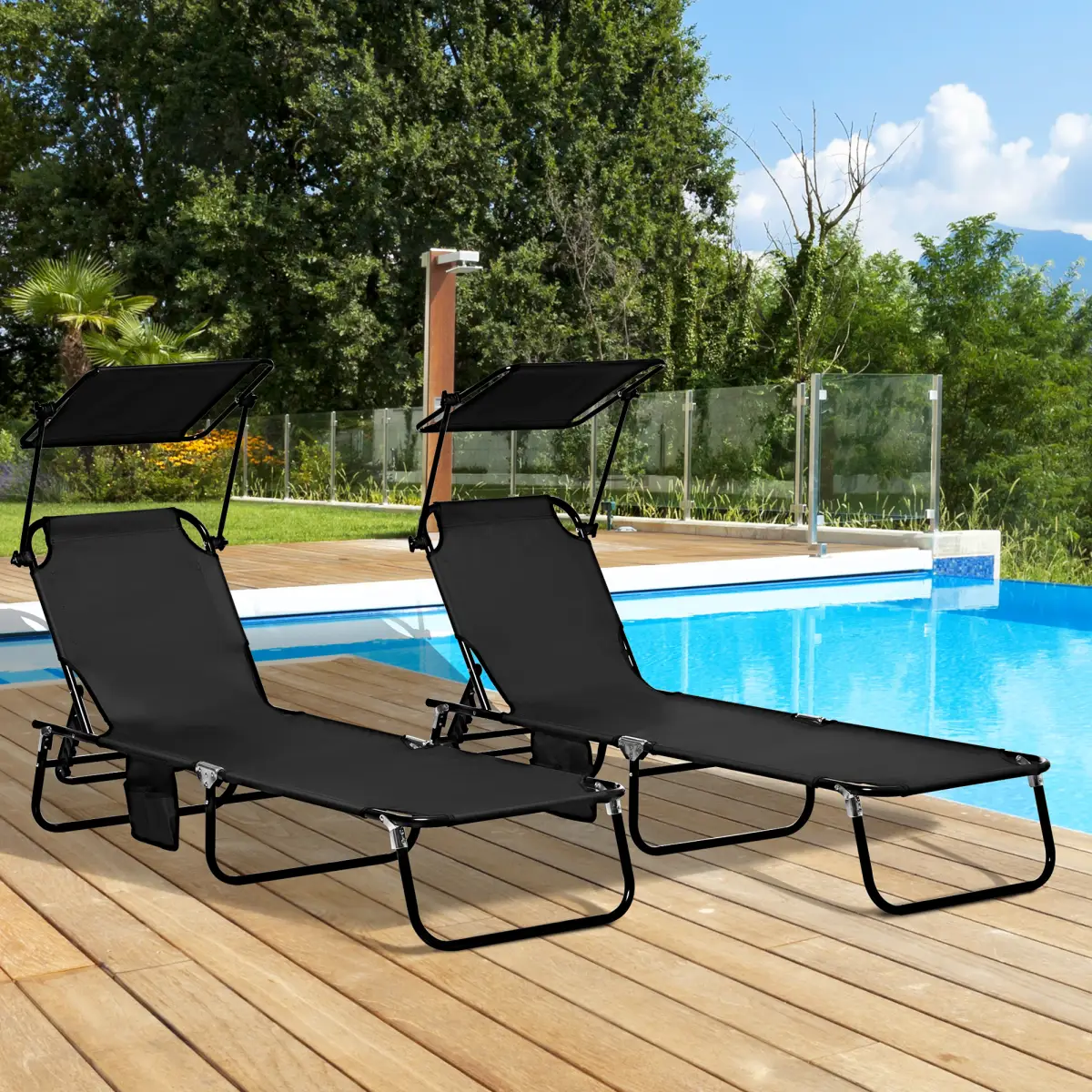
Not everyone wants to bake. If you burn easily, or you just prefer being outside without full sun on your face, look for a lounger with its own sunshade or canopy built in.
There are folding loungers with a compact sun shade awning from around £31, and two-packs with adjustable recline and a sunshade from around £64. The canopy usually tilts, so you can shield your head and shoulders while your legs stay in the sun. It saves you having to angle a parasol perfectly every time the sun moves, which anyone who has done the parasol shuffle will appreciate.
If it's for two of you
Buy them as a pair. Sets of two are all over the range and they work out considerably cheaper than buying twice, with a two-pack of cushioned recliners from around £78 and matching folding sets from around £50. They also look better, since two matching loungers read as a deliberate seating area rather than two chairs that happened to end up next to each other.
A couple of things to check whatever you choose
Weight capacity is listed on every product and typically sits between 100 and 150kg, so it's worth a glance. And think honestly about storage, because a lounger that folds flat is the one that survives winter in decent condition. Frames here are weather-resistant, but cushions and fabric last far longer if they come indoors when the weather turns, and a cover over the frame does the rest.
You can browse the full sun loungers range to find the one that matches how you like to relax, and it's worth pairing it with a parasol for shade or looking through the garden furniture section if you're setting up the whole space.
Every order comes with free delivery to UK mainland addresses, dispatch within 3 to 5 working days, and no hidden fees. If you change your mind or order the wrong one, returns are welcome, though the return postage would be down to you in that case, while anything faulty or damaged is handled separately by the team.