Most people measure a recliner for width, because that's the number on the front of the listing. In a small room, it's rarely the width that causes trouble. It's how far the chair stretches out when you lean back, and whether there's anything left to walk past once it has.
So before picking a small recliner chair, it helps to know which measurement actually matters in your room. Here's how to work it out, using real figures from chairs in our manual recliners range.
Depth catches people out, not width
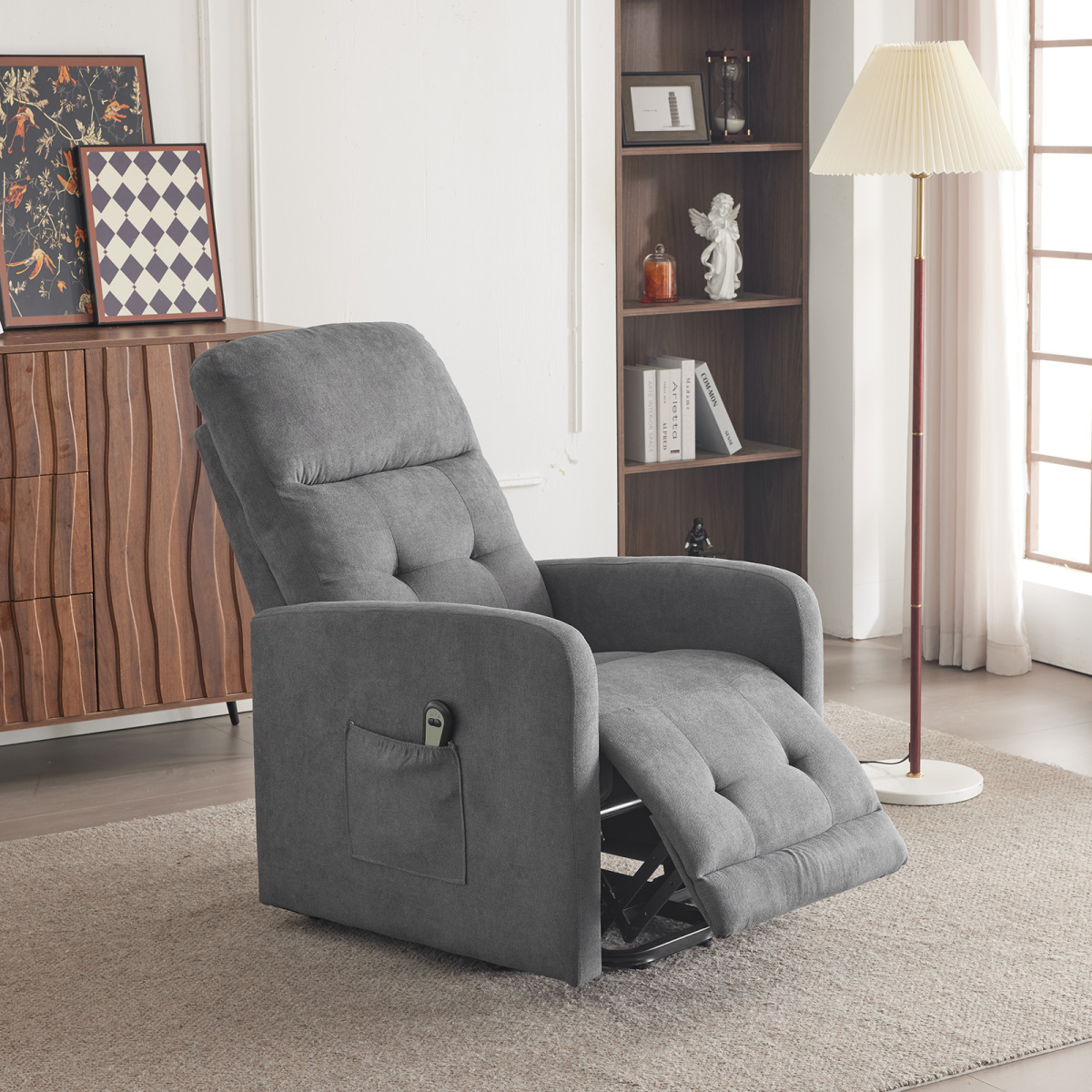
A recliner changes shape. Upright, it takes about the same floor as any armchair. Lean back and the footrest swings out, the back drops and the whole thing gets longer.
Take the HOMCOM velvet swivel recliner. At 68cm wide, it's one of the narrowest chairs we sell. Upright it's 90cm deep. Fully reclined, that grows to 149cm. That's an extra 59cm of floor you need in front of it.
Now compare the HOMCOM compact PU leather recliner. It's wider at 80cm, but only 79cm deep upright and 122cm when reclined. In a narrow room where the chair faces across the space, the "wider" chair might be the better fit.
Here's how a few of them compare:
|
Chair |
Width |
Depth upright |
Depth reclined |
Max load |
|---|---|---|---|---|
|
HOMCOM velvet swivel recliner |
68cm |
90cm |
149cm |
120kg |
|
HOMCOM compact PU leather recliner |
80cm |
79cm |
122cm |
160kg |
|
HOMCOM corduroy power lift chair |
96cm |
96cm |
170cm |
120kg |
The power lift chair is there for contrast. Riser recliners are bigger chairs, and they need more room both in front and behind.
Footrest or footstool?
This is the choice that changes the numbers most.
A built-in footrest folds out from under the seat when you recline. It's tidy, there's nothing extra on the floor, and it's always there when you want it. The catch is that the chair's reclined depth includes the footrest, so you need that full length clear every time.
A separate footstool works differently. The compact PU recliner comes with its own footstool, measuring 48 x 42cm. The chair's reclined depth of 122cm doesn't include it. When you're not using the footstool, you can push it against a wall, slide it next to the sofa or use it as a spare seat. In a small living room, being able to move part of the chair out of the way is handy.
If you like the footstool idea, our recliners with footstools collection has more options.
Why swivel helps in a tight room
Both of the manual chairs in the table swivel a full 360 degrees. That sounds like a nice extra, but in a small room it does a real job.
In a compact lounge, the chair usually has to go wherever it fits rather than where you'd want it. A swivel base lets you turn to face the telly, then the window, then someone on the sofa, without dragging the chair across the carpet. It also makes getting in and out easier when the chair sits close to other furniture, because you can turn the seat towards the open side.
Do leave a little space round the arms so the chair can turn without knocking a side table or lamp.
Manual or electric for a small room?
For most small rooms, a manual recliner is the simpler choice. There's no cable and no socket to plan around, so the chair can go in the corner that suits the room rather than the one nearest a plug. The velvet swivel chair works with a side handle that adjusts the back angle. Other manual chairs recline when you lean back against the backrest.
Electric chairs are different. They need a socket within reach of the cable, and the cable has to run somewhere nobody will trip over it. That's easy in some rooms and awkward in others.
There's one exception worth thinking about. If the person using the chair finds it hard to stand up from a low seat, a riser recliner with a lift function may be the better choice, even though it takes more room. Our riser recliner buying guide covers how to measure for one.
Measuring up before you order
Start with the spot you have in mind and measure three things.
First, the floor in front, from the wall to whatever's opposite, whether that's a coffee table, a doorway or a radiator. Compare that with the chair's reclined depth, not its upright depth. Leave enough of a gap to walk past when the chair is fully back.
Second, the space behind. Check the listing for any clearance figure. Riser chairs state one, and some need 35cm to 50cm from the wall.
Third, the width of the spot itself, plus a bit extra if the chair swivels.
A sheet of cardboard cut to the chair's reclined footprint is a quick way to test it. Lay it on the floor for an evening and count how many times you step round it.
Getting the chair into the room is less of a worry than people expect. Both manual chairs in the table arrive in parts and need some assembly, so you're carrying boxes up the stairs, not a finished armchair.
Fabric and colour in a smaller space
Lighter colours tend to make a small room feel less crowded, and the compact chair comes in light grey PU, which also wipes clean. The velvet chair is a softer, warmer option in grey, with curved wooden armrests rather than fully upholstered sides.
Whichever you pick, check the seat size against the person using it. The velvet chair has a 53cm wide seat at 50cm high, and the compact chair has a 50cm wide seat. On a small chair, a few centimetres either way makes a difference.
If you're still deciding, measure your room tonight and come back with the reclined depth you can spare. That one number will narrow the choice faster than anything else.
Delivery and returns footer
Shop recliner chairs at Bossy Cat
Delivery is free on all orders to UK mainland addresses and arrives in 3-5 working days, with no hidden fees. If you change your mind, you can return your order, but the return postage is paid by you.