The first genuinely cold night tends to arrive before anyone has thought about it. One week the garden is mild and damp, the next there's frost on the shed roof and a cat sitting on the doorstep looking unimpressed. If there's a cat in your life that spends most of its time outside, whether that's your own, a neighbourhood regular or a feral you've been feeding since spring, autumn is the point to sort out shelter rather than December.
Cold on its own is rarely the problem. Wet is. A dry cat in a draught-free box copes with a British winter far better than a damp cat in a bigger, warmer-looking one, and most of what follows comes back to that.
Small beats big
It feels counterintuitive, but a smaller shelter is warmer. Cats heat their own space with body heat and nothing else, so a roomy house takes far longer to warm up and loses that warmth the moment the cat leaves. Something a cat can curl up in and fill is the aim. Two cats sharing works even better, which is worth knowing if you're feeding a small colony.
The insulated shelters in the Bossy Cat range are built around this idea. Six-sided foam panels hold heat on all faces including the floor, and the curtained entrance stops wind pushing straight through. They're light enough to move, and the openable roof means cleaning doesn't involve reaching in blind.
Get it off the ground
Cold travels up. A house sitting directly on paving or wet soil will pull heat out of the floor all night, and rain running across a patio finds its way underneath. Anything raised on legs, or lifted on a couple of bricks or a pallet, solves most of that in one go.
Several of the wooden houses come elevated as standard, with a raised floor and a small balcony and steps up to the entrance. Fir wood with a weatherproof asphalt roof handles rain and wind reasonably well, and the pitched roofs shed water rather than pooling it. Solid pine models do the same job in a plainer shape.
Bedding: straw, and only straw
This is the part people most often get wrong, and it matters more than the house itself.
Straw is the right material. It's hollow, it doesn't hold moisture, and a cat can burrow into it and trap air around itself. Hay is not the same thing and shouldn't be used. It absorbs water, breaks down and goes mouldy, and it tends to attract mites.
Blankets, towels and old jumpers feel like the kind thing to put in a cat house. They're not. Fabric soaks up condensation and the cat's own body moisture, and once it's damp it sits cold against the animal all night. In a hard frost it can freeze solid. Fleece is slightly better than cotton because it doesn't hold as much water, but straw still wins.
A decent handful of straw, topped up when it flattens, is all a shelter needs. Bales are cheap from farm shops and pet suppliers, and one goes a very long way.
Where you put it
Face the entrance away from the prevailing wind, which across most of the UK means pointing it away from the south west. Tucking the house against a wall, fence or hedge gives it a solid back and cuts wind on at least one side. Under an overhang or the eaves of a shed is better again.
Somewhere quiet helps too. A shelter beside a busy path or a gate that bangs will sit empty no matter how well insulated it is. Cats want a spot with a view of the approach and an easy exit, which is one reason the elevated designs with a balcony tend to get used.
Keep the entrance small. Roughly the width of a cat is enough. A big opening loses heat and lets in foxes and larger animals, and a flap or curtain across it makes a noticeable difference on a windy night.
Water is the other job
Frozen water is a bigger day to day problem than cold air. A deep bowl freezes more slowly than a shallow one, plastic slower than metal or ceramic, and a bowl placed in a sunny sheltered corner slower still. Wide, shallow dishes are the worst option in winter. Checking and refilling twice a day is more useful than any gadget.
Never run an extension lead out to a heated pad or lamp in a homemade setup. Outdoor electrics and animal shelters are a poor mix, and there are safer ways to keep a cat warm.
If you're looking after a feral or a stray
Community cats generally won't accept anything that feels like a trap, so a shelter with a single narrow entrance and no obvious way out can be ignored for weeks. Some people cut a second smaller opening on the opposite side for this reason. Give it time, put it near where the cat already shelters, and resist moving it around.
Feeding station and shelter are best kept slightly apart. Food attracts other wildlife, and a fox nosing around the entrance will put a cat off using the house at all.
Choosing between the options
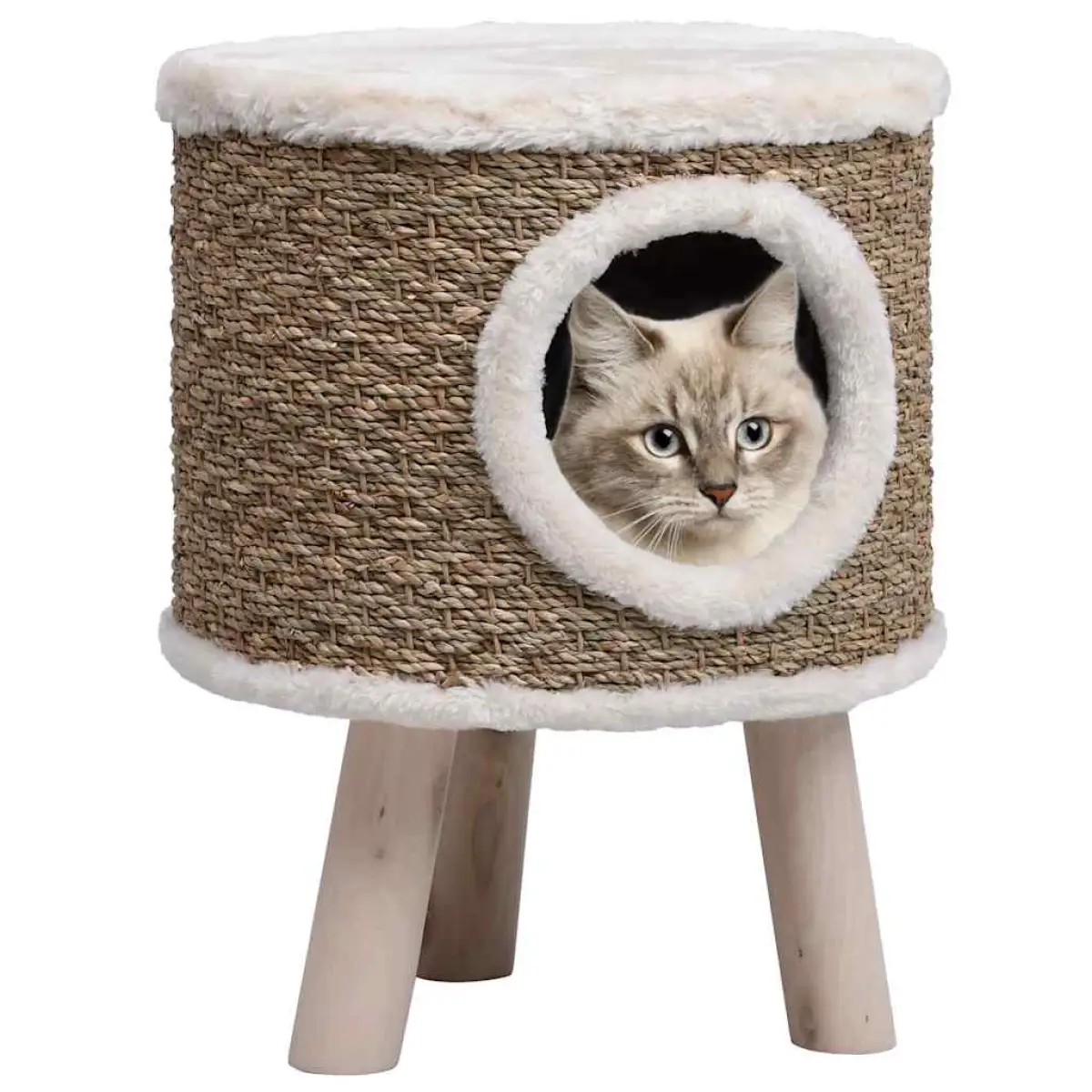
For a cat that already lives outdoors year round, a fir wood house with a raised floor and an asphalt roof is the sensible default. For a feral or stray you're trying to help through the worst of the weather, the insulated foam shelter does more for less money and can be repositioned easily. The wicker and rattan houses in the same collection are lovely, but they're indoor pieces and won't cope with rain.
Whatever you go for, check it in November and again in January. Straw compacts, roofs shift, and a house that was dry in October isn't always dry by February.
Delivery and returns
Free delivery on all orders to UK mainland addresses, dispatched within 3 to 5 working days, with no hidden fees at checkout. If you change your mind or order the wrong item, returns are welcome, though the return postage cost is yours to cover in those cases. Anything faulty or damaged is handled by the Bossy Cat team.