Here's something that surprises a lot of new keepers: hens handle cold far better than you'd think. A healthy chicken in full feather is wearing a duvet. What gets to them is wet, draughts and boredom, and a British winter is very good at supplying all three.
So the job from October to February isn't really about keeping your flock warm. It's about keeping them dry, keeping the wind off them and keeping the predators out during long dark evenings. Here's how we'd break it down, month by month.
October: check the house before the weather turns
Do your coop check now, while it's still dry enough to work outside without swearing at a screwdriver.
- Walk round the coop and look for gaps at floor level, split boards and loose hinges. Anything a finger fits through, a rat will use.
- Check the roof. Felt lifts at the corners over summer, and one wet night is all it takes for damp bedding.
- Make sure the coop sits off the ground. Most coops with built-in runs stand on legs for this reason. If yours is low, a few paving slabs underneath stop it sitting in a puddle.
- Look at the vents. You want air moving above the birds' heads, not across them while they roost.
That last point catches people out. A sealed-up coop feels cosy, but hens breathe out a lot of moisture overnight. With no ventilation, that damp settles in the bedding and on the birds, and a damp hen is a cold hen.
November: sort the run before it turns to mud
By November the grass in most runs has given up. Bare soil plus rain equals a mud bath, and muddy feet and feathers make for unhappy birds.
A few things help a lot:
- Spread a deep layer of woodchip or bark chippings over the run floor. It drains well and gives the hens something to scratch through.
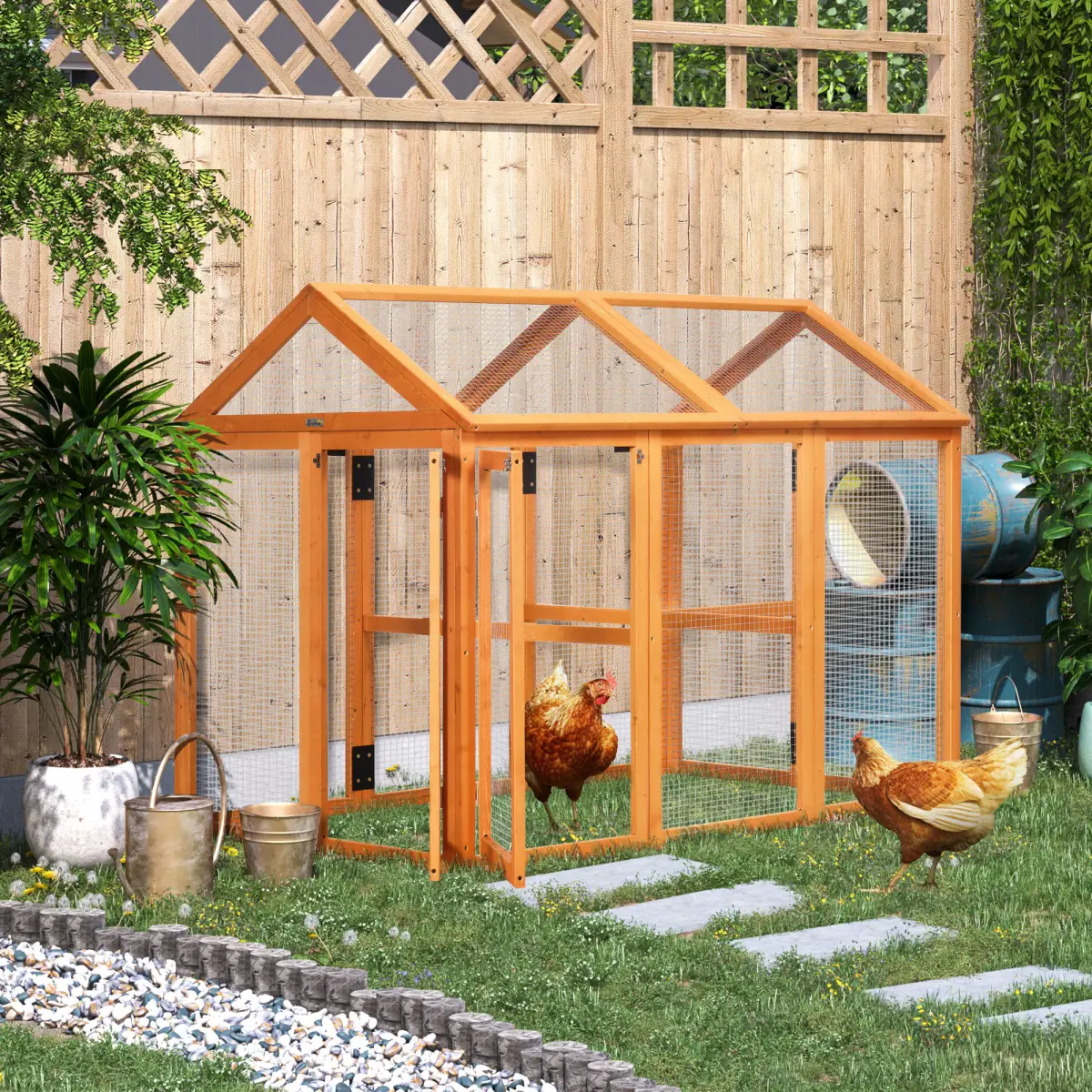
- Cover at least part of the run. A clear roof panel or tarpaulin over one end gives them a dry place to stand on wet days.
- Put a windbreak on the side your weather usually comes from. Even a sheet of board along the lower half of the mesh makes a difference.
A covered run has another use. During bird flu outbreaks, Defra can introduce rules requiring kept birds to be housed or kept away from wild birds. Those measures change from season to season, so check the current position on GOV.UK. A run with a solid roof makes it much easier to follow them without shutting your hens inside the coop for weeks.
December: water, food and the long nights
Winter's shortest days bring two practical headaches.
The first is frozen water. A drinker that turns to ice overnight leaves your flock without water first thing. Check it every morning on cold days. Some keepers swap in a second drinker at breakfast and bring the frozen one inside to thaw. Others stand the drinker on a tray out of the wind. Whatever you do, avoid adding salt or anything else to stop it freezing.
The second is predators. Foxes are hungrier in winter and dusk arrives around 4pm. Get into the habit of shutting the pop hole as soon as the hens have gone up to roost. If you're out at work until dark, an automatic door opener is one of the best things you can add to a coop.
On feed, hens use more energy staying warm. Keep their layers' feed topped up and save treats like mixed corn for the afternoon, so they go to roost with a full crop.
January: keep them busy and keep it clean
January is when boredom bites. Hens with nothing to do pick at each other. Hang a cabbage in the run, scatter a handful of corn in the woodchip or add a log or two for them to hop on.
Keep up with bedding too. Swap out wet patches as you spot them, especially under the perches. In winter, little and often beats a full muck-out every fortnight.
Have a look at your birds when you collect eggs. Check their combs, feet and feathers. If anything looks wrong, such as swelling, discoloured combs or a hen sitting hunched for a long time, call a vet who sees poultry. It's always better to ask early.
February: get ready for spring
Days get noticeably longer through February and many hens start laying properly again. It's a good moment for a deep clean on a dry day, a check for red mite in the perch ends and a look at whether your current setup still suits your flock.
If winter has shown you that your coop is too small, too low or too hard to clean, now's the time to plan a change before spring chicks and new point-of-lay hens arrive.
Why have my hens stopped laying?
Most winters, egg numbers drop. That's normal. Hens need roughly 14 hours of daylight to lay steadily, and a UK December gives them around eight. Many also moult in autumn, putting their energy into new feathers instead of eggs. Give them good feed and a dry home and laying usually picks up as the days stretch.
Choosing a coop that makes winter easier
If you're shopping for a new setup, a few features make cold-weather keeping much simpler:
- A raised house on legs, so it stays out of standing water
- A built-in or attached covered run
- Vents set high up, above the roosting bars
- A pull-out tray or wide door so you can change bedding quickly
- A solid lock on every door, not just a twist latch
You'll find coops with these features in our chicken coops with runs range, and standalone houses in our chicken coops collection. If you're still weighing up sizes and materials, our guide to choosing the right chicken coop for your garden covers that in detail.
Delivery and returns
All orders come with free delivery to UK mainland addresses, usually within 3 to 5 working days, with no hidden fees. If you change your mind, you can send your order back, but return postage is paid by the customer. If something arrives faulty or damaged, contact us and we'll sort it out separately.