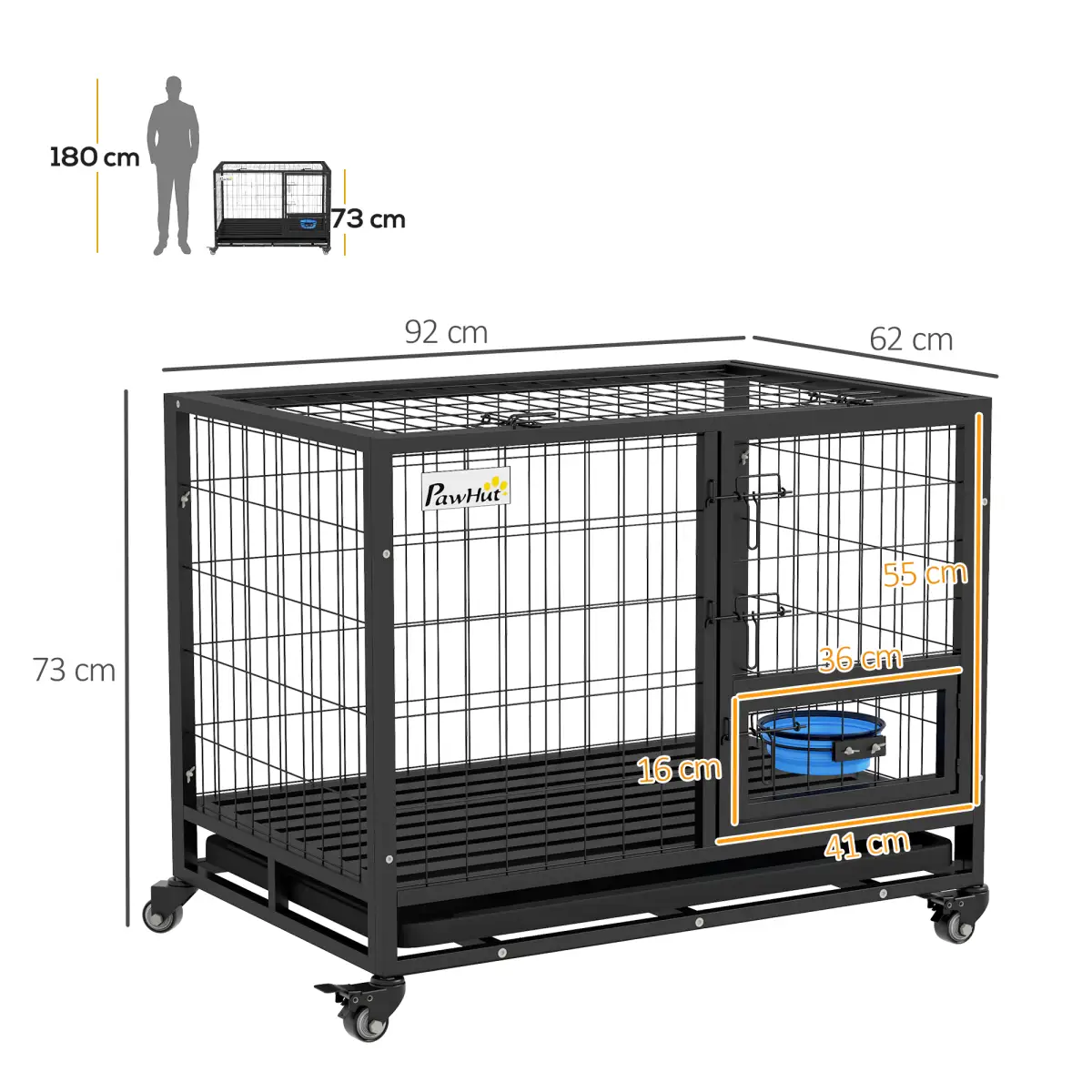
A wire dog crate does its job. It's also not something most people want as the centrepiece of the living room. Dog crate furniture sets out to fix that. It's a crate built into a wooden cabinet or side table, so your dog gets a den and you get something that looks like it belongs in the house.
You'll also see these sold as indoor dog kennels or crate end tables. They're the same idea. Here's an honest look at when one is a good buy, and when a standard crate or a playpen would serve you better.
Why people choose them
The main reason is space. In a flat or smaller house, a wire crate takes up floor you can't use for anything else. A crate table gives you a usable top for a lamp, a plant or the TV remote, so the space pays its way.
The second reason is how dogs use them. Plenty of dogs like a covered, den-like spot to rest. A solid top and sides give that feeling without you draping a blanket over a wire cage. With the door left open, it often becomes the dog's favourite nap spot.
It's probably a good fit if...
Your dog is past the heavy chewing stage. Most crate furniture is made from wood or engineered board, often with metal bars on the doors. A settled adult dog will be fine. A teething puppy may treat the corners as a chew toy.
You want it to stay in one place. These are heavier than wire crates and aren't designed to fold flat for car journeys.
You're short on floor space and would use the top as a table anyway.
Think twice if...
You have a young puppy who's still growing. A crate that fits at 12 weeks won't fit at a year, and furniture crates rarely come with divider panels. Many owners start with a wire crate and a divider, then move to crate furniture once the dog is full size.
Your dog is a determined chewer or a known escape artist. A heavy-duty metal crate is the more practical choice.
You need something portable. A folding wire crate or a fabric crate travels far better.
Getting the size right
Most sizing mistakes happen here, so it's worth ten minutes with a tape measure.
For length, measure your dog standing, from the tip of the nose to the base of the tail, and add about 10cm. That's the minimum internal length. For height, measure from the floor to the top of the head while your dog is sitting, and add another 10cm or so. Your dog should be able to stand up, turn around and lie flat on their side without being squashed.
Always check the internal measurements on the product page, not the external ones. The frame and tabletop of a furniture crate can take several centimetres off the usable space. Go by your own dog's measurements rather than the breed, since dogs of the same breed vary a lot.
What to check before you buy
Doors. A single-door crate is fine against a wall. Double-door or three-door designs are more flexible, because you can tuck them into a corner or beside a sofa and still get your dog in and out easily.
Airflow. Look for bars or mesh on at least two sides. A crate that's solid on three sides can get warm, especially near a radiator.
Cushion. Several models include one. Check that the cover is machine washable, because it will need to be.
What goes on top. The top is for light items, such as a lamp, a few books or a plant. Keep hot drinks and trailing cables elsewhere, since a curious dog can pull things down.
Double crates. Some larger units split into two sections. They're handy for two small dogs who get on well, or for dividing the space for one bigger dog.
Where to put it
Pick a spot where your dog can see and hear the household without being in the middle of foot traffic. A living room corner or the end of the sofa usually works well. Avoid spots right next to radiators, patio doors in full sun or a draughty hallway.
Quick comparison
| Type | Best for | Watch out for |
|---|---|---|
| Crate furniture | Adult dogs, smaller homes, a permanent spot | Heavy; not chew-proof for puppies |
| Wire crate | Puppies, training, travel | Looks less homely |
| Heavy-duty metal crate | Strong chewers, escape artists | Bulky, industrial look |
| Playpen | More room to move, young puppies | Takes up more floor space |
A word on how crates are used
A crate should be somewhere your dog is happy to go, not somewhere they're shut away for long stretches. Introduce it slowly, pop a few treats inside, and leave the door open so it becomes their space. If you're unsure how much crate time suits your dog, a vet or an accredited trainer can advise based on age and temperament.
The bottom line
For a settled adult dog in a home where floor space matters, crate furniture is one of the most practical buys going. For a puppy who's still growing and teething, start simpler and come back to it later.
Browse our dog crates, or see our dog kennels and pet playpens if you need something different.
Delivery and returns
Delivery is free on every order to UK mainland addresses, and orders arrive within 3 to 5 working days. There are no hidden fees, so the price at checkout is the price you pay. If you change your mind, you're welcome to send your order back, though return postage on no-fault or change-of-mind returns is paid by the customer. If anything arrives faulty or damaged, get in touch and we'll put it right.