Here's a small thing that makes a big difference. You can have the comfiest chair in the house, but if your legs are dangling or planted on the floor all evening, you never quite settle. Getting your feet up is the bit most people forget about when they buy a chair, and it's the bit that turns "a place to sit" into "the spot you fight over".
So this guide isn't really about which chair looks nicest. It's about the practical question underneath all of it: what's the best way to get your feet up, and which one suits the way you actually relax? There are three routes, and the right one depends on your room, your budget, and how serious you are about lounging.
The real choice: built in, or separate?
Before anything else, decide this. Do you want the footrest built into the chair, or would you rather have a separate footstool you can move around?
A built-in footrest is part of the chair. You lean back or pull a lever and the legrest swings up as one motion. It's seamless and it's the closest thing to a proper recline. A separate footstool, on the other hand, is just a padded stool you park in front of any chair. It's more flexible, usually much cheaper, and it doesn't tie you to a reclining mechanism. Neither is the "right" answer. They suit different people, so let's take the three routes one at a time.
Route one: an armchair with a footrest built in
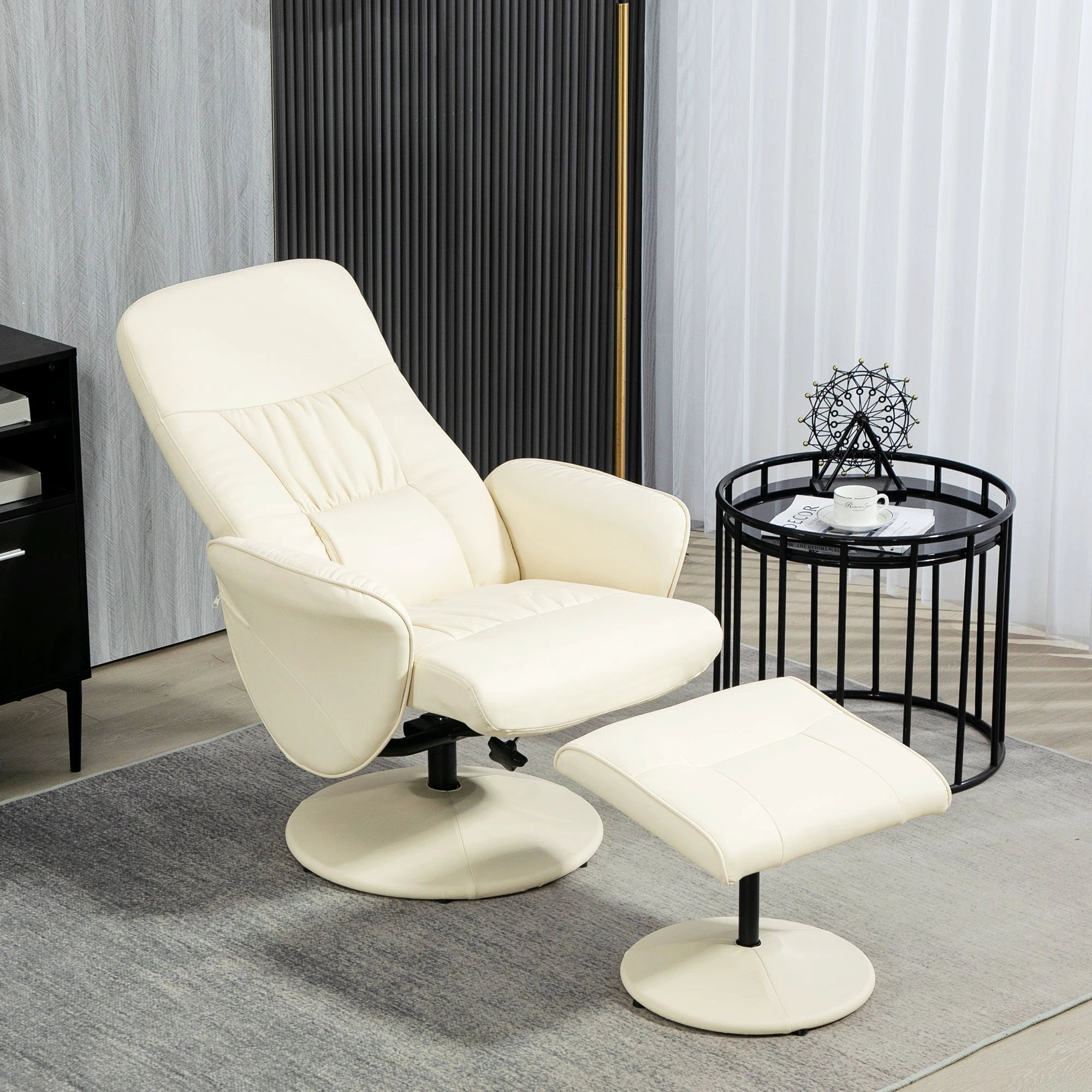
This is the route for anyone who wants to lean back properly. An armchair with a footrest built in means the legrest is part of the reclining action, so when you tip back, your feet come up automatically. No separate stool to line up, no shuffling about.
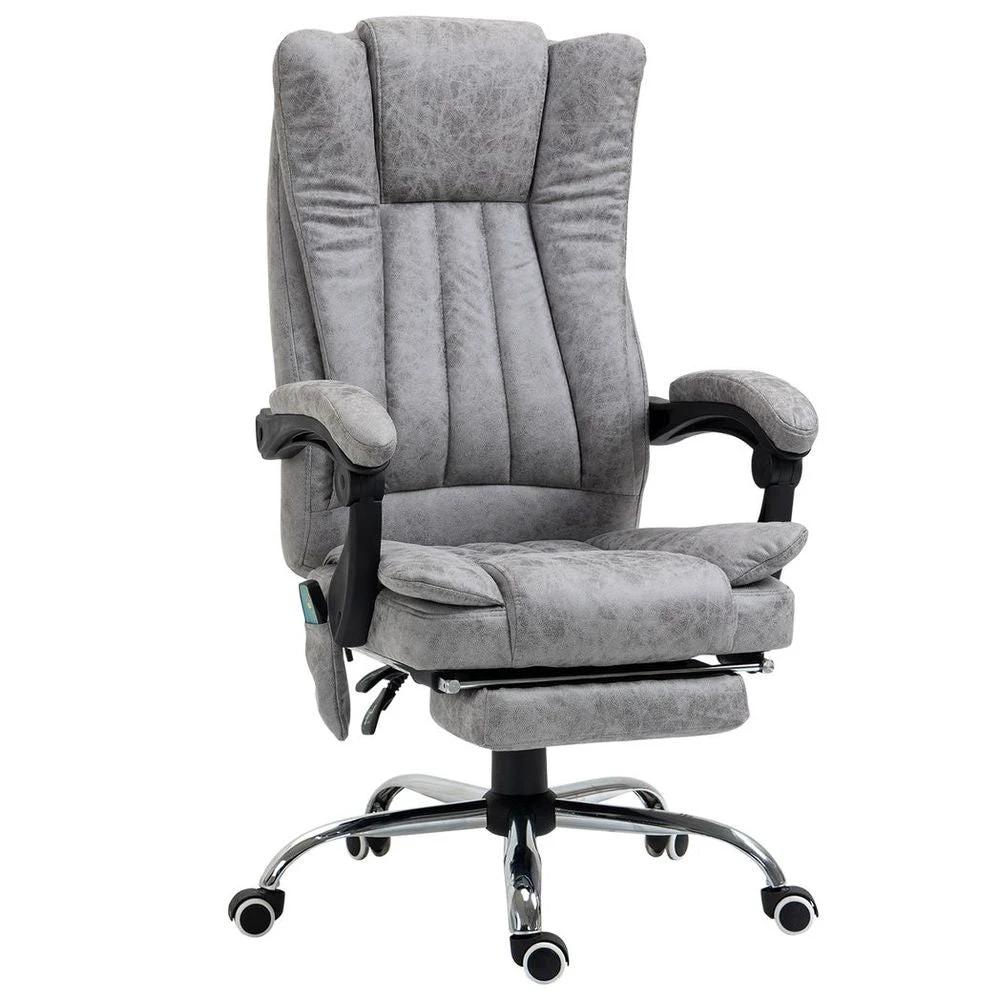
Within this you've got options. Manual versions use your own body weight against a lever or a push-back action, which keeps the cost and the fuss down. Powered ones do the work for you at the touch of a button, and some go further still. There's a swivel recliner in the range that comes with a matching footstool and built-in massage points worked by a remote, which is about as close to switching off as a chair gets. At the more supportive end, riser-recliner styles gently tilt forward to help you stand again, which makes them a sensible pick for anyone who finds getting out of a low chair a struggle.
The honest trade-off is space and price. These footrest chairs are bulkier than a plain armchair, they need clearance behind them to recline, and they cost more. But if your idea of a good evening is fully reclined in front of the telly, nothing else competes. The recliners with footstools and the wider recliners range are where to look.
Route two: an armchair paired with a footstool
This is the most flexible route, and for a lot of homes it's the smartest. You buy a comfortable armchair you love the look of, then add a footstool in front of it. Done.
The appeal is that nothing is locked together. You can angle the stool however you like, share it between two chairs, push it out of the way when you're hoovering, or use it as a perch when guests turn up. A footstool also tends to cost very little next to a recliner. There are storage footstools in the range from around twenty-five pounds, including fabric and velvet styles with a drawer or a lift-up lid, so you get a place to rest your feet and somewhere to hide throws and remotes in the same piece.
For the chair itself, a deep-seated armchair or a high-backed wingback gives you something to properly sink into. A velvet wingback frames your head and keeps the draughts off, which is exactly what you want in a reading corner. Pair it with a matching or contrasting stool and you've built yourself a comfortable chair with footstool that cost far less than a powered recliner and looks more like considered furniture than a gadget. Browse the armchairs and the footstools and stools to mix and match.
Route three: an accent chair with an ottoman
The third route is the one to take if looks matter as much as comfort. An accent chair is built to be noticed, in bolder colours, textured fabrics, or a distinctive shape with tapered legs. Add a matching ottoman and you've got a comfortable chair with footstool that also pulls a room together.
This works beautifully in a bedroom, a hallway nook, or as the standout seat in a living room that's otherwise fairly neutral. The ottoman does double duty too, since lifting your legs onto it takes pressure off your lower back and helps your circulation on a long evening. The catch is that accent chairs are made to look good first, so they're best for a couple of relaxed hours rather than all-day lounging. For that, you're back to route one. Start with the accent chairs if this is you.
A few things to get right whichever route you pick
Two practical points save most of the disappointment. First, measure. Recliners need room to tip back, and a footstool needs to be roughly the same height as your chair seat or it won't feel natural underfoot. Full dimensions are on every product page, so hold them against your space before you order.
Second, think about fabric for your household. Velvet looks rich and feels lovely but shows marks. Linen and linen-feel fabrics are relaxed and breathable. Faux leather is the one to choose if you've got children or pets, because it wipes clean in seconds. Match the fabric to your life and the chair stays looking good for years.
You can see everything together in the armchairs and footstools collection. Free delivery applies on every order to UK mainland addresses, dispatched within 3 to 5 working days, with no hidden fees. Whichever way you choose to get your feet up, that part's sorted.