Watch a cat in a room and you'll notice they always want to be up high. The top of the bookshelf, the back of the sofa, the windowsill. It isn't random. Height is where a cat feels safe, in charge, and able to keep an eye on everything going on below. A cat tree gives them that vertical territory in one spot, which is why it's one of the few bits of pet furniture that genuinely earns its place. Here's a plain guide to choosing one that suits your cat and your home.
Why the perch is the part that matters most
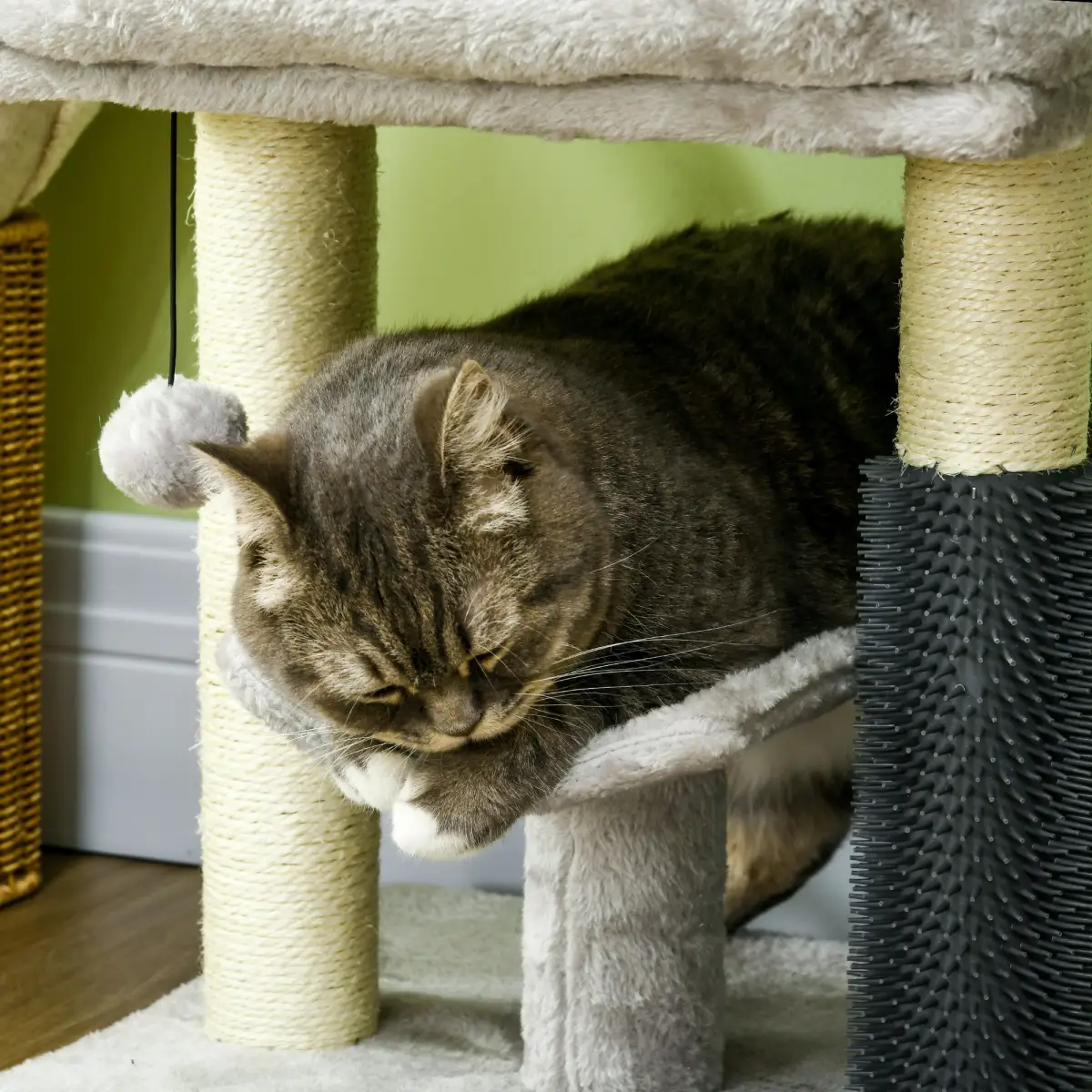
The single most important feature of any cat tree is the perch, because that raised lookout is the whole point as far as your cat is concerned. A good cat tree perch gives them somewhere to sit above the action, watch the birds through the window, and nap without being disturbed by feet and hoovers at floor level.
When you're looking at perches, a couple of things matter. Size is the first. A perch that's too small for your cat to settle on properly won't get used, so bigger, heavier cats need wider platforms, while a kitten is happy on something smaller. Comfort is the second. The best perches are covered in soft plush or have slightly raised edges so your cat can curl up and feel held rather than perched on a bare shelf. Some trees go further and include a hammock slung between the posts, which a lot of cats adore for that gently cradled feeling. If your cat likes to sprawl, look for those.
Free-standing or fixed to the wall?
This is a decision worth making early, because it shapes everything else. There are two broad approaches.
A free-standing cat perch or tower simply stands on the floor under its own weight. You put it where you like, move it whenever you want, and there's no drilling involved, which makes it the obvious choice for renters or anyone who'd rather not put holes in the wall. The trade-off is that it takes up floor space, and taller free-standing towers need a sturdy base to stay stable when an excitable cat launches onto the top.
The alternative is a fixed design. Wall-mounted cat shelves and perches screw to the wall and float there like little steps, using no floor space at all, while floor-to-ceiling trees wedge between your floor and ceiling to give loads of height on a tiny footprint. There's a 260cm floor-to-ceiling model in the range that adjusts to your ceiling height and comes with an anti-slip kit to hold it firmly in place, which is a clever answer for a small flat where floor space is precious but you've got height to spare. Fixed designs are brilliant for space, just be sure you're happy to attach them and that your walls can take the fixings.
The case for stairs and steps
Not every cat can leap between levels, and this is where a cat tree with stairs earns its keep. Stepped designs with platforms set close together, or an actual little staircase built in, let kittens learn to climb safely and give older or less agile cats a way up that doesn't rely on a big jump.
It's easy to overlook when you're buying, but the gaps between levels really matter. For a senior cat, or one carrying a bit of extra weight, wide leaps between far-apart platforms just mean they'll give up and stay on the ground. Look for gentle, stepped access instead. It's also worth knowing there are separate pet stairs in the range, soft padded steps that help an older cat reach a favourite sofa or windowsill without the hard landing. Pair those with a lower tree and you've made the whole room accessible again for a cat whose jumping days are behind them.
Don't forget the scratching side
Nearly every tree here includes sisal-wrapped posts, and it's worth a quick word on why. Cats far prefer the rough drag of sisal rope to carpet or smooth surfaces, so a tree with good sisal posts gives them somewhere to scratch that isn't your sofa arm. A post sturdy enough not to wobble also lets them stretch out fully, which is good for their claws and muscles. It's a small thing that quietly protects your furniture.
Match it to your cat, not just your room
The right tree depends as much on the cat as the space. A lively young cat will make full use of a tall multi-level tower with several perches, tunnels and dangling toys to burn off energy. A calmer or older cat is better served by something lower and cosier, with easy access and a snug enclosed house to hide away in. If you've got more than one cat, size up. A larger tree with multiple perches and houses lets each cat claim its own level, which cuts down on squabbling and means they'll actually share it rather than competing for the one good spot.
Where to put it
Position makes a surprising difference to whether a tree gets used. By a window is almost always a winner, since it turns the top perch into a front-row seat for watching the garden. Somewhere that's part of family life rather than shut away in a spare room tends to work better too, because cats like to be near their people even when they're keeping their distance. Just make sure it's on a firm, level floor so it stands rock solid, and give a tall tree a wall nearby to sit against for extra reassurance.
Ready to have a look?
Whether you want a compact tower for a kitten, a floor-to-ceiling climber for a busy cat, or a gentle stepped design for an older one, there's plenty to choose from in the cat trees range. It's worth a browse through the cat houses and the wider cat supplies section too while you're sorting out their setup.
Every order comes with free delivery to UK mainland addresses, dispatch within 3 to 5 working days, and no hidden fees at checkout. If you change your mind or order the wrong one, returns are welcome, though the return postage would be down to you in that case, while anything faulty or damaged is handled separately by the team.