Most British period homes have at some point had their original cast-iron radiators ripped out and replaced with cheap white panels from the nearest plumbing merchant. The panels heat the rooms fine. They also undo decades of careful period detail in about half an hour. A perfectly proportioned Victorian drawing room with original cornicing and a marble fireplace, anchored visually by a 1980s convector radiator with plastic end caps, is a familiar British compromise.
Replacing radiators is one of those rare moments when you can make a deliberate aesthetic choice instead of accepting the compromise. The traditional radiator market has caught up with this in the past decade, with column profiles and period finishes that pair the original Victorian look with modern heating efficiency. But "traditional" covers a lot of ground, and the right radiator depends on the era of the house it's going into. This guide walks through five British home eras and what suits each one.
The original Victorian radiator wasn't designed to be hidden. It was designed to be seen. The modern equivalent should be too.
What "traditional radiator" actually means today
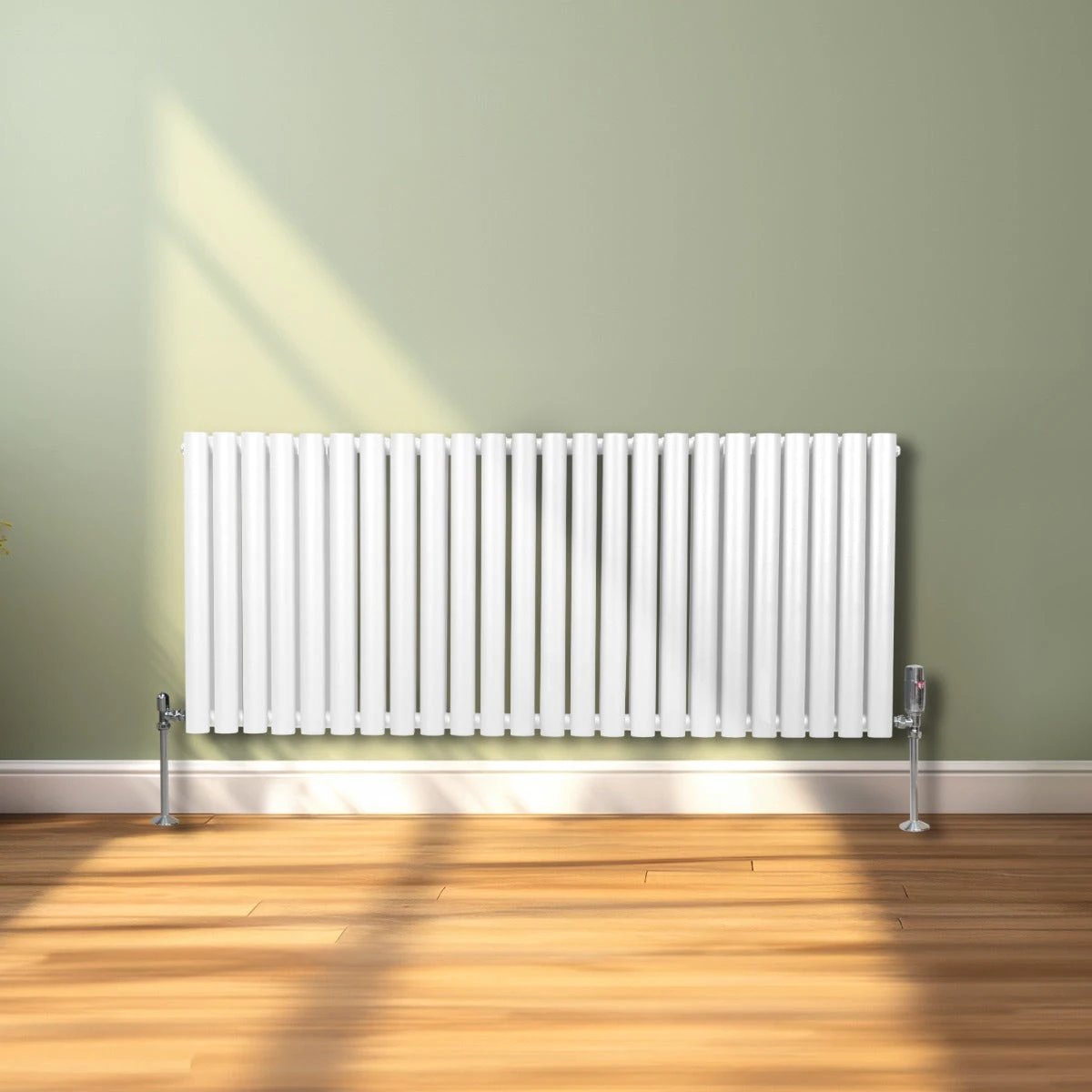
Before the era walkthrough, a short word on terminology. A traditional radiator today usually means a column-profile design, where the heated surface is built from vertical tubes (the "columns") grouped together. This is the silhouette people associate with Victorian and Edwardian homes, and it remains the most period-sympathetic option. The radiator can be horizontal or vertical, two-column or four-column or more, finished in white, anthracite, polished chrome, polished nickel, or various RAL colours.
Original cast-iron column radiators are still made, but most modern "traditional" radiators are steel column designs that share the look. They're lighter, easier to install on standard UK plumbing, more thermally responsive, and far more affordable. The Imperial range in our collection takes this approach. Column profiles inspired by classic Victorian-era radiator design, built with contemporary heating efficiency, in finishes that cover anthracite, white, polished chrome and polished nickel. For period sympathy without the cost or weight of original cast iron, this kind of design is where most people end up.
ERA ONE / 1837 - 1901
Victorian
Victorian homes were the period that arguably invented the British relationship with radiators. Cast-iron column radiators emerged in the second half of the 19th century and were genuinely impressive pieces of engineering, often left visible as part of the room's design. Modern Victorian terraces, semi-detached villas, and grander Victorian properties almost always benefit from a column-profile radiator rather than a flat panel.
Why a column radiator suits a Victorian room
Victorian rooms tend to have high ceilings, often 2.7 to 3.1 metres in the main rooms. They also have original cornicing and ceiling roses, deep skirting, and either a working or decorative fireplace. The vertical proportions of the room reward a radiator that has visual height of its own. A tall vertical column radiator alongside a sash window, or a horizontal four-column unit beneath one, looks intentional in a Victorian room in a way that a flat horizontal panel never quite does.
What to choose
In the main rooms (front living room, dining room), a column radiator in white or anthracite is the safest period-sympathetic choice. Polished chrome and polished nickel work in Victorian bathrooms, where the period style often included chrome and nickel fittings already. For hallways, vertical column designs use the height that Victorian hallways typically have to spare. The Imperial column radiators in our range cover all three finishes and both vertical and horizontal configurations, suiting most Victorian rooms without bespoke ordering.
A note on original radiators
If your Victorian home still has its original cast-iron radiators, restoring them is genuinely worth considering rather than replacing them. A specialist can blast off old paint, repressure-test the unit, and refinish it in any modern colour. The result is an authentic period piece that will outlast everything else in the room. Modern column radiators are a fine alternative when the originals are gone or beyond repair. The originals themselves are part of the house's history.
ERA TWO / 1901 - 1914
Edwardian
Edwardian homes are a quieter, lighter cousin of the Victorian. The style stepped back from heavy ornamentation toward simpler lines, lighter wood, and a more restrained palette. Edwardian terraces and villas are still period homes with high ceilings and proper proportions, but the visual register is different, and the radiator choice should reflect that.
Why the choice is slightly different
Edwardian interiors typically lean lighter and more open than Victorian ones. Walls are often painted in softer tones. Ceilings stay tall but the cornicing is usually simpler. The rooms feel less weighty than their Victorian equivalents. A heavy ornate cast-iron radiator can look almost too much in an Edwardian room. A simpler column profile in a light finish, on the other hand, fits the period perfectly.
What to choose
Two-column and three-column horizontal designs in white or polished chrome are the natural Edwardian fit. The slimmer, less ornate profile sits more comfortably under a window or against a wall than a heavier ornate version. For Edwardian bathrooms (often featuring original tiling and free-standing baths) a polished nickel or polished chrome traditional towel radiator from the Imperial range works particularly well. Five-bar or eight-bar designs double as towel warmers, in keeping with period bathroom style.
Edwardian homes reward restraint. A simpler column profile reads as more authentic than an ornate Victorian-era replica.
ERA THREE / 1918 - 1939
1930s and inter-war
The 1930s semi-detached is one of the most common British house types, and it's a period that often gets overlooked in period-radiator discussions. These homes have their own design language. Bay windows in front rooms, more modest ceiling heights at 2.4 to 2.6 metres, painted internal woodwork, occasional Art Deco details, and a generally cleaner aesthetic than Edwardian and Victorian properties.
What this means for radiator choice
Inter-war homes sit between fully period and fully modern aesthetically. They suit a traditional column profile, but in a slightly smaller, more restrained scale than a Victorian house would take. Three-column horizontal designs at modest heights of 600 to 750mm work well under bay windows and in front rooms. The slightly Art Deco character of some 1930s homes also welcomes black or anthracite finishes. These read as period-appropriate rather than aggressively modern.
What to choose
White column radiators are the safe default for 1930s rooms. Anthracite works particularly well if the house has Art Deco touches or you're styling the room with a slightly contemporary lean. Avoid very ornate designs, which tip the room toward Victorian rather than 1930s. The straight, clean column profile is what suits the period.
ERA FOUR / 1945 - 1980
Post-war and mid-century
Post-war British homes are a less obvious candidate for traditional radiators, but they're where many of the worst mismatches happen. A 1950s semi or a 1970s estate house with a 1990s panel radiator slapped on the wall is a familiar sight, and it's almost always slightly wrong. Post-war architecture has its own clean, modest aesthetic that deserves better.
Why traditional can work here too
The clean lines of post-war and mid-century interiors don't have to be paired with the cheapest modern panel radiator. A simple column radiator in white or anthracite reads as a deliberate design choice rather than a period replica. The column profile itself sits comfortably in a mid-century room without looking out of place. The key is restraint. Two-column or three-column horizontal designs in plain finishes, not ornate or chromed.
What to choose
Modest-scale column radiators in anthracite or matt white. The anthracite finish in particular bridges the gap between contemporary and traditional and suits the mid-century aesthetic well. Vertical column designs work in narrow halls and stairwells, which post-war homes often have. Avoid polished chrome and polished nickel here, which read as too period for a mid-century interior; save those finishes for Victorian and Edwardian bathrooms.
ERA FIVE / PRESENT
Modern homes with period sympathies
Plenty of British buyers fall into this category. You live in a new build, a conversion, or a renovated property without strong period features, but you want the warmth and character that traditional radiators bring. The aesthetic case for column radiators in modern homes is well-established, and the heating performance has caught up with the panel radiators they replace.
Why traditional works in a modern setting
Modern interiors often default to clean, minimal finishes that can tip toward feeling sterile. A column radiator in anthracite or matt black brings warmth and visual texture that a flat white panel doesn't, without committing to a fully period look. The same column profile that suits a Victorian drawing room reads as a deliberate design feature in a modern open-plan kitchen. It's the same product playing two very different roles depending on its setting.
What to choose
Anthracite is the contemporary go-to. It's dark enough to add presence, neutral enough to coordinate with most colour schemes, and modern enough to avoid looking out of place. Vertical column radiators particularly suit modern homes, where wall space is often more limited than in period properties. For sympathetic kitchen and bathroom installations, the Imperial range includes towel rails in chrome and polished nickel that fit modern bathrooms without looking dated.
Valves, fittings and finishes: don't skip these
Whatever era your home is and whichever radiator you choose, the valves and fittings finish the look or undo it. A beautifully chosen anthracite column radiator paired with cheap white plastic valves looks unfinished. A matching set of traditional thermostatic valves in antique brass, pewter, polished chrome, or polished nickel completes the period sympathy.
- Traditional thermostatic valves are widely available in period finishes including antique brass, pewter, polished chrome and polished nickel.
- Match the valve finish to the radiator finish where possible. Anthracite radiators take pewter or matt black valves well; white radiators take chrome or polished nickel; chrome and nickel radiators want valves to match.
- Wall stays are decorative-and-structural for traditional column radiators. They secure the unit to the wall, but they also continue the radiator's finish in a way that looks intentional.
- Bleed valves and pipe shrouds in matching finishes complete the look. These are small details, but they add up to the difference between a deliberately styled radiator and an installation that feels half-finished.
Quick reference: era to radiator
The radiator is the room
Period homeowners often spend years getting the small details right (the right cornicing, the right wood floor, the right paint colours) and then accept whatever radiator the plumber recommends. It's worth treating the radiator as part of the design decision rather than a service fitting. A column radiator in the right finish for the era genuinely changes how a room reads, and the cost difference versus a plain panel is far smaller than people assume.
The traditional radiators collection covers column profiles, towel rails, and floor-mounted designs across the era spectrum, with the Imperial range giving you period-sympathetic designs in anthracite, white, polished chrome and polished nickel. If your priority is keeping an existing radiator rather than replacing it, our radiator covers guide walks through how to hide an ugly one well. And for the opposite end of the spectrum, our forthcoming flat panel radiator guide covers the modern alternative if your home isn't asking for period sympathy at all.
Free UK mainland delivery applies on every order, dispatched in three to five working days, with no hidden fees. Traditional radiators ship on pallets and benefit from a second person on hand for delivery day, since column radiators are heavier than panel equivalents. Most can be fitted by a competent installer on standard UK plumbing, with valves and fittings supplied separately so you can match finishes to your radiator.