You've been thinking about growing your own veg or getting your tomatoes off to an earlier start. A greenhouse seems like the obvious answer, but then you see the prices for glass ones and wonder if there's a better option.
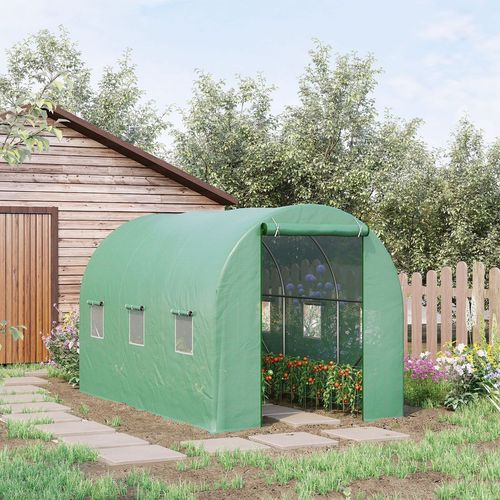
Walk-in polytunnel greenhouses might be exactly what you need. They are not the fancy Victorian-style structures you see in stately homes, but they do the job brilliantly. Here is why so many gardeners swear by them.
They're Much Kinder to Your Budget
Talking about money first, because it matters. A proper glass greenhouse with all the fixings can easily cost you £500 to £1500, sometimes more if you want something decent-sized. Walk-in polytunnels? You are looking at a fraction of that.
Home Gardens
Most polytunnels suitable for home gardens start around £100 to £300 for a good size. Yes, you read that right. For the price of a small glass greenhouse, you could get a polytunnel twice the size.
This matters more than you might think. When you are growing plants, space is everything. More room means more variety. You can have your tomatoes at one end, seedlings in the middle, and still have space for peppers or cucumbers at the other end. With a small glass greenhouse, you're playing Tetris with your pots by July.
Savings On Polytunnels
The savings don't stop at the initial purchase either. If something goes wrong with a glass greenhouse - a cracked pane, broken clips, damaged frame - repairs add up quickly. With a polytunnel, replacing the cover every few years costs much less than fixing glass panels. The frames are simpler too, which means fewer things to go wrong.
Setting Them Up Is Actually Straightforward
You don't need to be a DIY expert to get a polytunnel working. Most people can put one together in an afternoon with a friend to help.
Glass greenhouses often need proper foundations. You are looking at concrete bases, making sure everything is perfectly level, bolting frames together. It's a weekend project at minimum, possibly longer if you've not done it before. Some people end up paying someone to install them, which adds hundreds to the cost.
Polytunnels are different. The basic setup involves pushing or hammering the frame hoops into the ground, connecting them with rails, and pulling the cover over. No concrete, no special tools beyond what most people have in their shed. A hammer, maybe a spanner, and you're sorted.
If you rent your home, this is massive. You can take a polytunnel with you when you move. Try that with a glass greenhouse that's been concreted into place. Landlords are also generally happier about polytunnels because they're not permanent structures that alter the property.
Moving them around your garden is possible too. Decide the polytunnel works better in a sunnier spot? You can shift it. Not easily perhaps, but it's doable. A glass greenhouse is staying put once it's in.
The Growing Environment Actually Works Better
Here's something that surprises people - polytunnels often create better growing conditions than glass greenhouses.
The plastic cover diffuses light instead of letting it beam straight through like glass. This means your plants get bright light without the harsh direct sun that can scorch leaves on really hot days. You still get all the warmth and protection, but the light is gentler and more even throughout the space.
Temperature Control
Temperature control is easier too. Glass greenhouses can turn into ovens on sunny days, even in the UK summer. You are opening doors and vents, maybe rigging up shade cloth, trying to stop everything cooking. Polytunnels warm up as well, but the airflow is better. Roll up the doors at both ends and you get a lovely breeze through. On cooler days, close them up and the warmth stays in nicely.
The humidity levels seem to settle into a better range as well. Plants like tomatoes and cucumbers love a bit of moisture in the air, but not so much that you're dealing with mould and mildew. Polytunnels tend to find that sweet spot more naturally than glass houses, where condensation dripping off the roof can be a right pain.
Winter Protection
Winter protection works brilliantly. Yes, a polytunnel will not keep things as warm as a heated glass greenhouse, but for hardy veg and overwintering plants, it's plenty. Salads, spinach, winter brassicas - they are all happy in there. You are extending your growing season by months without spending a fortune on heating.
They are Flexible as Your Needs Change
Gardens change. What you want to grow this year might be completely different in three years. Polytunnels roll with these changes.
Want to grow tall tomatoes this year? The height in most walk-in polytunnels gives them plenty of room. Next year fancy growing melons on the ground? No problem. The open floor space adapts to whatever you're doing. Glass greenhouses with staging and shelves can feel a bit fixed in how you use them.
Adding shelving or staging later is simple enough. A few planks and some supports, and you've got seed-starting space. Don't need it anymore? Take it out. The structure itself does not limit you.
If you get really into growing and want to expand, adding another polytunnel is much more realistic than adding another glass greenhouse. The cost and effort make it actually achievable rather than just a nice dream.
Some people start with a small polytunnel to see if they enjoy the whole greenhouse growing thing. If it works out, brilliant - you've not spent a fortune finding out. If you discover you prefer outdoor growing or don't have the time, you've not got an expensive glass structure sitting empty in your garden.
Is a Polytunnel Right for You?
They are not perfect for everyone. If you want something that looks impressive and traditional, a glass greenhouse wins on appearance. Polytunnels are functional rather than beautiful.
But if you want to grow more food, protect your plants better, and not spend half your gardening budget on the structure itself, a walk-in polytunnel greenhouse makes a lot of sense. They're practical, affordable, and they genuinely work.
Plenty of serious gardeners who could afford fancy glass greenhouses choose polytunnels instead. That tells you something.