A clock is one of those things you notice when it's wrong and barely think about when it's right. Too small on a big wall and it looks lost. Too loud and you'll hear every second tick in a quiet bedroom. Cheap finish and it ages the whole room.
This guide walks through what to look for across the main styles we stock, wall clocks, digital clocks, vintage pieces and statement sizes, with honest pointers on what suits which room. No mystery, no jargon.
Wall clocks: the workhorse of the collection
Most of what we sell sits in this category because it's what most people actually need. A round face, battery operated, hung somewhere you glance at it a few times a day.
The kitchen is where a wall clock earns its keep. You want something readable from across the room, usually 25cm to 35cm, with clear numerals and a dial that doesn't disappear against your wall colour. The Acctim Wycombe at 22.5cm is a sensible pick here, and the Ravel kitchen clock sits in the same bracket with a durable plastic case and oversized numbers. Neither is trying to be fashionable, which is the point.
For living rooms and hallways the brief shifts. You've got more wall to fill and the clock becomes part of the decor rather than just a timekeeping tool. Our black metal designs work well against lighter walls, and the golden metal pieces bring some warmth if your scheme leans neutral. A mirrored finish clock is worth considering if the room is short on natural light, as it bounces whatever you've got around the space.
One thing worth flagging: the word silent gets thrown around a lot. Most quartz mechanisms have some noise, it's just quiet enough not to bother you during the day. If you're planning to hang one in a bedroom, look specifically for a sweep movement rather than a standard tick.
Digital clocks: when you want the details
Digital isn't the obvious choice for a living room but it's often the right one for a bedside table, home office or kitchen worktop. You get the time, the date, usually the temperature, and often an alarm that's easier to set than whatever's buried in your phone.
The useful features to actually look for are adjustable brightness (bright displays will keep you awake, dim ones are unreadable in daylight), a battery backup so the time doesn't reset every power cut, and a dimmable night mode if it's going in a bedroom.
Large LED digital clocks have become popular for open plan kitchens and offices where you want to read the time from six or seven metres away. They're not subtle and they're not meant to be. If that sounds practical rather than appealing, a compact digital on a shelf will do the same job without taking over the room.
Vintage style clocks: for when new-looking feels wrong
Vintage style is a broad label. At one end you've got Roman numeral dials with aged cream faces and distressed metal surrounds, the sort of thing that suits a country kitchen or a period property. At the other you've got mid-century and retro kitchen designs from the 60s and 70s, which land more playfully and work in flats and modern builds where a straight antique piece would feel try-hard.
Our retro-style kitchen wall clocks sit in that second camp and tend to be the ones people pair with pastel cabinets or open shelving. The HESTIA Bumblebee wall clock is a good example of how a vintage silhouette can still feel current if the colours are right.
A word of caution on genuinely antique looking pieces: the weathered finishes vary a lot in person. If the exact look matters, check the product photos carefully and read the descriptions for the finish type. Painted distress and printed distress are not the same thing.
Large statement clocks: getting the size right
Oversized clocks are probably the single biggest source of buyer's remorse in this category, and it's almost always because people underestimate the size they need for the wall.
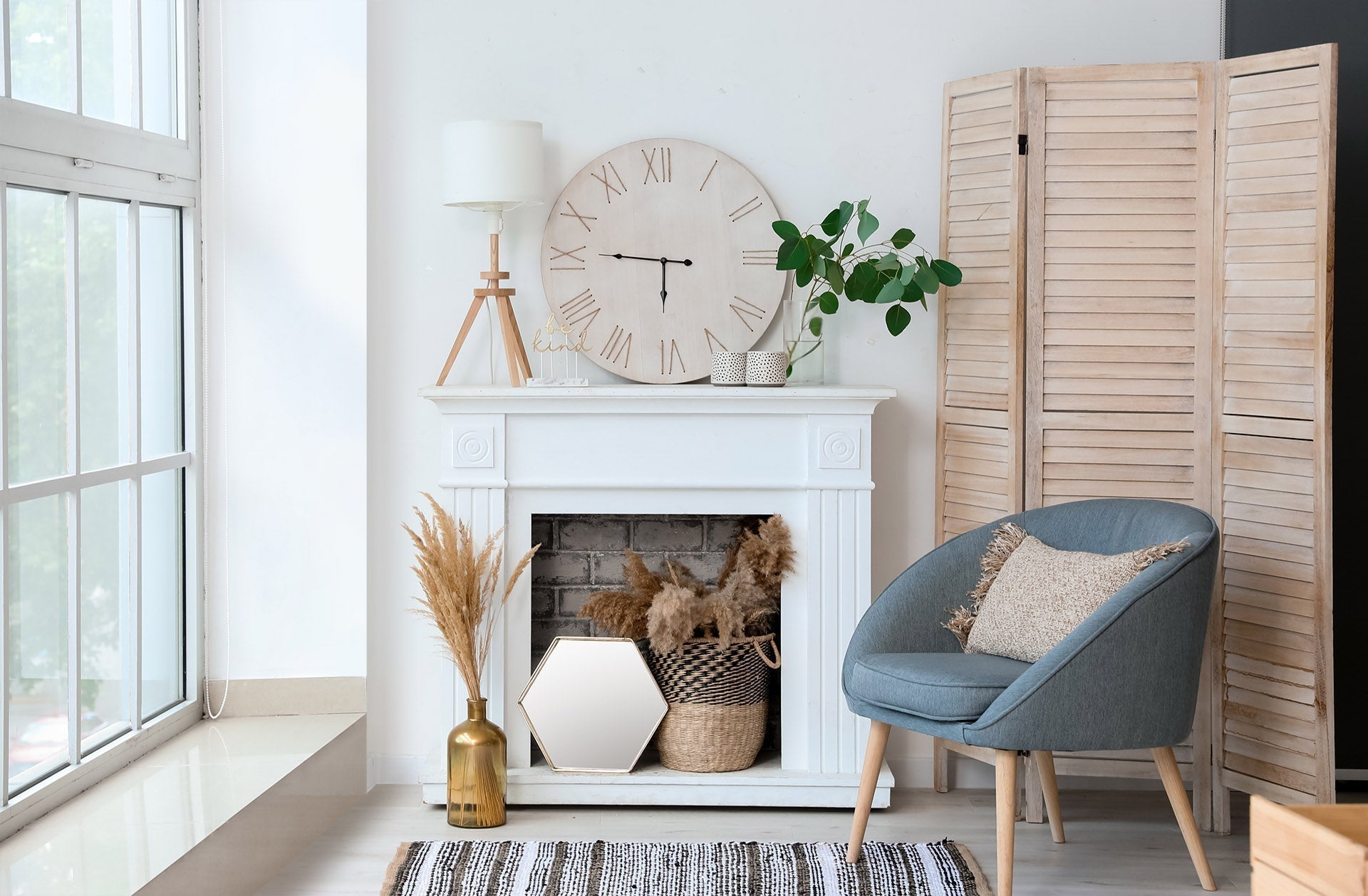
Rough rule: your clock should take up somewhere between a third and two thirds of the wall space or furniture below it. On a standard living room wall behind a sofa, that usually means 60cm or more. Above a console table in a hallway, 40cm to 50cm is often enough. In an open plan kitchen-diner with high ceilings, you can go to 90cm or even 100cm without it feeling mad.
Our metal statement clocks run from 34cm right up to 100cm, and the jump between a 60cm and a 70cm piece is more noticeable on the wall than you'd think on paper. Measure the space first, mark it out with masking tape, and live with it for a day before ordering. It's a five minute job that saves a return.
Table and desk clocks: the overlooked option
Not every room needs something on the wall. A 19cm or 20cm table clock on a bedside unit, mantelpiece or desk gives you the function without drilling holes, and they travel well if you're in a rental or likely to move. They're also one of the easier things to gift.
Practical things worth checking before you buy
Batteries are rarely included. Most of our wall clocks run on a single AA, a few take AA or C depending on the movement size. Worth having a spare pack in anyway.
Hanging hardware varies. Small clocks usually come with a keyhole slot on the back and you're done. Larger metal pieces sometimes need a wall plug and a proper screw rather than a picture hook, particularly on plasterboard. Check the product description or ask before buying if your wall is tricky.
Finally, colour in photos can be flattering. Black metal is reliably black, but aged brass, champagne gold and brushed silver can all look slightly different in a room lit by warm bulbs versus daylight. If you're colour matching to existing fittings, it's worth being a bit cautious.
Finding one that fits
The full range is at bossycat.co.uk/collections/clocks. Delivery is free across UK mainland (Northern Ireland excluded), orders land in 3 to 5 working days, and there are no hidden fees at checkout. If you're between two sizes or not sure which style fits the room, drop us a note before ordering, it's quicker than returning something.