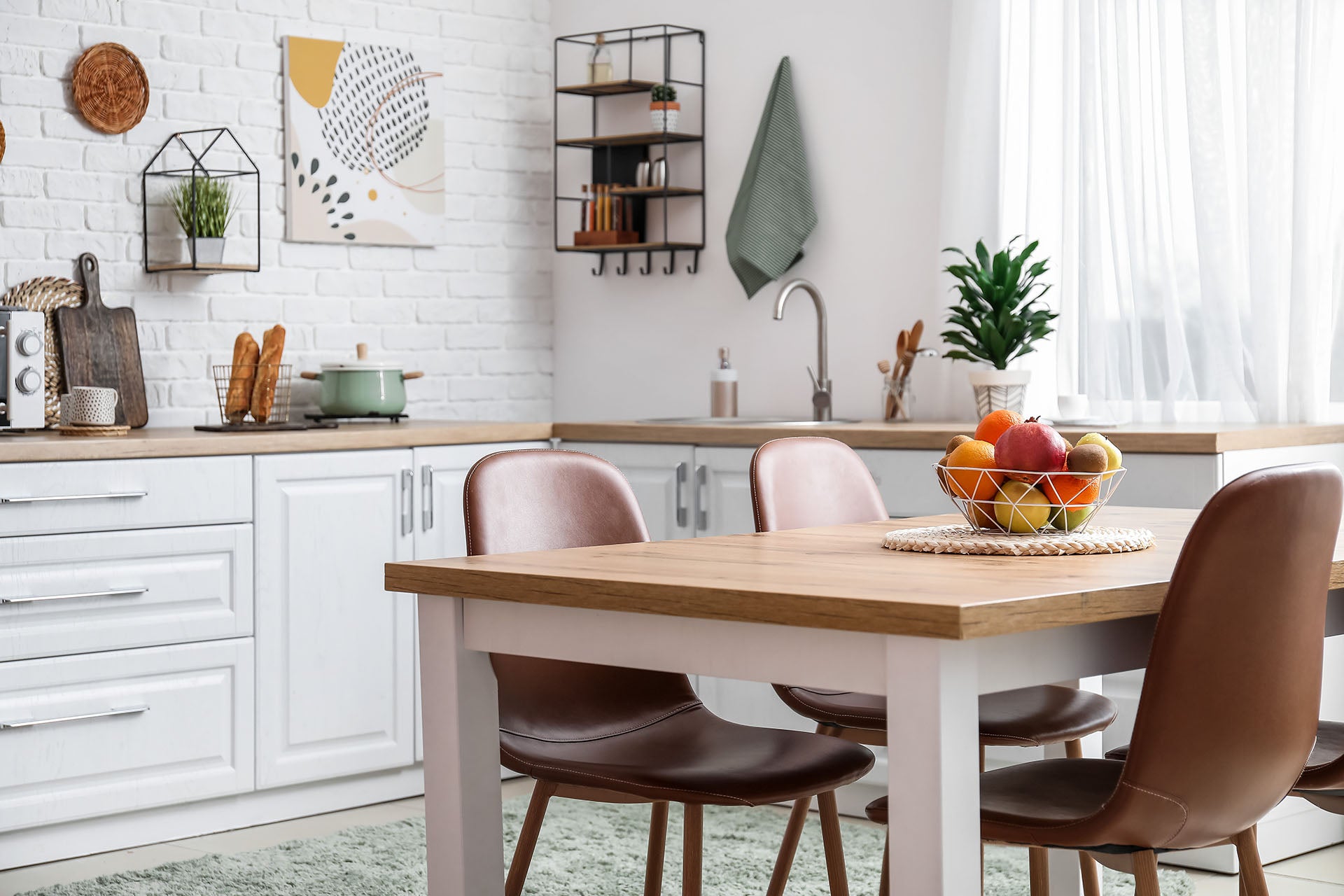
Small kitchens and one-bed flats present a familiar dilemma. You want somewhere to eat properly, somewhere that feels like a dining space rather than just a perch on the sofa. But a full-sized table eats half the room, and you only really need it three times a day.
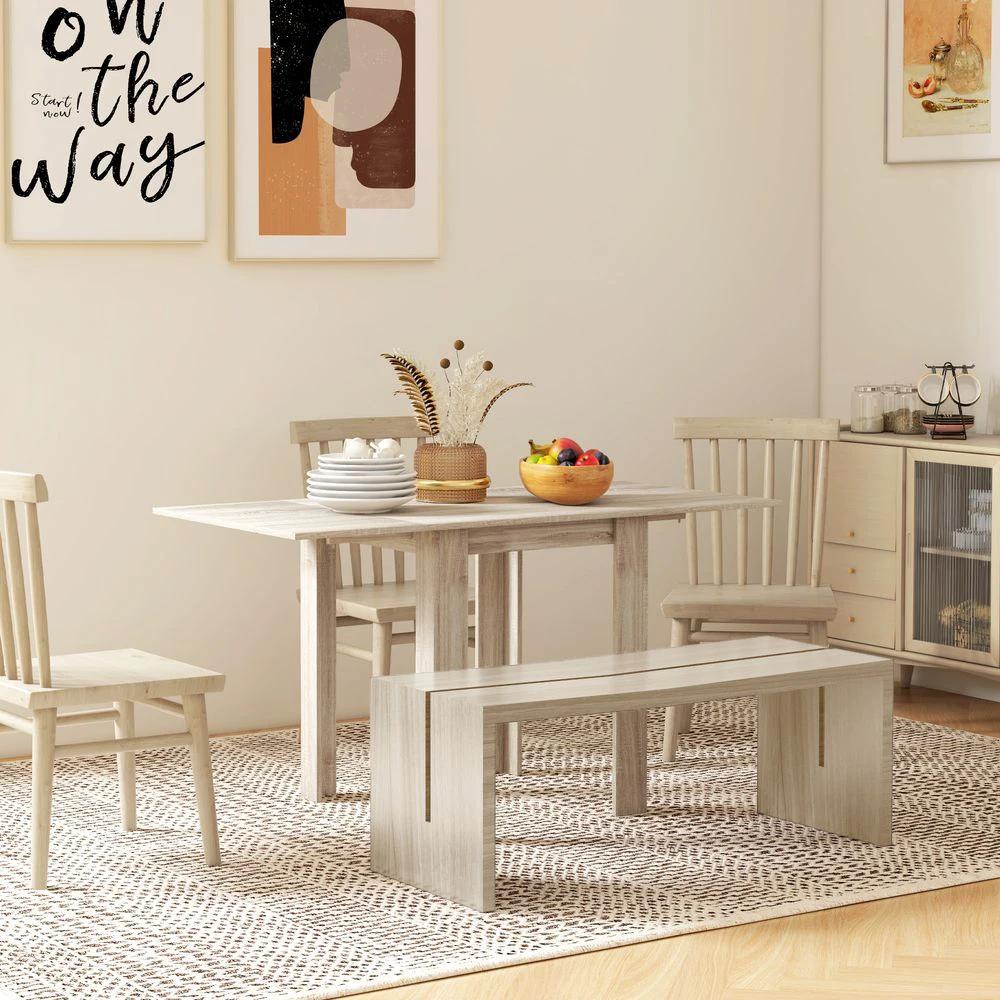
Drop leaf dining tables solve that exact problem. They sit small when you're not using them and grow when you are. Below is everything worth knowing before you buy one, including who they actually suit, the sizing that matters, the materials that hold up, and how to use one day-to-day without it becoming a nuisance.
Who a drop leaf table is actually for
Drop leaf tables get marketed at everyone with a small kitchen. In reality there are a few specific situations where they really earn their place, and a few where you'd be better served by something else.
You'll get the most out of one if
You live in a flat, studio, or small terraced house where every square foot has to work harder than usual.
You eat most meals as one or two, but occasionally need to seat four or six.
Your dining area doubles as something else, like a workspace, a craft surface, or a homework spot.
You rent and don't want a permanent piece of furniture taking up the whole room.
You have an awkward corner, alcove, or galley layout that a rectangular table won't fit in cleanly.
A drop leaf might not be the right call if
You host four or more people regularly. The folding mechanisms add up to a less stable surface than a fixed table, especially if you're putting heavy serving dishes on the leaves.
You want a table that lives extended permanently. At that point you're paying for a feature you'll never use.
You've got the floor space for a fixed table. A solid 4-seater in the same price range will usually feel sturdier and last longer.

Sizing: the numbers that actually matter
This is the part most buying guides skip over with vague advice like "measure your space". You need specific numbers, so here they are.
Folded vs extended footprint
The whole point of a drop leaf is the difference between its folded and extended size. Common dimensions you'll see across the range:
Compact 2-to-4 seaters: roughly 73cm wide folded, expanding to 140cm extended, with a depth of around 70cm.
Round oval drop leaf tables: typically extend to seat up to 4 with both leaves up, and fold down to a slim profile against a wall.
Larger 6-seater drop leaf designs: usually open to around 160cm or more, with both leaves contributing meaningful seating space.
Clearance you need around the table
Allow at least 75cm between the edge of the table and any wall, kitchen unit, or piece of furniture behind it. That's the minimum needed to pull a chair out and sit down comfortably. If you can manage 90cm, you'll find it a lot less cramped when someone needs to get past.
This matters more than people think. A table that technically fits the room but leaves you shuffling sideways every time you stand up will start to feel like a mistake within a week.
Height and chair fit
Most drop leaf dining tables sit at standard dining height, around 75cm. Your dining chairs need a seat height of roughly 45cm to 47cm to work with that. If you're pairing the table with stools or chairs you already own, measure first. A mismatch of even a few centimetres makes meals uncomfortable.
Materials: what holds up and what doesn't
Drop leaf dining tables come in a few material types and they're not all equal. Here's what to look for and where the trade-offs sit.
Particle board with melamine coating
Most affordable drop leaf tables, including a lot of the popular HOMCOM range, use a particle board core finished with a melamine coating. This is the most common option and there's nothing wrong with it for everyday use.
The melamine surface wipes clean easily, which matters more than you'd think when you're using the table for breakfast, work, and dinner all on the same day. It resists scuffs and stains from coffee, sauces, and pen marks. The trade-off is weight capacity. These tables typically support 30kg to 50kg on the tabletop, which is plenty for plates and laptops but not for sitting on or pressing down hard during food prep.
Solid wood
Solid wood drop leaf tables, often in oak, pine, or bamboo, cost more but feel substantially better in daily use. They're heavier, more stable, and develop character over the years rather than looking tired. Bamboo in particular has become popular for compact designs because it's light enough to move easily but firm enough to feel solid when you lean on it.
If the table is going to be a permanent fixture in a flat you own, solid wood is usually worth the extra. If you're in a rental and might be replacing it in two years anyway, particle board with a quality melamine finish does the job.
Mixed materials and metal frames
Some drop leaf tables pair an MDF or wooden top with a powder-coated steel frame. These suit modern and industrial-style interiors and tend to feel sturdier than all-particle-board designs because the legs do most of the structural work.
Look for tables with locking mechanisms on the leaf hinges. Without them, the leaves can sag or wobble under weight, which gets old quickly.
Daily use: the things you only realise after you own one
Buying guides tend to stop at the purchase. The reality of living with a drop leaf table is where most of the actual learning happens, so here are the things worth knowing before you buy.
Folding becomes a habit
If you've never owned a drop leaf table, you might assume you'll fold the leaves down between every meal. In practice most people don't. The leaves stay up if you're going to eat there again in the next few hours, and only get folded down when you need the floor space, like before having someone over or when you're cleaning the kitchen.
This is fine. The mechanism is built for occasional use, not constant folding. Tables with smooth, well-engineered hinges handle daily folding without complaint, but cheaper designs will start to feel loose if you're flipping the leaves a dozen times a day.
Storage underneath is genuinely useful
A lot of drop leaf tables include drawers, shelves, or open cubbies underneath. This sounds like a minor feature on the product page but ends up being the thing you appreciate most. Cutlery, placemats, napkins, scissors, and the random bits that accumulate in a kitchen all go in there, which keeps your worktops clearer.
If you're shopping for a small kitchen specifically, prioritise tables with built-in storage. The HOMCOM oak finish drop leaf with two drawers and a shelf is a good example of how much extra utility this adds.
Wheels are a feature, not a gimmick
Several drop leaf tables come with castors. If your dining area also serves as a workspace, an entrance, or somewhere you occasionally need to clear completely, wheels make it genuinely easy to shift the table out of the way. Look for designs with two or four lockable wheels so it stays put when you actually want to use it.
How a drop leaf compares to other small-space dining options
Drop leaf isn't the only solution for a small dining space. Here's how it stacks up against the main alternatives so you can make an informed call.
Drop leaf vs round table
Round tables suit small rooms because they don't have corners to bump into and they encourage closer conversation. The downside is the footprint stays the same whether you're using it or not. A 90cm round table takes up the same space at breakfast on a Tuesday as it does at Christmas dinner. If you have the floor area for that, round is a valid choice. If you don't, drop leaf wins.
Drop leaf vs extendable table
Extendable dining tables grow by adding a leaf in the middle rather than folding sides down. They typically extend to seat more people (six to eight) and feel sturdier because there are no hinged sections. The trade-off is the minimum size is bigger than a folded drop leaf, so they need more permanent floor space. Extendable suits family homes; drop leaf suits flats and small kitchens.
Drop leaf vs compact dining set
A small two-seater dining set with a fixed table and two chairs uses less material and costs less than most drop leaf options. If you genuinely never need to seat more than two, that might be the simpler answer. The moment you have anyone round for dinner though, you're stuck. Drop leaf gives you flexibility a fixed compact set can't match.
Quick answers to common questions
Are drop leaf tables sturdy enough for everyday use?
Yes, provided you don't exceed the stated weight capacity. Most drop leaf tables support 30kg to 50kg on the tabletop, which covers normal dining, working, and homework. Avoid sitting on the leaves or putting heavy serving dishes on them right at the edge.
How many people can a drop leaf table seat?
Compact models typically seat 2 folded and 4 extended. Larger drop leaf tables with two lift-up sides can accommodate up to 6 when fully open. If you regularly host more than 4, look at the dimensions carefully or consider an extendable table instead.
Can you leave the leaves up all the time?
Yes. The mechanism is designed to support both positions indefinitely. Leaving the leaves up doesn't damage the table or weaken the hinges over time. The folding feature is there for when you need it, not as something you're obliged to use daily.
What's the best surface for a drop leaf dining table?
For everyday use, a melamine-coated particle board top is the most practical choice. It wipes clean, resists stains, and stands up to daily wear. If you want longevity and don't mind paying more, solid wood with a protective finish lasts longer and looks better as it ages.
Finding the right drop leaf table for your space
The right drop leaf dining table comes down to honest answers to a few questions. How small is your space when the leaves are down? How many people do you actually need to seat when they're up? Will the table double up as a workspace, or just sit there waiting for meals? Once you've answered those, the choice gets a lot simpler.
Have a look through the Bossy Cat drop leaf dining tables collection to see the current range, sizes, and materials in one place. There are compact two-to-four seater options, larger six-seater designs with lift-up sides, and bamboo, oak, and white finishes to suit different rooms. Free UK mainland delivery is included on every order, with most tables arriving in three to five working days.
If a drop leaf isn't quite the right fit, the wider dining tables collection covers round, extendable, and fixed designs. The dining sets section is also worth a look if you're starting from scratch and want a coordinated table and chairs in one go.