There's a quiet snobbery in furniture buying. Solid wood is treated as the obvious right answer and MDF as the compromise you settle for when you can't afford the real thing. The reality is more interesting. Both materials have genuine advantages and genuine drawbacks, and the right answer depends on the room, the household, and what you actually want the table to do.
This guide takes both sides seriously. The first half makes the strongest possible case for solid wood. The second half makes the strongest possible case for MDF. Then a final section walks through real situations and says which side wins each one. By the end you should have a clear sense of which material is right for your living room, rather than the vague sense that you should be buying the more expensive option.
Solid wood and MDF are both legitimate choices. The question isn't which one is better in the abstract. It's which one suits your specific living room.
THE CASE FOR SOLID WOOD
Solid wood: the long game
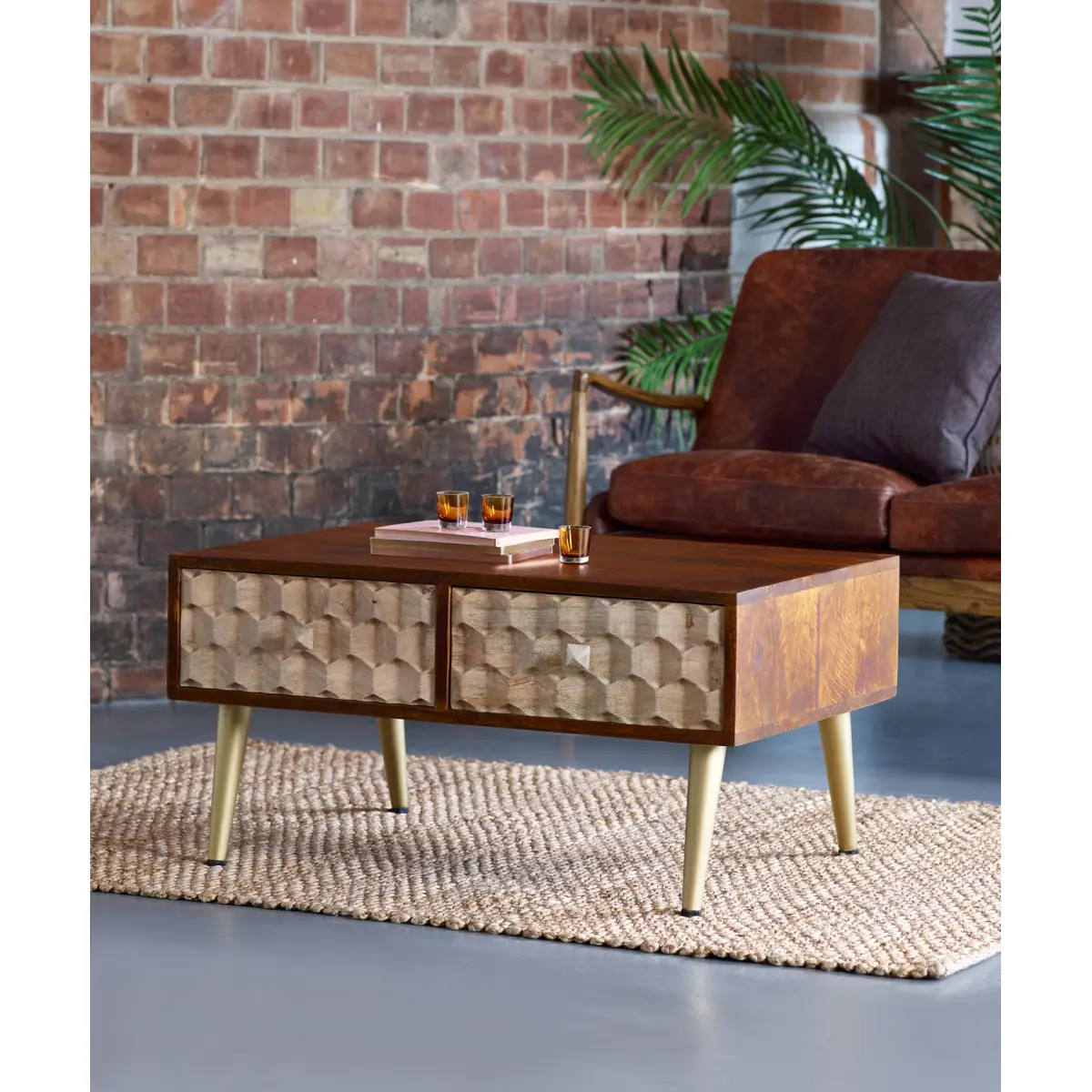
Solid wood furniture works on a different timeline to everything else in a modern living room. A solid oak coffee table bought today, looked after with a basic level of care, will still be there in twenty years. It will look better than the day you bought it because the wood will have developed depth, character, and the small marks of family life that solid hardwood absorbs into its grain rather than hiding from.
The argument for solid wood comes down to four things, and they reinforce each other.
It lasts
Solid hardwoods, including oak, ash, walnut and acacia, are dimensionally stable in normal indoor conditions. They expand and contract slightly with the seasons but they don't warp, swell, or fall apart at the joints in the way engineered alternatives can over decades. A solid wood table assembled with proper joinery (dowels, tenons, dovetails) doesn't need re-tightening every few years. It just keeps working.
It ages well
This is the point most buying guides understate. Solid wood develops a patina. The grain deepens with light exposure. Small dents and scratches integrate into the surface as character rather than damage. The classic mistake people make about wood furniture is treating it like a museum piece. A solid oak coffee table can be sanded back and re-oiled in an afternoon, removing years of wear and bringing the surface back to nearly new. You can't do that to an MDF veneer.
It feels different to use
There's a quality you only notice when you put a heavy book or a hot mug on a solid wood table. The surface has weight and density. It absorbs the impact of objects being set down. It doesn't sound hollow when you tap it. None of this is critical to the function of a coffee table, but it changes how the room feels in daily use. People notice the difference between a solid wood table and an engineered alternative even if they couldn't tell you why.
It carries the room
A solid wood coffee table is genuinely the anchor of most living rooms. It holds the gravity of the seating arrangement, makes the rug underneath look intentional, and gives the eye somewhere to settle. MDF tables can look good in their own right, but they rarely carry a room in the same way. They sit in the space rather than defining it.
A solid oak coffee table can be sanded back and re-oiled in an afternoon. You can't do that to an MDF veneer.
Where solid wood loses its argument
This case has limits, and the limits matter. Solid wood is heavy, expensive, and demanding. A 90cm solid oak coffee table costs three to five times more than a comparable MDF design with a wood-look finish. Moving it between rooms is a two-person job. Hot mugs left without coasters mark the surface noticeably. Spills need addressing quickly. And in households with toddlers, dogs, or anyone who treats furniture as a tool rather than an heirloom, the patina-as-character argument can feel like rationalisation when the table has been dragged across the floor and dented within six months.
None of these are reasons not to buy solid wood. They are reasons to be honest about what owning solid wood involves.
THE CASE FOR MDF
MDF: the practical match for modern life
MDF (medium-density fibreboard) has spent two decades being treated as the budget option, which has obscured a more interesting truth. For a lot of British living rooms, MDF is the better choice on the merits, not the cheaper compromise. The argument isn't that MDF imitates solid wood. It's that MDF, used well, does things solid wood can't.
It handles modern living
Most MDF coffee tables have a melamine, painted, or veneer surface that wipes clean. Coffee rings, sticky drinks, ink from a borrowed pen, biscuit crumbs, the general residue of evenings spent on the sofa with food: all of it cleans up with a damp cloth in seconds. Solid wood demands ongoing care to look its best. MDF demands almost nothing. For households where the coffee table is in constant use, this difference adds up fast.
It enables design that solid wood can't
Solid wood resists complex shapes. It's expensive to mill, splinters along the grain, and limits what's structurally possible. MDF doesn't have a grain direction. It can be routed, drilled, and shaped into curves, openwork patterns, lift-top mechanisms, and slim profiles that wouldn't be viable in solid timber. The vidaXL 90x45x35cm White Engineered Wood Coffee Table with an openwork geometric design is a textbook example: a pattern that genuinely couldn't be made affordably in solid wood, but is straightforward in engineered material.
The HOMCOM Lift-Top Marble Coffee Table in our range tells the same story. The faux marble surface and the hidden storage mechanism beneath both depend on MDF's machinability. A solid wood lift-top table would be heavier, costlier, and harder to engineer to the same tolerances.
It carries useful technology
Modern coffee tables increasingly include features solid wood would struggle to integrate. The vidaXL Coffee Table with USB-powered LED lighting in our range pairs engineered wood with built-in mood lighting and a moisture-resistant finish. The HOMCOM Woodgrain Coffee Table uses an MDF core with a painted steel frame to achieve a 30kg total load capacity (20kg on the top, 5kg per drawer) in a piece light enough for one person to move. These hybrids of engineered wood, metal, and modern fittings represent where coffee table design is heading, and solid hardwood doesn't follow easily.
It costs a fraction
This matters more than the snobbery suggests. A quality MDF coffee table from a serious brand costs roughly a quarter of what a comparable solid wood version does. That price difference is not a tax for poor people. It's a legitimate trade-off that frees budget for other living room investments (a better rug, decent cushions, a proper floor lamp) that change the room more than the table material does. Spending two thousand pounds on a solid oak table and then putting a forty-pound rug under it is bad room economics. Spending five hundred pounds on a well-designed MDF table and putting a five-hundred-pound rug under it is better.
MDF, used well, does things solid wood can't. Complex shapes, lift-top mechanisms, integrated lighting, a fraction of the cost.
Where MDF loses its argument
MDF has a shorter lifespan than solid wood. Five to ten years of typical use is realistic for quality engineered furniture, compared to several decades for solid hardwood. The veneer or melamine surface can chip or peel along edges over time, particularly if exposed to moisture or sharp impacts. And while MDF cleans easily, it can't be refinished. Once the surface is damaged, the damage is permanent.
MDF is also not all created equal. Cheap MDF from low-end manufacturers uses thinner board, weaker joints, and lower-grade finishes that deteriorate fast. The case for MDF rests on quality MDF construction with a proper finish. Bargain-basement engineered wood doesn't carry the same argument.
THE VERDICT BY USE CASE
Which side wins, in real situations
Rather than declaring an overall winner, here's how each side wins in the situations that actually matter.
Forever homes with adult occupants
Solid wood wins. If you're in your long-term home and the coffee table is going to sit in the same living room for ten or twenty years, solid hardwood is the better investment. The cost spreads over a long period, the patina develops over years of use, and the practical inconveniences (weight, care requirements) don't matter when the table isn't being moved or knocked about. A solid oak coffee table is a piece of furniture you buy once.
First homes and rentals
MDF wins. If there's a reasonable chance you'll be moving in the next few years, or you're furnishing on a budget and your taste might shift, an MDF coffee table makes more sense. Lighter to move, far cheaper to replace if your style evolves, and easier to sell or give away than a 40kg solid oak piece. The HOMCOM Woodgrain Coffee Table with drawers and hairpin legs is the kind of piece that does this job well: it looks considered, has practical storage, and won't anchor you to a single living room for decades.
Households with young children
MDF wins, with caveats. Young children put coffee tables through a punishing schedule. Spills, hot food, toys being thrown, the table being used as a desk, a footstool, a stepping stool. Solid wood handles all of this and develops character, but the character includes deep scratches and dents that some buyers find harder to live with than they expected. MDF with a quality melamine surface wipes clean and accepts the impact without permanently scarring. The caveat: choose a piece with rounded edges and a stable base. The HOMCOM Lift-Top Marble Coffee Table has both, plus storage for the toy clutter.
Modern minimalist or design-led rooms
MDF often wins. If your living room aesthetic depends on clean lines, slim profiles, complex shapes, or unusual finishes (high gloss, faux marble, openwork patterns), MDF is the material that makes those designs possible. Solid wood gives you traditional joinery, natural grain, and warmth, but it can't deliver geometric openwork or a lift-top mechanism without compromise.
Traditional, rustic, or cottage-style rooms
Solid wood wins. Period properties, country cottages, and rooms styled with antiques or vintage rugs benefit from the warmth and weight of solid hardwood in a way no engineered alternative can match. The grain, the weight, the way the wood ages with the room: this is what solid wood does best.
Households that move frequently
MDF wins. Heavy solid wood furniture is the single hardest category of furniture to move. If you've moved three times in five years and you're likely to move again, lighter engineered pieces save genuine grief. The savings on removal company fees alone tend to pay for the MDF table several times over.
When you want both
Many living rooms are best served by mixing. A solid wood side table or accent piece next to an MDF main coffee table gives you the visual weight of solid hardwood without the cost or weight penalty across the whole room. Equally, a solid wood coffee table paired with engineered wood storage pieces (TV stand, bookshelf) is a sensible distribution of where the timber spend goes.
What this means for your next purchase
If you've worked through the cases and the verdicts, you should have a clearer sense of which material is right for your situation than a generic "solid wood is always better" answer would give you. There's no universal winner. There's only the right answer for your living room, your household, and your timeline.
The wooden coffee tables collection covers both ends of the spectrum, from solid-wood-led designs to engineered wood pieces with melamine, veneer, and faux marble finishes. For more specific styling angles, our white coffee tables styling guide walks through six visual directions including the white-and-natural-wood pairing that combines both materials. The broader coffee tables collection covers glass, metal, and mixed-material designs if you'd rather sidestep the solid-wood-vs-MDF question entirely.
Free UK mainland delivery applies on every order, dispatched in three to five working days, with no hidden fees. Solid wood pieces ship on substantial pallets and benefit from two people for unloading. Engineered wood pieces are usually flat-packed in a single carton that one person can handle. Plan your delivery day accordingly.